Elektrine
Log in Register
Paige Chat Timeline Gallery Friends Email Drive DNS Private DNS Domains VPN Kairo Nerve
Remote

Dr. Dan Killam

@dantheclamman@scicomm.xyz
mastodon 4.7.3
  • Open on scicomm.xyz

Environmental scientist and clammunicator

Provider of #ClamFacts

3576 Followers
852 Following
50 Posts
Joined August 24, 2018
Pronoun:
he/him
Website:
https://dantheclamman.blog
ORCID:
https://orcid.org/0000-0001-7569-1828
Open post
Dr. Dan Killam @dantheclamman@scicomm.xyz
· 2mo ago
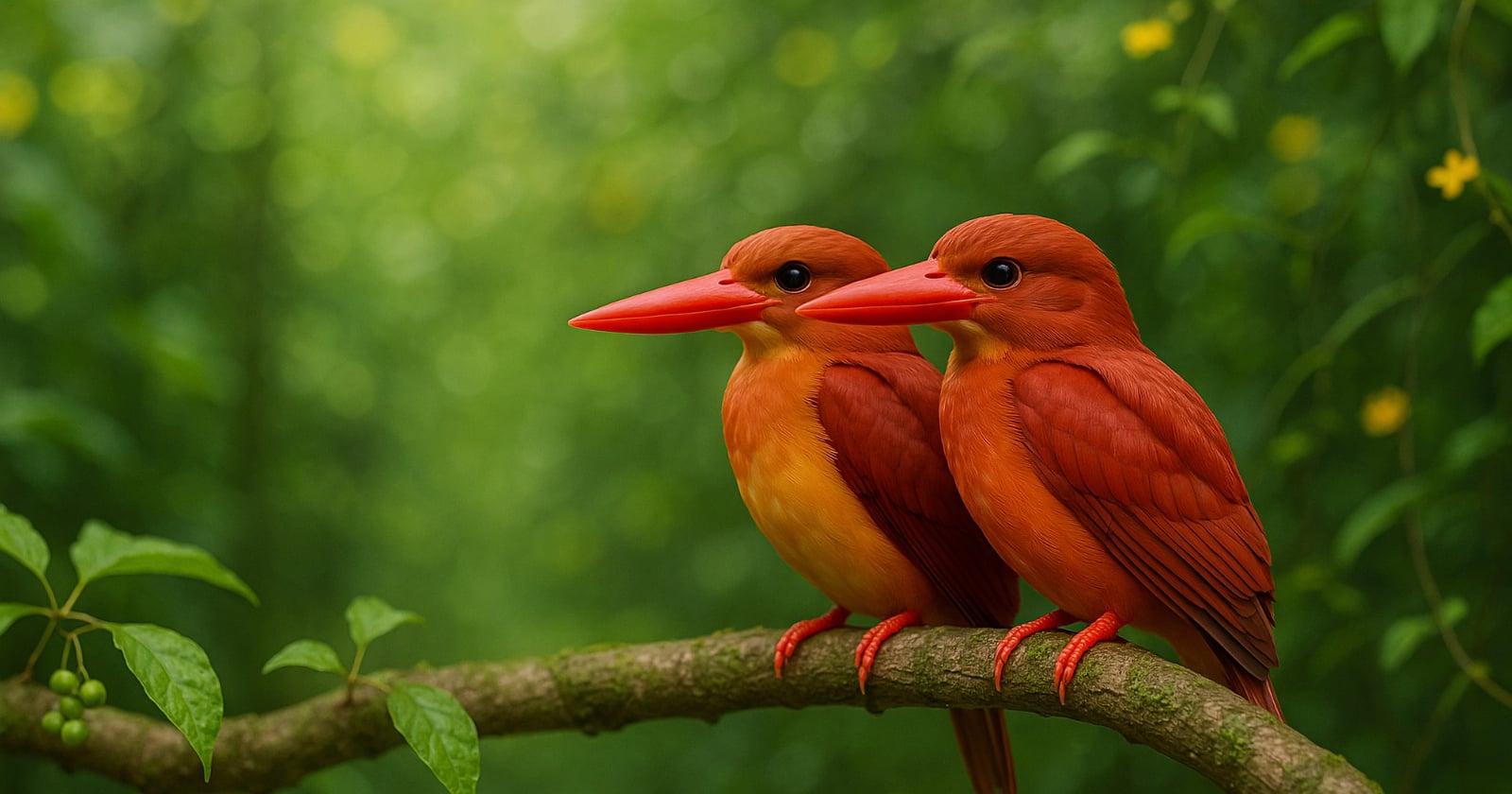
I have to pay increasing attention to what my phone does to pictures it takes. For example, my new Motorola phone includes a super zoom feature that actually uses generative AI to fill in details as it crops in! I turned it off, but others might not notice and upload such digitally created images to iNaturalist, where they'd actually impact scientific research https://petapixel.com/2026/07/20/scientists-warn-wildlife-photographers-ai-enhanced-bird-photos-could-threaten-research/
Scientists Warn Wildlife Photographers’ AI-Enhanced Bird Photos Could Threaten Research
PetaPixel

Scientists Warn Wildlife Photographers’ AI-Enhanced Bird Photos Could Threaten Research

'Wildlife photographers can be quite obsessed with getting a beautiful photo.'

570
41
725
20
Open post
Dr. Dan Killam @dantheclamman@scicomm.xyz
· 5d ago
Boosted by @MaryAustinBooks@mstdn.social
Replying to
@MHowell@kolektiva.social @FlockOfCats@famichiki.jp clams do clammunicate, through pheromone signals and sometimes even by living close together to feel each others' body language. If one clam closes the others know a threat is nearby! #clamFacts
3
0
3
0
Open post
Dr. Dan Killam @dantheclamman@scicomm.xyz
· 2mo ago
For some reason I had never considered that peanuts are actually the product of a fruit that grows under the ground. It's called geocarpy. The flowers are pollinated and the pods drop down to the ground as "pegs", growing into the soil. To me, this is absolutely crazy. Peanuts are crazy.
212
19
144
5
Open post
Dr. Dan Killam @dantheclamman@scicomm.xyz
· 2mo ago
Giant clams love light. As a general rule, the more light they can get for their symbiotic algae, the better. Some species will even continue to photosynthesize in air for hours exposed by the tide, since their photosynthesis provides them some oxygen. Which makes the "devil clam" (Tridacna mbalavuana) from Tonga and Fiji so weird. It lives up to 100 ft down! The super clear waters where it's found allow it to live as a kind of counterpart to mesophotic corals, which are able to photosynthesize even far from the sunlit surface. Since they are so rare, the devil clams are not well studied, but researchers determined it is able to compensate for its very deep lifestyle through some of the greatest photosynthetic efficiency known from giant clams! #clamFacts https://www.inaturalist.org/taxa/479982-Tridacna-mbalavuana
inaturalist.org
154
1
104
0
Open post
Dr. Dan Killam @dantheclamman@scicomm.xyz
· 1mo ago
San Francisco has insane wealth. Yet it's about to close its only marine science station. The zoo has suffered decades of mismanagement. Same for the Aquarium of the Bay. The Cal Academy is existentially threatened. SF should be a world-leading home for natural sciences. What went wrong?
21
2
15
0
Open post
Dr. Dan Killam @dantheclamman@scicomm.xyz
· 3mo ago
Boosted by @trending@homestead.social
198
11
104
1
Open post
Dr. Dan Killam @dantheclamman@scicomm.xyz
· 1mo ago
Boosted by @trending@homestead.social
Over the last few years, a meme has been growing on Reddit, Tiktok and elsewhere that bivalves have a decentralized enough nervous system that they count as vegan. I am not vegan, and I think bivalves are an excellent, sustainable food source, but I am trying to fight this misconception because it's just incorrect. Clams are not vegetables, folks. This is the hill I will die on.
33
0
21
0
Open post
Dr. Dan Killam @dantheclamman@scicomm.xyz
· 4mo ago

Pulse oximetry has previously been noted to have a bias against people with higher skin melanin content. It over-measures blood oxygen for Black people and others with more melanin, because most oximeters were calibrated for people with light skin. This can lead to someone with a real blood O2 reading of 91% reading as 94%. A new study shows that has led to different levels of follow-up care, with Black patients being less likely to receive supplemental oxygen as a result of this systematic mismeasurement. I was recently caring for my mom when she had a severe infection. During the recovery phase, she had supplemental oxygen at home and I literally had a pulse oximeter hanging on my neck like a pendant, taking spot checks frequently of her oxygen. It was already scary enough and I can't imagine not being able to trust the readings of what should be a life-saving device! This is why systemic racism is so insidious and pops up in all sorts of subtle but fundamental ways, especially when science is contaminated by the racist thinking! It makes me wonder what other effects this has had? Has this contributed to the known under-diagnosis of Black patients with sleep apnea? It's scary to think about.

https://news.stanford.edu/stories/2026/05/pulse-oximeter-bias-black-patients-follow-up-care

news.stanford.edu
182
8
220
1
Open post
Dr. Dan Killam @dantheclamman@scicomm.xyz
· 3mo ago
Bivalve hinges have to be very resilient, considering the animal's very existence depends on keeping the valves attached and articulated. One team of researchers mechanically opened and closed a freshwater mussel shell 1.5 million times, finding no signs of cracking or deformation from the strain! They found that the mussel uses a fan-shaped structure between the valves to deflect stresses. In the crystal of the shell, a complex fabric of mineral fibers are wrapped in organic materials that act kind of like the reinforcing rebar of concrete, to allow the structure to deform rather than fracture. Engineers could use this as inspiration for more resilient hinge designs! #clamFacts https://en.ustc.edu.cn/info/1150/5111.htm
en.ustc.edu.cn

Bivalve shells inspire materials that don’t wear out-University of Science and Technology of China

The hinge of bivalve shells can remain intact even after opening and closing 1.5 million times. Now scientists are looking to them to create deformable, fatigue-resistant materials based on brittle compounds. Bivalves, such as freshwater mussels, open their shells to feed and reproduce, while closing them tightly to protect their soft bodies from threats from predators such as crabs. Connecting...

79
4
57
2
Open post
Dr. Dan Killam @dantheclamman@scicomm.xyz
· 3mo ago
Boosted by @trending@homestead.social
Ophiocordyceps is iconic for its ability to infect ants and change their nervous system to force them to climb high, where the fungus can fruit and spread spores to infect more ants. Pleurocordyceps is a hyperparasitic fungus that eats Ophiocordyceps. It isn't really a friend to the ants, since it has no interest in fully wiping out its host. But it makes for an interesting dynamic, and I continue to think it would make an interesting Alien movie or Last of Us sequel to introduce a hyperparasite to interact with the titular monsters! A new species from Borneo, Pleurocordyceps cornusynnemata, named for its fruiting bodies looking like little horns, was just described for the first time! https://phys.org/news/2026-06-scientists-hyperparasite-malaysia-borneo-jungle.html
phys.org
99
6
84
0
Open post
Dr. Dan Killam @dantheclamman@scicomm.xyz
· 2mo ago
Clams can integrate all sorts of toxins from the phytoplankton they eat. Some prominent marine ones include paralytic shellfish poisoning, amnesic shellfish poisoning, and diarrhetic shellfish poisoning. There are dozens of known toxins around the world. In freshwater they can accumulate microcystin, which damages the liver. Before collecting clams for eating, always check for warnings from the local water quality or public health agency! #clamFacts
43
1
25
1
Open post
Dr. Dan Killam @dantheclamman@scicomm.xyz
· 3mo ago

Olympia oysters (Ostrea lurida) are our native oyster in estuaries on the West coast of North America. They are marvels of evolution, able to survive extreme swings in salinity and turbidity often seen in their native environment. As another adaptation to their extreme habitat, they brood their young within their shell for a couple weeks to a month, to increase their chances of survival. Some years, they may be nearly wiped out by extreme high flow events, and they maximize their chances of finding a mate during the following interval by alternating sexes annually (sequential hermaphroditism). There were once billions of these oysters in SF Bay in huge reefs, where they were harvested sustainably for thousands of years by native peoples, who produced enormous shell mounds as ceremonial monuments to their relationship with the Bay. But in the era of colonization they were almost wiped out by overharvesting, introduced predators/diseases, pollution and habitat destruction. These days the vast majority of farmed oysters are Japanese oysters, which grow faster and reach much bigger size. Nevertheless, Olympia oysters persist and can be found all throughout the Bay in somewhat sparse concentrations, biding their time for when conditions are more to their favor. I have full faith they will inherit the Bay after we're gone! #clamFacts

scicomm.xyz
67
3
39
0
Open post
Dr. Dan Killam @dantheclamman@scicomm.xyz
· 2mo ago
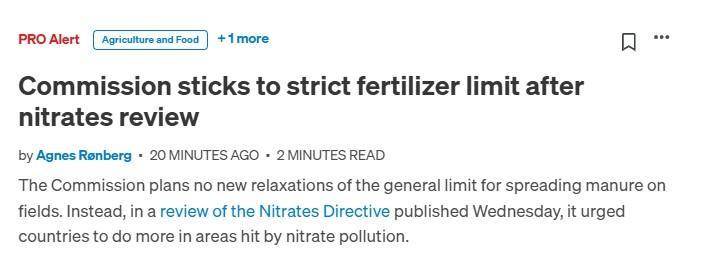
RE: https://eupolicy.social/@GreenpeaceEU/116923909086714251 Psst...clams already provide us with tens of billions of free nitrogen removal services a year, and that's just a fraction of their power. If we helped them more through active aquaculture, we could cut nitrogen pollution from farming by about half! #clamFacts
Open quoted post
Quoting
Greenpeace EU :europe:
@GreenpeaceEU@eupolicy.social
Nitrogen pollution - mostly from animal farming - is out of control in Europe. It kills soils, chokes rivers, makes people sick & costs billions So it’s good that the EU is keeping its limits to how much fertiliser farmers can put on their fields, and hints at more measures in the worst-hit regions
Open quoted post
eupolicy.social

Greenpeace EU :europe:: "Nitrogen pollution - mostly from animal farming -…" - EUpolicy.social - A Mastodon server for the EU bubble

47
5
35
0
Open post
Dr. Dan Killam @dantheclamman@scicomm.xyz
· 1mo ago
The ENSO Blog, which was a beloved NOAA climate communication resource until it was killed by Doge, is back as part of the climate.us nonprofit just in time for this year's (potential) El Niño fireworks! Here's a post from them about how this year stacks up in term of different ENSO indices (big!) and potential for rainfall (uncertain but also likely to be big!) https://www.climate.us/news-features/blogs/enso/super-duper-or-el-nino-warming-world
climate.us
12
0
25
0
Open post
Dr. Dan Killam @dantheclamman@scicomm.xyz
· 5mo ago

not enough people are asking, what is the water-speed velocity of an unladen scallop?

112
29
74
0
Open post
Dr. Dan Killam @dantheclamman@scicomm.xyz
· 5mo ago

I am a very specific kind of reply guy. If someone jokes about the appearance of geoducks (Panopea), I must appear and remind them THEY👏LOOKED👏LIKE👏THAT👏FIRST

since the Jurassic!! #clamFacts

scicomm.xyz
106
39
63
2
Open post
Dr. Dan Killam @dantheclamman@scicomm.xyz
· 2mo ago
Once zebra or quagga mussels get into a water body, it is very difficult to remove them. Many common molluscicides like copper or chlorine are also very harmful to other life forms. Pseudomonas fluorescens strain CL145A is a bacterium that produces a toxin highly specific to zebra and quagga mussels. It can be released as dead cells near the mussels, which ingest it, with the toxin destroying their digestive system. In this way it is similar to Bacillus thuringiensis israelensis (Bti), which is valued for its very specific toxicity to certain insect pests. CL145A is specific enough that it has been used to kill zebra mussels smothering native freshwater mussels, leaving the native mussel unharmed! It is sold as a product called Zequanox, which hasn't been a huge hit due to its comparative expense compared to other solutions. It also can reduce dissolved oxygen in the water when applied indiscriminately. Scientists are trying to find similar targeted solutions that will kill invasive golden mussels, currently spreading through aqueducts and reservoirs in California. #clamFacts https://www.bizjournals.com/sacramento/news/2025/05/01/marrone-golden-mussels.html?rel=plus
bizjournals.com
35
1
21
1
Open post
Dr. Dan Killam @dantheclamman@scicomm.xyz
· 3mo ago

In 1764, John Adams wrote to his wife Abigail that when he was sick with smallpox, he ate 30 oysters to try to get better. I can't find any evidence that oysters have special therapeutic value against smallpox, though they are rich in zinc, which is an essential mineral for the immune system! #clamFacts

https://www.masshist.org/digitaladams/archive/doc?id=L17640504ja

masshist.org

Letter from John Adams to Abigail Smith, 4 May 1764

32
4
10
0
Open post
Dr. Dan Killam @dantheclamman@scicomm.xyz
· 3mo ago
Replying to
One of the biggest flowers I've had on an indoor plant for sure.
29
3
5
0
Open post
Dr. Dan Killam @dantheclamman@scicomm.xyz
· 3mo ago

The best discussion of the actual biology of the Reflecting Pool algal bloom I've seen so far, including descriptions and microscope pics from GMU professor Rosalina Stancheva Christova. The green algae Desmodesmus is taking advantage of warm water, fresh nutrients and a lack of competition in the new pool water to explode in population! In this way it's analogous to weeds proliferating in disturbed soils. If there's anything I've learned about algae, it will usually do the opposite of what we hope it will do! Algae is truly ungovernable!

https://www.npr.org/2026/06/19/nx-s1-5863044/dc-reflecting-pool-algae-green-trump

npr.org
28
3
19
0
Open post
Dr. Dan Killam @dantheclamman@scicomm.xyz
· 4mo ago

I don't supplement CO2 in my aquarium, so it is a limiting factor for the plants in there, as it is in many freshwater aquatic ecosystems. For a long time, the tapegrass Vallisneria spiralis dominated in the tank. Its cheat code is that it can use bicarbonate (HCO3-) as a carbon source for photosynthesis. It uses an enzyme, carbonic anhydrase, to transform the plentiful bicarbonate in my very hard tap water to CO2, which it then uses for photosynthesis. About half of aquatic plants have some ability to do this. This year I had a baby boom of mystery snails that have decided the Vallisneria is a snack, reducing its biomass. So this summer another plant, the dwarf aquarium lily Nymphaea stellata, has exploded. It can engage in a limited amount of bicarbonate use, but even more important are its floating leaves, which allow it to sidestep the aquatic carbon sources entirely and just use atmospheric CO2! I am considering setting up a CO2 bubbler system as I have in the past to give some of the other aquatic plants a leg up. I had taken it down when the snails were babies to help keep pH high to help their tiny shells grow.

32
6
11
0
Open post
Dr. Dan Killam @dantheclamman@scicomm.xyz
· 5mo ago
Giant clams can survive for hours out of water. They actually produce enough oxygen through the action of their photosynthetic algal symbionts to power their respiration for short periods, even with no water to breathe from. But even they have limits, and last year the famous clam garden of Orpheus Island, where 100s of 40-year old specimens were thriving, was wiped out by weeks of low salinity after a storm event. These 4 ft long clams were the legacy of an aquaculture research program from the 80s. Even after the Orpheus Island center was defunded, the clams remained. Hopefully further research can determine whether their loss was simply a result of poor placement (there are mentions of occasional low salinity events in the past), or whether they would have survived if not for increasingly volatile and heavy storms caused by climate change. While the loss of the clam garden was devastating, their presence and spawning helped support several generations of new recruits in the surrounding area! #clamFacts https://www.jcu.edu.au/news/releases/2025/march/giant-clam-garden-a-victim-of-severe-weather
jcu.edu.au
37
4
33
0
Open post
Dr. Dan Killam @dantheclamman@scicomm.xyz
· 5mo ago

‪It is surprisingly common to find whole clam shells in everyday neighborhood concrete, since they often use sand or gravel mined from shallow aquatic environments to make the concrete. The legendary malacologist Tim Pearce from Carnegie Museum wrote about finding invasive Corbicula clams in a sidewalk! #clamFacts https://carnegiemnh.org/clams-in-the-concrete-how-old-is-this-sidewalk/

scicomm.xyz
34
2
16
1
Open post
Dr. Dan Killam @dantheclamman@scicomm.xyz
· 3mo ago

Georges Bank is a broad elevated area separating the Gulf of Maine from the Atlantic. It has long been a desirable fishing location, and it is ideal habitat for scallops, with its sandy bottom and elevated position in the path of currents delivering phytoplankton food. But in recent years, the northern edge has been closed to scallop fishing. Scallop populations have been plateauing or falling across the Bank, and underwater surveys have determined that the northern edge of the Bank is an important site that scallops swim to and aggregate for mating, helping seed populations of scallops across the broader bank as a whole. Unfortunately after lobbying by fishermen, the Trump administration has now decided to throw that science out the window and ordered that area be opened for scallop harvesting, prioritizing short term profits over preserving an important New England seafood resource for future generations. #clamFacts https://www.reuters.com/world/us/us-lowers-regulatory-burdens-fishing-adviser-navarro-says-2026-07-02/

scicomm.xyz
14
2
13
0
Open post
Dr. Dan Killam @dantheclamman@scicomm.xyz
· 5mo ago
Replying to
@johnefrancis@cosocial.ca uh uh...
17
0
0
0
Open post
Dr. Dan Killam @dantheclamman@scicomm.xyz
· 2mo ago
Replying to
@ranjit@friend.camp @publicdomainrev@mastodon.social The Clam sploosheth
4
1
0
0
Open post
Dr. Dan Killam @dantheclamman@scicomm.xyz
· 5mo ago
Replying to
@SarraceniaWilds it comes from the Salish word for them, gʷidəq! And yes, ducks also came later
15
1
3
0
Open post
Dr. Dan Killam @dantheclamman@scicomm.xyz
· 5mo ago
Replying to
@dryak clam content in general get downranked by most social algorithms in my experience! I think that's part of why clam facts generally do best on fediverse where it mostly is chronological
12
0
1
0
Open post
Dr. Dan Killam @dantheclamman@scicomm.xyz
· 5mo ago
Replying to
@Alejandro_P I can say that geoducks evolved to be champion penetrators...of the earth. They delve deeper and faster than almost any other bivalve
11
1
2
0
Open post
Dr. Dan Killam @dantheclamman@scicomm.xyz
· 4mo ago
Replying to
@kboyd@phpc.social I couldn't find a study trying that, but it is a major focus of research from the perspective of light pollution and reducing artificial light at night. But in a similar approach, they have found in multiple experiments that when they play audio of oyster reefs they can induce larvae to settle! #clamFacts https://journals.plos.org/plosone/article?id=10.1371%2Fjournal.pone.0079337
journals.plos.org

Oyster Larvae Settle in Response to Habitat-Associated Underwater Sounds

Following a planktonic dispersal period of days to months, the larvae of benthic marine organisms must locate suitable seafloor habitat in which to settle and metamorphose. For animals that are sessile or sedentary as adults, settlement onto substrates that are adequate for survival and reproduction is particularly critical, yet represents a challenge since patchily distributed settlement sites may be difficult to find along a coast or within an estuary. Recent studies have demonstrated that the

7
2
1
0
Open post
Dr. Dan Killam @dantheclamman@scicomm.xyz
· 5mo ago
Replying to
@nev omg the horseshoe crab emoji :blobaww:
8
0
0
0
Open post
Dr. Dan Killam @dantheclamman@scicomm.xyz
· 5mo ago
Replying to
@lasse @SarraceniaWilds a tale full of twists and turns
8
0
0
0
Open post
Dr. Dan Killam @dantheclamman@scicomm.xyz
· 4mo ago
Replying to
Images and fact source: https://link.springer.com/article/10.1007/s10750-024-05601-7
link.springer.com
6
2
0
0
Open post
Dr. Dan Killam @dantheclamman@scicomm.xyz
· 4mo ago
Replying to
Image source: https://www.pangeashellfish.com/blog/the-different-methods-of-growing-oysters
pangeashellfish.com
5
0
1
0
Open post
Dr. Dan Killam @dantheclamman@scicomm.xyz
· 2mo ago
Replying to
@TrueNorthSpice@mastodon.world it would mean they would not need to reduce fertilizer use as much as they would be required to otherwise, or install expensive runoff diversion infrastructure. Some bivalves like oysters have other benefits to landlubbers too, in reducing erosion and improving overall water quality
2
1
0
0
Open post
Dr. Dan Killam @dantheclamman@scicomm.xyz
· 3mo ago

@thomasfuchs@hachyderm.io

3
0
1
0
Open post
Dr. Dan Killam @dantheclamman@scicomm.xyz
· 5mo ago
Replying to
@johncarlosbaez cognitive decline is a helluva drug
6
0
1
0
Open post
Dr. Dan Killam @dantheclamman@scicomm.xyz
· 4mo ago
Replying to
@kimlockhartga@beige.party me too. From what I've read, wrist-based smartwatches are just inherently less accurate, but unlike the little standard finger ones a fitbit could possibly be set to different calibration curves by the app. So someone could possibly set their skin tone!
4
1
0
0
Open post
Dr. Dan Killam @dantheclamman@scicomm.xyz
· 5mo ago
Replying to
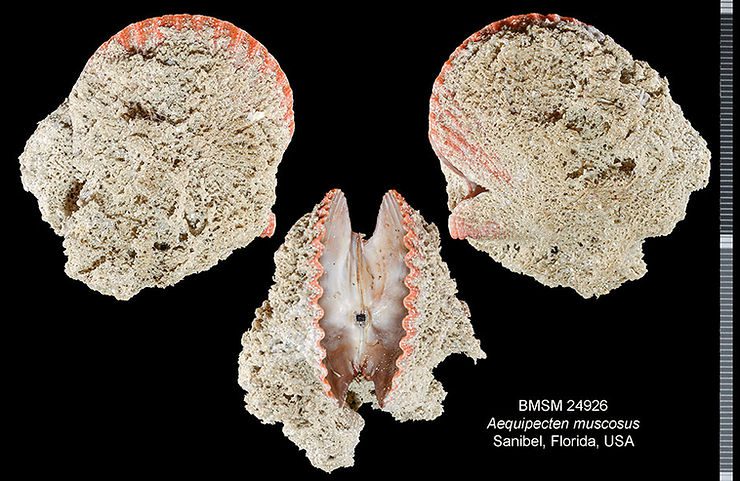
@deepmud@mas.to they may be 'laden' in some cases by fouling organisms like sponges, algae, bryozoans, etc! it can provide a nice source of camouflage to the scallop, though might be a burden when swimming! https://shellmuseum.org/blog/spongy-rough-scallops/
"Spongy" Rough Scallops - Bailey-Matthews National Shell Museum
Bailey-Matthews National Shell Museum

"Spongy" Rough Scallops - Bailey-Matthews National Shell Museum

The Rough Scallop, Aequipecten muscosus (W. Wood, 1828), is one of three species of shallow-water scallops consistently found on the coast of Southwest Florida. Ten years ago, in February 2010, the beach at the east end of Sanibel Island was swarmed by large numbers of empty Rough Scallop shells. That in itself would be unusual, as the species is anything but common. But, in addition the large numbers present, both valves of those Rough Scallop shells were covered with sponge colonies. A little

5
1
2
0
Open post
Dr. Dan Killam @dantheclamman@scicomm.xyz
· 5mo ago
Replying to
@Alejandro_P@mathstodon.xyz yes, for swimming, the winner would probably be the Atlantic scallop, Plactopecten magellanicus, observed to swim >100 cm/s (3.7 km/hr)! but peak velocities of different scallop species aren't well studied! #clamFacts https://www.cambridge.org/core/journals/journal-of-the-marine-biological-association-of-the-united-kingdom/article/abs/in-situ-swimming-characteristics-of-the-sea-scallop-placopecten-magellanicus-on-german-bank-gulf-of-maine/BFDBF8CA247E09EEA9F9A776BBEA5757
In situ swimming characteristics of the sea scallop, Placopecten magellanicus, on German Bank, Gulf of Maine | Journal of the Marine Biological Association of the United Kingdom | Cambridge Core
Cambridge Core

In situ swimming characteristics of the sea scallop, Placopecten magellanicus, on German Bank, Gulf of Maine | Journal of the Marine Biological Association of the United Kingdom | Cambridge Core

In situ swimming characteristics of the sea scallop, Placopecten magellanicus, on German Bank, Gulf of Maine - Volume 94 Issue 5

5
1
1
0
Open post
Dr. Dan Killam @dantheclamman@scicomm.xyz
· 4mo ago
Replying to
@researchfairy@scholar.social cool analysis, and solidarity in your search 🫂
2
0
0
0
Open post
Dr. Dan Killam @dantheclamman@scicomm.xyz
· 4mo ago
Replying to
@kboyd@phpc.social @mlanger@mastodon.world unfortunately a lot of common boat-fouling bivalves can't see and probably wouldn't care if they could lol
2
0
0
0
Open post
Dr. Dan Killam @dantheclamman@scicomm.xyz
· 5mo ago
Replying to
@Alejandro_P that is a razor clam! razors are actually even faster by some measures than geoducks!
2
1
0
0
Open post
Dr. Dan Killam @dantheclamman@scicomm.xyz
· 5mo ago
Replying to
@lzg
2
0
0
0
Open post
Dr. Dan Killam @dantheclamman@scicomm.xyz
· 4mo ago
Replying to
@Tofu_Golem@kolektiva.social penises have been arohnd at least 425 million years so the general concept of an insertive reproductory male organ is older than geoducks. But the joke is that they resemble the penis of our species (allegedly), which are a couple orders of mag younger. Unless people are implying that a geoduck looks like a fossil ostracod's penis, I personally see even less resemblance there! https://www.abc.net.au/news/science/2024-08-17/penis-evolution-fossils-biology-ostracod-harvestman-reproduction/104097772
abc.net.au

425-million-year-old fossil trapped in ash sheds light on the evolution of sex

When a UK palaeontologist examined rocks collected from rural west England in the 1990s, he found something unexpected: a tiny fossil with a perfectly preserved penis.

1
1
0
0
Open post
Dr. Dan Killam @dantheclamman@scicomm.xyz
· 2mo ago
Was trying to think of a tie-in post between clams and soccer and honestly folks, I got nothin
0
1
0
0
Open post
Dr. Dan Killam @dantheclamman@scicomm.xyz
· 4mo ago
Replying to
@Tofu_Golem@kolektiva.social geoducks have been alive and looking like that since the Jurassic :)
0
2
0
0
Back
313k7r1n3
Elektrine

Tor hidden service

elekhj7afj4qnrr4yd3bkzslsyo5jgfxw3orgjkhlcxifueodybyiiad.onion

I2P eepsite

j6b6cyk6gjmepjih7jjadxgxvvf3lzzujljuu2v4biemzpg3naya.b32.i2p

Platform

  • Email
  • Chat
  • Timeline
  • VPN
  • DNS

Company

  • About
  • Contact
  • FAQ
  • Lite (no JS)

Legal

  • Terms of Service
  • Privacy Policy
  • Transparency Report
  • Report Abuse
  • Warrant Canary
  • VPN Policy

Support

  • support@elektrine.com
  • Report Security Issue
Mail client setup IMAP mail.elektrine.com:993 POP3 mail.elektrine.com:995 SMTP mail.elektrine.com:465
© 2026 Elektrine. All rights reserved. Server: 04:45:53 UTC