Remote
John Carlos Baez
@johncarlosbaez@mathstodon.xyz
I'm a mathematical physicist who likes explaining stuff. I'm the Maxwell Fellow of Public Engagement at the School of Mathematics and the School of Physics and Astronomy at the University of Edinburgh.
Check out my blog Azimuth! I'm also a member of the n-Category Café, a group blog on math with an emphasis on category theory. I also have a YouTube channel, full of talks about math, physics and the future.
15170 Followers
578 Following
50 Posts
Joined April 27, 2022
Boosted by @trending@homestead.social
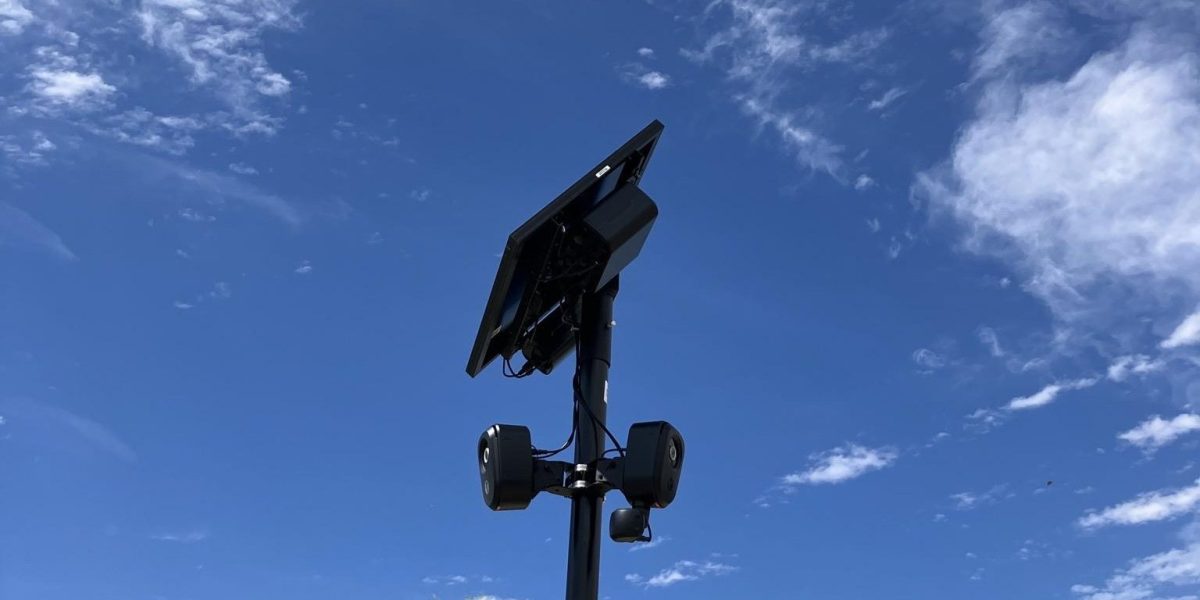
I hope folks make lots of copies of this map of 300,000 Flock cameras before Flock gets the "official" map taken down.
https://theintercept.com/2026/09/24/how-many-flock-devices-in-united-states-300000/
Open post
Boosted by @trending@homestead.social
I've been thinking about life after the ecological collapse. Many of the species we love will be extinct. But probably not liverworts.
Liverworts were among the first plants to bounce back after the world-wide rain of molten quartz set all the forests on fire when an asteroid hit the Earth 65 million years ago. They were among the first to bounce back after the much worse end-Permian extinction. They've been around for 420 million years, but with bursts of new species beginning in the mid-Jurassic and continuing through the Cenozoic.
Liverworts so deeply evolved that when you search the internet for info on them, half the articles you'll see are about how to *kill* them, because they're so fucking hard to kill! That's because a small piece of a liverwort can grow into a whole new plant. And some have little cup-shaped structures holding clusters of cells called gemmae. A gemma can be splashed out of one of these cups by falling raindrops, and if it lands in a suitable place it will grow into a new liverwort. It's as if flakes of your skin splashed off by rain could grow into new copies of you.
They like damp, poorly lit places. I was delighted to find a bunch along the River Leith in Edinburgh - shown in my photo here. They were mixed with ferns and moss: two other ancient types of plant that propagate using spores. After global crises, we see "spore spikes" in the fossil record: plants like these become very common, setting the stage for new forests.
29
0
23
0
Open post
Boosted by @trending@homestead.social
Did you hear about the UK government report on ecosystem collapse? It was created not only by the environment department but also intelligence agencies like MI5 and MI6. Reporters were invited to see the unveiling of this report in October 2025 - but at the last minute the Prime Minister blocked it!
Luckily the Greens forced the release of a 14-page redacted version.
𝗧𝗵𝗲 𝗸𝗲𝘆 𝗷𝘂𝗱𝗴𝗲𝗺𝗲𝗻𝘁: 𝗶𝘁 𝗮𝘀𝘀𝗲𝘀𝘀𝗲𝘀 𝘄𝗶𝘁𝗵 𝗵𝗶𝗴𝗵 𝗰𝗼𝗻𝗳𝗶𝗱𝗲𝗻𝗰𝗲 𝘁𝗵𝗮𝘁 𝗲𝘃𝗲𝗿𝘆 𝗰𝗿𝗶𝘁𝗶𝗰𝗮𝗹 𝗲𝗰𝗼𝘀𝘆𝘀𝘁𝗲𝗺 𝗶𝘀 𝗼𝗻 𝗮 𝗽𝗮𝘁𝗵𝘄𝗮𝘆 𝘁𝗼 𝗰𝗼𝗹𝗹𝗮𝗽𝘀𝗲 - 𝗶𝗿𝗿𝗲𝘃𝗲𝗿𝘀𝗶𝗯𝗹𝗲 𝗹𝗼𝘀𝘀 𝗼𝗳 𝗳𝘂𝗻𝗰𝘁𝗶𝗼𝗻 𝗯𝗲𝘆𝗼𝗻𝗱 𝗿𝗲𝗽𝗮𝗶𝗿.
Here's the redacted version: https://assets.publishing.service.gov.uk/media/696e0eae719d837d69afc7de/National_security_assessment_-_global_biodiversity_loss__ecosystem_collapse_and_national_security.pdf
(1/2)
312
7
464
10
Open post
I went to Glasgow to give a talk on the 4d rotational symmetry of the hydrogen atom, but what sticks in my mind is the beauty of ferns, tree ferns, mosses, liverworts and other "primitive" plants on display at the Glasgow botanical garden!
(1/2)
37
0
6
0
Open post
Boosted by @trending@homestead.social
The Republican Party's midterm convention used the traditional red, white and blue decorations - but added Trump's favorite color: gold.
I recommend that they use a new US flag. The traditional colors were red for blood, white for purity and blue for justice. The new version features red for blood, gold for wealth and purple for monarchy.
137
0
93
0
Open post
I'm fascinated by the laurel forests of La Gomera, one the Canary Islands. They're full of different species of trees with shiny, waxy leaves. Mosses and lichens grow on the branches, and the ground is covered with a green mantle of dripping ferns and liverworts thriving in the permanent damp. The place has a mysterious, prehistoric air.
The lower altitudes of this island are deserts, but the upper parts catch fog, known locally as "horizontal rain" (lluvia horizontal). Near-constant northeasterly trade winds carry moist Atlantic air that condenses into a persistent low cloud layer. This "sea of clouds" (mar de nubes) shrouds the island's central heights. As humid air drifts through the forest, moisture precipitates on contact with the trees - and the leaves, trunks, and epiphytes act as collection surfaces that channel the droplets down to the ground. So the trees literally comb water out of the air!
(1/2)
87
0
53
0
Open post
Mathilde Marcolli writes:
"What is it about all of these famous and less famous, invariably hard, Big Problems™? There is an undeniable sense in which these questions are interesting. Typically they are because, in the process of thinking about a particularly hard question, a lot of new mathematics gets developed that advances the field as a whole. The Riemann hypothesis is currently unsolved (at the time of this writing), but many people, in the process of thinking about the problem, have developed a very significant amount of very interesting mathematics. That is certainly a valuable goal.
But is the Famous Conjecture™, invested with its aura of sacred object, actually needed for that goal? The idea of kettling mathematical research into narrow streets overseen by the dominant presence of Big Problems™ gained prominence with programmatic efforts like the Hilbert problem-list and its more recent millennial revival. While some of the problems in Hilbert’s list were broad in scope, the understanding of what constitute a Big Problem™ is increasingly reflecting a competition system of pain and rewards that is simply a system of power, and that can easily become detrimental to our creativity and to the inner life of the mind.
Now we are all faced with a new reality in which sudden unpredictable burps of artificial intelligence, often with unauthorized access to ongoing unpublished work of human mathematicians gobbled into their garagantuan training sets, can liquidate our centenarian Big Problems™ in a moment’s time."
From "Duet for the End of Math", https://www.its.caltech.edu/~matilde/AImathNew.pdf
53
6
37
1
Open post
Replying to
Every nonzero vector is basically just an arrow: sure, they can have different lengths and point in different directions, but they all look like arrows.
For bivectors the classification is different. Some look like flat surfaces: these are the ones you can write as u ∧ v for two vectors u and v. Some can't be written this way, but can be written as a sum of two terms u ∧ v + w ∧ z for some vectors u,v,w,z. In 3d or 4d space that's as bad as it gets. But in higher dimensions there are bivectors that can only be written as a sum of three terms, or four, etc. When space has dimension at most 2n, you need at most n terms.
For trivectors the classification gets a lot more interesting. You can write every trivector as u ∧ v ∧ w when the dimension of space is low enough, namely 5-dimensional or lower. When you hit 6 dimensions you also get trivectors that you can only write as a sum of two terms, like u ∧ v ∧ w + a ∧ b ∧ c. The same holds in dimensions 7 and 8.
But in 9 dimensional space, ALL HELL BREAKS LOOSE! There are *infinitely* many kinds of trivectors. 🌩️
To be honest: these new ones can all be written as a sum of three terms, like u ∧ v ∧ w + a ∧ b ∧ c + d ∧ e ∧ f. So you could say there's just one new kind. But that's not how mathematicians think about it. I really need to say more precisely what I mean by a 'kind' of trivector.
[Typical way math professor starts to talk about what they really REALLY wanted to talk about.]
(2/n)
26
1
0
0
Open post
Replying to
Let's look at linear combinations of wedge products of k different vectors in n-dimensional space. We call these 'k-vectors'.
The group GL(n) of linear transformations of n-dimensional space acts on the set of k-vectors. We can look at orbits of this group action. An orbit is what I'm calling a 'kind' of k-vector in n-dimensional space.
There are finitely many kinds of k-vector in n-dimensional space in only these cases:
k = 0 and n is anything.
k = 1 and n is anything.
k = 2 and n is anything.
k = 3 and n < 9.
k = 4 and n < 8.
n-k = 4 and n < 8.
n-k = 3 and n < 9.
n-k = 2 and n is anything.
n-k = 1 and n is anything.
n-k = 0 and n is anything.
You'll notice this list is palindromic! That's not a coincidence. I will just mutter two words for those in the know: Hodge duality.
The case k = 3 and n = 9 is interesting. There are infinitely many kinds of trivectors in 9-dimensional space. There's a 3-dimensional space of kinds! It's connected to the Lie group E8, and other cool things!
This is what I REALLY wanted to talk about, but I have to go shopping so for now I'll just point you to these:
• Ernest B. Vinberg and Alexander G. Elashvili, A classification of the trivectors of a nine-dimensional space, Trudy Seminara po Vektornomu i Tenzornomu Analizu 18 (1978): 197–233. English version: Selecta Mathematica Sovietica 7, no. 1 (1988): 63–98.
• Victor G. Kac, Some remarks on nilpotent orbits,Journal of Algebra 64, no. 1 (1980): 190–213. https://doi.org/10.1016/0021-8693(80)90141-6
These do the complex case. The real case is harder:
• Mikhail Borovoi, Willem A. de Graaf, and Hông Vân Lê, Real graded Lie algebras, Galois cohomology, and classification of trivectors in ℝ⁹. https://arxiv.org/abs/2106.00246
(3/n)
23
1
1
0
Open post
Boosted by @trending@homestead.social
I hope you're enjoying the weather this summer. I expect it will be one of the coolest summers in the next two decades!
151
0
145
1
Open post
Yesterday a really good mathematician told me Anthropic is paying experts like him $250/hour to improve Fable by throwing hard math problems at it. They also get a separate account where they can use Fable for their own purposes. They can do this for 5 months maximum.
On Bluesky someone asked me if I'm interested in this sort of thing. An ambiguous question. I said I'm not interested in working for an AI company, but I'm *extremely* interested in the battle for the soul of mathematics that is heating up.
On the one hand, some of these LLMs are getting very good at solving math problems - when used by someone who knows what they're doing. The person I spoke to was in awe. He could ask it hard questions about generalized cohomology theories and it could compute the answers using clever tricks without being told which tricks to use.
On the other hand, Kevin Buzzard, who is always pushing for the computer formalization of mathematics in Lean, says any PhD student who is not paying $200 per month for an AI subscription is "crazy". Does he really think they're all so rich? Is this what we want being a mathematician to become: paying a lot of money for an AI subscription to help you prove theorems and formalize them in Lean? So dull.
https://xenaproject.wordpress.com/2026/07/20/human-mathematicians-are-being-outcounterexampled/
172
20
101
3
Open post
Boosted by @gvenema@fairmove.net
RE: https://mathstodon.xyz/@highergeometer/117323453342622319
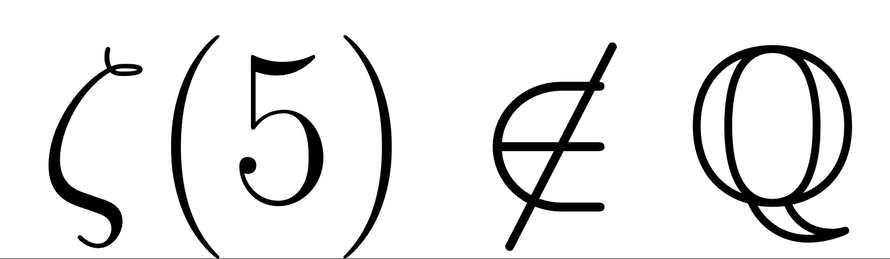
Wow, more progress on the Riemann zeta function! We know in our bones that for all positive integers n,
ζ(n)=1⁻ⁿ + 2⁻ⁿ + 3⁻ⁿ + ⋯
is irrational. But it's only been proved for n even, n = 3, .... and now, it seems, n = 5. This may seem small, but it's huge.
Open quoted post
Open quoted post
Quoting
Big news on irrational numbers!
Aabir Fauzan from Aalto University released a preprint on Zenodo before it hit the arXiv, and a formalisation has been posted by Moritz Firsching. Since the statement is so elementary, the repo is set up to be checked by the stringent anti goal-hacking framework Comparator, and moreover the machinery used is the PNT+ project run by @tao@mathstodon.xyz and Alex Kantorovic, which is high-quality hand-rolled analytic number theory in Lean, I'm fairly confident this is sound.
https://github.com/mo271/zeta5 also has the link to the preprint.

7
0
7
0
Open post
As the view from Moscow becomes increasingly embarrassing, it seems increasingly likely Putin will start a new more desperate phase of his war against Ukraine. Experts expect him to start a quiet mobilization of troops shortly after tomorrow's parliamentary elections. He seems to want 300,000 - 500,000 new soldiers. Despite increasing payments, recruitment has been failing to keep pace with the rising casualties.
We can also expect Putin to step up attacks against Europe. More drones flying into European air space, and more stuff like this:
• On August 4, 2026, a bomb squad at Leipzig/Halle Airport found an explosive-laden drone that had failed to detonate near Ukrainian Antonov cargo aircraft, with a second object reportedly striking a DHL plane.
• Between September 1 and 7, a wave of sabotage hit German power infrastructure: devices were detonated at a Brandenburg substation (Sept 1–2), a suspected attack occurred near Cologne, and 21 homemade devices meant to short-circuit high-voltage lines were found near the Bärwalde and Graustein substations in Saxony (Sept 4–7), with a cut fence found at a Wesel substation around Sept 7.
• Train services across the Netherlands were disrupted by sabotage on September 15th. Long pipes were attached to train tracks in 30 places.
Of course an attack on the Baltics, or something like that, is also an option.
The picture here is the Moscow oil refinery after it was attacked by Ukrainian forces today. It supplies 40% of the city's fuel: https://www.pravda.com.ua/eng/news/2026/09/20/8054274/
8
7
4
0
Open post
Replying to
@nmvdw@mathstodon.xyz - Thanks! One interesting thing about the Russian strategy is that since they deny all involvement in any attack, every attack becomes possibly Russian.
6
5
0
0
Open post
I love this story. I never knew about the original Colonel Sanders. It would be so funny to be eating at Kentucky Fried Chicken, with his picture on the sign, and then see him walk in and angrily complain about the food!
He started his chain in the late 1930s. Making Southern fried chicken in a cast-iron skillet could take half an hour, so he developed a special quick recipe using a pressure cooker. In 1956, a new interstate rerouted customers away from his restaurant. He and his wife packed a pressure cooker, a cooler of raw chicken and his special spice mix into their Oldsmobile and took off.
A few years later he had 600 franchises and a well-developed persona. In 1964, a wealthy Nashville investor and a young lawyer persuaded him to sell them his company and his likeness for $2 million. They soon resold it for over a hundred times that.
He remained with the company to promote the brand. He took the job seriously, making hundreds of appearances and autographing buckets of chicken.
"But as the company grew and changed his recipes, he became increasingly outraged. He sometimes walked into franchises, berated the manager and threw out food he thought was subpar.
“That extra-crispy recipe is nothing in the world but a damn fried dough ball stuck on a chicken,” he told the Louisville Courier-Journal in a 1976 interview, in which he also likened the gravy to wallpaper paste. A local franchisee group sued him, claiming that he had defamed the brand and damaged sales. A court ruled that his comments were protected speech."
From here:
https://archive.is/564B8
47
0
30
1
Open post
Wow! You may have looked through polaroid glasses and seen how the Sun reflecting off water looks different depending on how you turn your head. That's because the electric and magnetic fields in light are able to wave back and forth in different directions, so there are different kinds of light: different 'polarizations'.
Now for the cool part:
In 1971 the physicist Stephen Adler predicted that in extremely strong magnetic fields, the speed of light depends noticeably on its polarization. And now this effect may have been seen near a 'magnetar': a young neutron star that's spinning around and has an extremely strong magnetic field - a hundred million times stronger than any man-made magnet.
You might be shocked, because you know that the speed of light in a vacuum is constant. But an extremely strong magnetic field is far from a vacuum! A magnetar's magnetic field has an energy density that corresponds to a mass density over 10,000 times that of lead. The magnetic field of a magnetar would be lethal even at a distance of 1,000 kilometers - and at a distance of halfway from Earth to the Moon, a magnetar could wipe information from the magnetic stripes of all credit cards on Earth.
https://arxiv.org/abs/2509.19446
https://www.nature.com/articles/s41586-026-10859-z?linkId=63101551
34
2
24
0
Open post
Replying to
@highergeometer@mathstodon.xyz @peterwoit@mathstodon.xyz @mc@mathstodon.xyz - I don't think using AI in math is like using chess programs in a chess competition or steroids in sport, because math IS FUNDAMENTALLY NOT A COMPETITION, it's a quest for understanding. You can try to "win" in math, and you can even find people who will humor you with competitions and prizes, but that's fundamentally nonsense and a perversion of the subject.
AI can be used to deepen understanding or it can be used to avoid understanding.
37
7
8
1
Open post
An article at NikkeiAsia claims that hidden debt at Alphabet, Microsoft, Amazon, Meta and Oracle has shot up to about $1.65 trillion this year, due to huge AI investments.
What's "hidden debt"? Under existing accounting rules, companies don't need to put certain kinds of debt on their balance sheets. It's enough for them to mention it in annotations to their quarterly financial statements. So you have to dig a bit to find it.
This includes money that tech companies borrow for servers and GPUs that haven't yet been delivered yet, and data centers that aren't yet operational. These kinds of hidden debt are ballooning, and experts are getting nervous.
For more details, see
• Kohei Yamada, Five US tech giants' hidden debts soar to $1.65tn on opaque AI funding, NikkeiAsia, July 21, 2026. Archived at https://archive.is/wlbqs
A quote:
"Tech giants are already relying on issuing corporate bonds and new shares because their investment expenditures are exceeding their earnings. Their fundraising from institutional investors on top of that is leading to overheated capital investment.
In a March report, economists at the Bank for International Settlements referred to the mechanism of raising funds from institutional investors without increasing debt on their balance sheets as "shadow borrowing." They expressed concern about the risk of data center projects stalling and AI anxieties spreading throughout the market.
An executive at a Japanese auditing firm said concerns were growing that the tech companies' "actual financial burden is significantly larger than what can be seen on their balance sheets.""
30
0
21
0
Open post
𝐇𝐀𝐑𝐃𝐂𝐎𝐑𝐄 𝐏𝐇𝐘𝐒𝐈𝐂𝐒 𝐏𝐎𝐒𝐓
It's cool how the SU(5) grand unified theory uses a Higgs to break down the symmetry to the Standard Model gauge group. The Standard Model gauge group is really S(U(3) x U(2)): that is, the subgroup of SU(5) that preserves a 3d subspace of ℂ⁵, or equivalently the 2d subspace orthogonal to that. So the desired symmetry breaking amounts to a choice of 2d subspace in ℂ⁵: that is, a point in a certain Grassmannian called Gr(2,5). So we're looking for a field, a 'Higgs field' H taking values in some vector space V, and a potential on V whose space of minima is this Grassmannian!
The usual choice is to take V to be the Lie algebra 𝔰𝔲(5). Multiplying by i, we can think of elements as 5×5 traceless self-adjoint matrices. These matrices are characterized (up to conjugation) by 5 real eigenvalues that sum to zero. So we want a polynomial on V whose minima occur when two of these eigenvalues are +1 and three are -1, or the other way around. This polynomial should be invariant under conjugation so it should be a linear combination of tr(H²), tr(H³), tr(H⁴), etc. In fact it's enough to take
V(H) = a tr(H²) + b tr(H²)² + c tr(H⁴)
Here's how to pick the right a,b,c. tr(H²) is the sum of squares of eigenvalues of H. If we imagine that's fixed, tr(H⁴) will measure how "spread out" the eigenvalues are - so it will be smallest when they're split into two blocks of opposite sign with roughly equal size... that is, two eigenvalues of one sign and three of the other!
It turns out
V(H) = - tr(H²) + tr(H²)² + tr(H⁴)
works, as do lots of other choices. The minima of this in the space of 5×5 traceless self-adjoint matrices should form the Grassmannian Gr(2,5).
21
4
5
0
Open post
Replying to
@pietkuip@mastodon.nl - I carefully avoid Facebook; I have never visited it and have a plugin in my browser to block their cookies, including the Meta Pixel.
But I get what you mean now. I feel that unlike the rest, Zuckerberg is not particularly pro-right-wing: he just wants to make money by stimulating people to use Facebook... and I guess rage works well for him, and he's not restrained by any sense of ethics.
I hope it's clear I'm not trying to excuse him here! He's an asshole.
2
1
0
0
Open post
Replying to on chaos.social
@rtn@chaos.social - in modern math, an 'associative algebra' is a structure where you can add, subtract, and multiply, obeying certain rules - for example, that multiplication is associative. Often we call this simply an 'algebra'.
But a 'Lie algebra' is a different kind of thing, where you can add, subtract, and take the 'bracket' of two elements, obeying some other rules.
And then there are other things, like 'nonassociative algebras'.
All these are examples of 'algebraic structures': sets with some operations obeying some identities. Other examples are 'groups', 'vector spaces', etc.
All these structures are studied in the branch of math called 'abstract algebra', or often just 'algebra'. Yes, this is a different use of the word 'algebra' from the one I mentioned at first! And of course it's different from the kind of 'algebra' we learn as kids - it's much more general.
Wikipedia is not bad at explaining the big picture:
https://en.wikipedia.org/wiki/Algebra
They distinguish between 'abstract algebra' and 'elementary algebra', the kind we learn as kids.
I spend a lot of time studying abstract algebra, because it goes on and on and on and it's very beautiful.
2
1
0
0
Open post
I would go into biology if I could write a paper with a title like "Dynamic instability of Asgard archaeal tubulins". So intense!
Asgard is the dwelling of the gods in Norse mythology.
Archaea are an important group of organisms, going back to the early Earth.
The Asgard archaea are a "kingdom" belonging to the "domain" Archaea, which may have spawned the eukaryotes - organisms like plants and animals and fungi.
Tubulins are proteins that help hold cells together.
This paper argues that tubulins in the Asgard archaea are somewhat unstable and can naturally change to tubulins more like those in plants and animals. This is more evidence that eukaryotes came from Archaea. If this is true, we may eventually stop saying there's a separate domain called Eukarya. There will just be two: Archaea and Bacteria.
All hail Odin!
https://www.science.org/doi/full/10.1126/sciadv.aeh1082
19
0
10
0
Open post
The mascot of New College, in Florida, was the empty set. Technically the Null Set.
But New College was considered "woke" - so a board of trustees dominated by conservatives appointed by Gov. Ron DeSantis voted to replace the Null Set with a new mascot: a tree.
www.nullsets.org/nullsethistory
12
0
8
0
Open post
I don't like algebra anymore.
(1/2)
22
0
6
0
Open post
Brand new old stuff! Tiny ivory figurines of birds made around 40,000 BC, recently found 1.5 meters apart in a cave called Hohle Fels in Germany.
This art is typical of the Early Aurignacian culture - Cro-Magnons known for their fine flint blades, ivory carvings, and some of the earliest cave paintings.
The glaciers had receded in Germany by this time: it was a steppe-tundra with regions of permafrost that supported mammoth, reindeer, horse, and bison. It was a time of rapid climate oscillations - the Dansgaard-Oeschger cycles - swinging between mild and colder weather on timescales of centuries to a couple thousand years.
It's really fun to imagine what it would be like to be an Aurignacian!
For more, read this:
https://uni-tuebingen.de/en/university/news-and-publications/press-releases/press-releases/article/two-bird-figurines-found-in-world-heritage-site-of-hohle-fels-are-declared-find-of-the-year/
You can get it in German or English.
13
0
15
0
Open post
Replying to
@solrize@mathstodon.xyz - theory building involves a lot of choosing good definitions... and ideally all the theorems you want become easy, but it rarely works that way except in category theory, which is like math without friction.
Scholze is a signatory of the Association for Human Mathematics, which calls for mathematicians to avoid AI: https://www.ahmath.org/
2
1
1
0
Open post
Alpöge's new counterexample to the Jacobian conjecture has consequences for quantum mechanics in 3 dimensions! You can find operators obeying the usual position-momentum commutation relations that generate a smaller algebra than the usual ones do. Some observables become unreachable.
Here's the setup: the Weyl algebra W₃ is generated by q₁,q₂,q₃ and p₁,p₂,p₃ obeying [pⱼ,qₖ] = −iℏδⱼₖ, all other commutators zero. Concretely, it consists of polynomial differential operators on ℝ³ - roughly the observables of a quantum particle in 3 dimensions that are polynomial in position and momentum.
In 1968, the famous mathematician Jacques Dixmier conjectured that every endomorphism of W₃ is an automorphism: basically, you can't squoosh the algebra into smaller piece of itself. But the new counterexample to the Jacobian conjecture shows you CAN!
(1/n)
https://en.wikipedia.org/wiki/Weyl_algebra
12
0
10
0
Open post
Replying to
I know how much most of you hate AI, so you'll be disgusted to know that this one was proved with a huge amount of help from various LLMs. But I'm really interested in the future of mathematics, and this is a theorem that actually seems very significant to me. So I had to read the accounts provided by David Turturean:
https://roed314.github.io/gq2/development/account/
and David Roe:
https://roed314.github.io/gq2/development/success/
and Claude Fable 5:
https://roed314.github.io/gq2/development/fable/
I think this material is quite good for explaining how the result was found and later formalized (twice!) in Lean. They provide an estimate of the cost of the project:
https://roed314.github.io/gq2/development/cost/
They also provide an interactive paper:
https://roed314.github.io/gq2/paper/paper.html
where you can choose the amount of detail you want to see. Unfortunately the paper is extremely technical, and it lacks the kind of basic survey of what's going on that would help a nonexpert like me understand the broad outlines!
There's no way I can tell for sure if this stuff is for real. Since I've never tried to understand the absolute Galois groups for p-adics with p ≠ 2, jumping into the 2-adic case is like practicing mountain climbing by going straight for Everest.
(Actually the real Everest is the rational numbers: nobody yet has figured out its absolute Galois group.)
But if I had to guess based just on my mathematical gut feel, I'd guess this stuff is real.
Anyway, let me quote Turturean, since he explains the strange way this theorem was proved.
(2/n)
9
1
3
0
Open post
I heard about OpenAI's large language models breaking out into the internet and hacking into a website to learn the answers to a test they were taking.
But I hadn't known that they were exchanging notes on a message board they created!
A wild story:
https://thezvi.wordpress.com/2026/08/08/what-happened-openai-and-huggingface/
7
0
6
0
Open post
Replying to
@PSL2Z@mathstodon.xyz - cheap AI may not last. These companies will want to make money eventually; they're bleeding billions and hoping to recoup them once we get addicted. Have you seen the figures on how much these companies are losing on each paid subscription now?
I'm hoping good open-source models you can run yourself will kneecap these companies. But they may keep an edge on the most powerful models... the kind that can settle the hardest conjectures. Math departments may wind up paying bills comparable to the cost of running a lab in the experimental sciences.
Good grad students will learn to use AI wisely. Bad ones will try to offload the hard part of writing their theses to AI.
11
1
1
0
Open post
Replying to
David Turturean writes:
"Much of this work done to solve this problem was done by voice. With a lot of the infrastructure already in place from solving other open problems, I used Claude Code as the operational controller and most often gave it procedural instructions by voice. This was partly motivated by the fact that I was trying to solve a lot of problems in parallel, partly motivated by the fact that voice simply allows for more natural intention expressivity, which coding agents can now pick up on. I also used speech-to-text in the ChatGPT conversations while developing the manuscript."
"This was my first sustained attempt to direct a mathematical research process primarily through speech. This entire experience has made me question what true effort in mathematics will look like in the future, now that you can elicit solutions to decades-old research questions in mathematics with your voice: can you one-shot entire PhD theses by just talking about them, thinking about them?"
However, if you read the whole story you'll see it required a lot of work, and an expert in solving math problems using LLMs (David Turturean), and a real expert in Galois theory (David Roe), to bring the research to this point.
(3/n, n = 3)
8
0
1
0
Open post
Replying to
@gregeganSF@mathstodon.xyz - Wow, that's the most amazing thing I've heard for a while! I've never heard any good reason to think this conjecture is true, but I assumed people had looked for counterexamples so hard that any counterexample would have to be much more complicated than this one.
"The Jacobian conjecture proposed that if you have a map F:C^n→C^n with polynomials as the components, and the determinant of the matrix of partial derivatives of F is a non-zero constant, then F will have a polynomial inverse."
I find that this statement, on Wikipedia, sort of weakens the blow. Instead of saying "is a nonzero constant" I would say "everywhere nonzero", since that makes the conjecture sound more general. It's equivalent, but it sounds more impressive.
Talking to myself, I'd actually say "if F: ℂⁿ→ℂⁿ is a polynomial map whose Jacobian is invertible everywhere, F has a polynomial inverse." That clarifies the charm of the conjecture: it's an insane relative of the inverse function theorem, which says that a smooth function whose linearization at a point is invertible must have a smooth inverse in some neighborhood. We change "smooth" to "polynomial", "at a point" to "at every point", and "in some neighborhood" to "everywhere".
Puzzle: Find a smooth F: ℝⁿ→ℝⁿ whose Jacobian is invertible at each point but where F does not have a smooth inverse.
9
2
1
0
Open post
Replying to
@antoinechambertloir@mathstodon.xyz @Colman@mastodon.ie @zanzi@mathstodon.xyz @peterwoit@mathstodon.xyz @mc@mathstodon.xyz - two things I love about math that chess lacks: it's open-ended rather than working within a fixed set of rules (as you note), and it's cooperative rather than competitive. Taken together, these mean that the idiosyncratic visions and deep labors of individual mathematicians compound to build up an ever more fascinating body of thought.
5
1
0
0
Open post
Replying to
@FrohlichMarcel@mathstodon.xyz - check out the alt text! I put a lot of work into alt text.
9
0
0
0
Open post
Replying to
Why do paths through the nth approximation to the Sierpiński triangle correspond to allowed sequences of moves in the n-disc Tower of Hanoi?
Well, suppose you have 3 discs. Draw the allowed states of the Tower of Hanoi puzzle as below. For example, (3,2,1) means "biggest disc on post 1, second biggest on post 2, third biggest on post 3". Draw edges for allowed moves between states. You get the 3rd approximation to the Sierpiński triangle!
I got this picture from an article with more details:
• Alexander Bogomolny, Sierpinski Gasket and Tower of Hanoi, https://www.cut-the-knot.org/triangle/Hanoi.shtml
6
0
2
0
Open post
Replying to
@RGBes@mastodon.social - many professionals, and many professional mathematicians, are easy to sucker because they don't focus on the big picture and the long run - and they don't think hard about the goals of someone handing them a shiny new tool.
5
2
0
0
Open post
Replying to
@marshray@infosec.exchange @petealexharris@mastodon.scot - hmm, now I really want to know why we have that archetype. Given that we have it, it's not so surprising that when we got the ability to make it real, we did. But why were we so interested in all-powerful trickster genies long before we could really create them?
7
2
1
0
Open post
Replying to
Most of this crazy story is on Wikipedia:
"In late August 1965, Brian Epstein had rented a house at 2850 Benedict Canyon Drive[8] in Beverly Hills, California, for the Beatles' six-day respite from their US tour. The large Spanish-style house was hidden within the side of a mountain. Soon their address became widely known and the area was besieged by fans, who blocked roads and tried to scale the steep canyon while others rented helicopters to spy from overhead. The police department detailed a tactical squad of officers to protect the band and the house. The Beatles found it impossible to leave and instead invited guests, including actress Eleanor Bron (their co-star in the film Help!) and folk singer Joan Baez. On 24 August, they played host to Roger McGuinn and David Crosby of the Byrds and actor Peter Fonda.
Having first taken LSD ("acid") in March that year, John Lennon and George Harrison were determined that Paul McCartney and Ringo Starr should join them on their next experience of the drug. [...] While Starr agreed to try the drug, McCartney refused to partake.
As the group passed time in the large sunken tub in the bathroom, Fonda brought up his nearly fatal self-inflicted childhood gunshot accident, writing later that he was trying to comfort Harrison, who was overcome by fear that he might be dying. Fonda said that he knew what it was like to be dead, since he had technically died in the operating theatre. Lennon urged him to drop the subject, saying "Who put all that shit in your head?" and "You're making me feel like I've never been born." Harrison recalls in The Beatles Anthology: "[Fonda] was showing us his bullet wound. He was very uncool."
(2/2)
https://en.wikipedia.org/wiki/She_Said_She_Said
3
0
1
0
Open post
Replying to
@maxpool@mathstodon.xyz - I'm very glad math isn't like that now; like many mathematicians I'm into it because I don't enjoy working with large teams and I'm no good at it - instead, I like pondering things on my own, or with a friend, and coming up with complicated ideas that go against the conventional wisdom. So if math becomes an endeavor for large teams - and it may - some people who who used to become mathematicians may do something else. Or maybe there will still be a niche for eccentric loner mathematicians.
It's not a complete accident that the only person who has won a Millennium prize so far turned down the $1,000,000 and lives in seclusion in St. Petersburg.
3
2
0
0
Open post
RE: https://mathstodon.xyz/@foldworks/116879349561576734
The mathematical skill of those old tilers was astounding.
3
0
4
0
Open post
Replying to
But suppose we measure distance between points in the plane in the usual way. What's the average distance between two points in the Sierpiński triangle with side length 1? I'm getting
0.4226884 ± 0.00004
This is close to 41/(56√3). But is that the answer, or just a coincidence? 🤷♂️
Maybe someone here can compute more decimal places and settle this question!
(3/n)
2
1
0
0
Open post
The exceptional groups E₈, E₇ and E₆ are famous - but in fact we can define Eₙ groups for smaller n too. E₃ is the gauge group of the Standard Model! Some larger ones are gauge groups of famous grand unified theories. I used to think this was cute - but now I think it could be a clue. I'm starting to see how this series of groups is connected to the foundations of quantum physics.
Here's part of the story that remains puzzling to me - it's about things called del Pezzo surfaces.
A del Pezzo surface is a special kind of 2-dimensional complex manifold, so it's a 4d manifold in the usual sense. Any 4d manifolds gives a lattice, called its 2nd cohomology. A del Pezzo surface gives a lattice with a special vector in it called its 'canonical class'. And if we look at all the lattice vectors orthogonal to this, we get a special sort of lattice called an Eₙ lattice! From this there's a way to get the Eₙ group - that's something you have to learn to understand the Eₙ groups.
But what the heck is a del Pezzo surface?
In algebraic geometry you can 'blow up' a surface by removing a point p and sticking in a bunch of new points, one for each direction in which you could approach p. But be careful: we're working with complex numbers, and we count two vectors as giving the same 'direction' if is one is some complex number times the other.
You get a del Pezzo surface if you take the complex projective plane ℂℙ² and blow it up at a bunch of points in 'general position'. That roughly means that they're random, nothing special about them. And here's the shocking part: if you blow up at n points, you get a del Pezzo surface that gives the Eₙ lattice!
What's going on?
https://en.wikipedia.org/wiki/Del_Pezzo_surface
2
0
2
0
Open post
Replying to
But be careful:
By "distance", I mean the length of the shortest path moving inside the Sierpiński triangle, not the usual distance between points in the plane.
Also: we compute the "average" distance using the natural measure on the Sierpiński triangle, not Lebesgue measure.
(2/n)
https://arxiv.org/abs/math/0310109
1
1
0
0
Open post
Replying to
@pietkuip@mastodon.nl @nmvdw@mathstodon.xyz - how would Zuckerberg be involved? The rest are standard suspects when it comes to right-wing populism in Europe.
0
1
0
0
Open post
Replying to
@androcat@toot.cat @floriantfw@mathstodon.xyz - it should clearly be 10⁴⁰, though I haven't checked that number.
0
2
0
0
Open post
Boosted by @gvenema@fairmove.net
The math has been around for decades - but nobody noticed it gives a new framework for quantum mechanics from which the Standard Model gauge group and its representation on one generation of quarks and leptons falls out pretty naturally:
arxiv.org/abs/2607.10833
I will probably explain this in a bit, but I'm still recovering from writing the paper!
0
0
5
0