Elektrine
Log in Register
Paige Chat Timeline Gallery Friends Email Drive DNS Private DNS Domains VPN Kairo Nerve
Remote

Christopher Kyba 🇨🇦🇪🇺

@skyglowberlin@fediscience.org
mastodon 4.6.9
  • Open on fediscience.org

Heisenberg Professor for Nighttime Light Remote Sensing at the Institute of Geography of the Ruhr University Bochum

#RemoteSensing #CitizenScience #LightPollution

0 Followers
0 Following
50 Posts
Joined February 03, 2025
Open post
Christopher Kyba 🇨🇦🇪🇺 @skyglowberlin@fediscience.org
· 3mo ago
Any astronomers looking for a wild new job? I got a message from an ecologist in Belgium today, and he's looking for a postdoc with experience in photometry to work on analysis of all-sky imagery for an experiment on the impact of #LightPollution on birds. This is not a job offer! He would work together with the candidate on an internal university grant. If anyone is interested (PhD in #astronomy or closely related field required), send me a message.
98
7
295
1
Open post
Christopher Kyba 🇨🇦🇪🇺 @skyglowberlin@fediscience.org
· 2mo ago
This is AWESOME! Cast members from different #StarTrek series make the case for reducing #LightPollution and preserving our ability to experience the stars from here on Earth: https://www.youtube.com/watch?v=Hc2zeKd-xf0 #DarkSkyInternational #StarTrek60
53
1
67
1
Open post
Christopher Kyba 🇨🇦🇪🇺 @skyglowberlin@fediscience.org
· 2mo ago
Immigrants completing PhDs in the US and then staying on to become residents is one of the things that has given the US a lead in technology. Spending US money to train PhDs and then telling them to "get the hell out of the country, you're not welcome here" is the US shooting itself in the foot. It took me 6 years to complete my PhD in the US. Would the border guards have let me back in to complete it after the new 4 year deadline? Who knows. For more than a dozen years after I left the US, I always told European academics that they should definitely plan to work or study in the US at some point. Now I tell them they should live and work in another country than the one they were first educated in, but I wouldn't go to the US if I was them. #F1Visa #USPol #ExpatLife #PhD
16
2
10
0
Open post
Christopher Kyba 🇨🇦🇪🇺 @skyglowberlin@fediscience.org
· 2mo ago
Replying to
RE: https://dmv.community/@jcrabapple/116947031276846706 @jcrabapple@dmv.community And if reindeer are exposed to #LightPollution, then their eyes don't get all the way to blue, then end up green! https://pmc.ncbi.nlm.nih.gov/articles/PMC3826237/
Open quoted post
Quoting
jcrabapple
@jcrabapple@dmv.community
🦌 Arctic reindeer are the only mammals whose eyes change color seasonally - gold in summer, deep blue in winter. They physically restructure a nanoscale photonic mirror inside their eyes to match Arctic twilight wavelengths, boosting night vision during months of polar darkness. #science #nature https://royalsocietypublishing.org/doi/10.1098/rspb.2022.1002
Open quoted post
dmv.community

jcrabapple: "🦌 Arctic reindeer are the only mammals whose eyes…" - DMV.Community

14
0
6
0
Open post
Christopher Kyba 🇨🇦🇪🇺 @skyglowberlin@fediscience.org
· 2mo ago
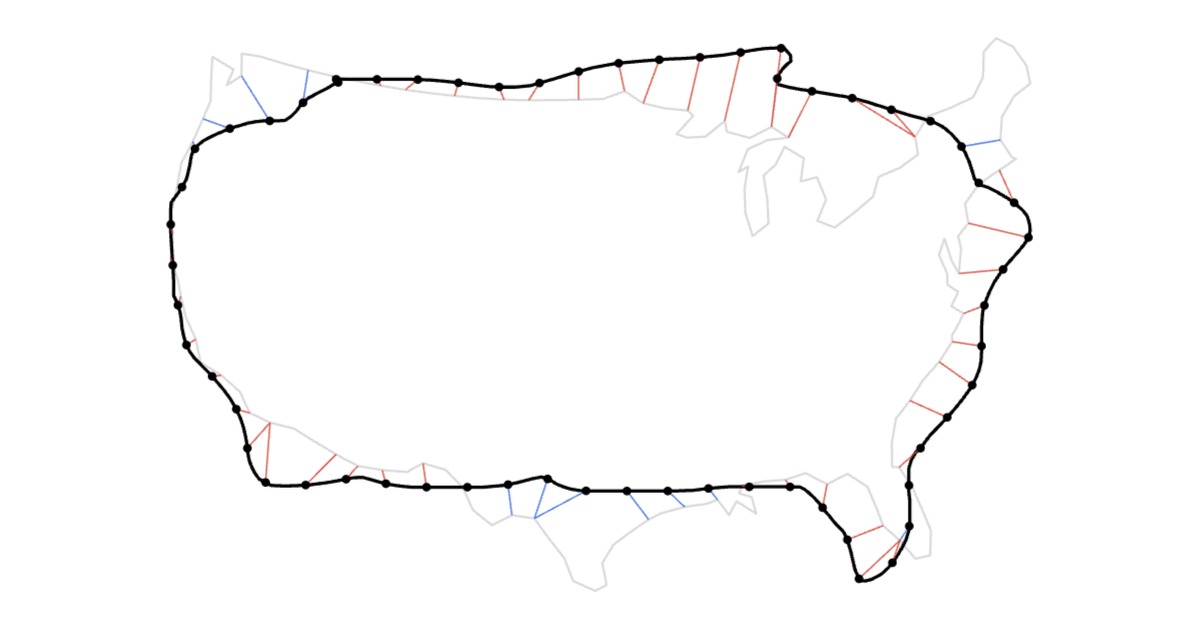
Want to have some fun on the internet? Check how well you can draw countries at https://country-draw.vercel.app
country draw
country draw

country draw

can you draw your country? or any country?

9
0
13
0
Open post
Christopher Kyba 🇨🇦🇪🇺 @skyglowberlin@fediscience.org
· 5mo ago

I was today years old when I learned that scientists from the 17th century had their own form of "preprints" to lay claim to ideas before they got them officially published.

Galileo wrote in a letter to Kepler "Haec immatura a me iam frustra leguntur o.y.", in English "These are now too young to be read by me".

*After* his work was formally published, he explained the anagram to Kepler:

"Cynthiae figuras aemulatur mater amorum" (The mother of love imitates the shape of Cynthia)

By sending the letter, Galileo could prove to Kepler and others that he had observed that Venus (mother of love) had phases like the moon (Cynthia), without giving Kepler a chance to scoop him before his own work was published.

https://en.wikipedia.org/wiki/Phases_of_Venus

#HistoryOfScience #Astronomy #History #PrePrint #AcademicPublishing

en.wikipedia.org
31
0
19
0
Open post
Christopher Kyba 🇨🇦🇪🇺 @skyglowberlin@fediscience.org
· 6mo ago
Replying to
And here's Paris. Out of wealthy countries that aren't in crisis, France stands out for really dramatic reductions in total light emissions. Partly this is due to their light pollution law, and partly it's because so many communities in France now turn off their streetlights late at night when there's no one on the street to see them.
32
15
22
1
Open post
Christopher Kyba 🇨🇦🇪🇺 @skyglowberlin@fediscience.org
· 6mo ago
Replying to
Oh, wait, I forgot to say something important... Remember when I said that the satellite pixels cover half a square kilometer? That really limits our ability to understand exactly what it is that is changing. I'm part of a group that will propose a nighttime light satellite with unprecedented sensitivity to #ESA for consideration as their #EarthExplorer 13 mission. It would allow us to understand the nature of these changes far better (e.g. who exactly is responsible for the changes? Are whole areas changing gradually, or are we seeing the impact of specific buildings or parking lots?) So, please cross your fingers for us, and if you would be interested in using such data, please reach out 😃
17
10
7
0
Open post
Christopher Kyba 🇨🇦🇪🇺 @skyglowberlin@fediscience.org
· 6mo ago
Replying to
It also suggests companies (and countries) that don't fire their programmers are going to mop the floor with the tech giants that have gone all in on "AI". It turns out the people you hired were doing something after all... keeping your code efficient and your company profitable 🤯
15
2
4
0
Open post
Christopher Kyba 🇨🇦🇪🇺 @skyglowberlin@fediscience.org
· 6mo ago
Replying to
You're probably now saying "enough of what you did I want results!" So here's the main finding: yes, Earth is getting brighter on average. But it's certainly not getting brighter everywhere - there are lots of places where light emissions are decreasing! Here's the "gradually changing" areas in Berlin, for example. Within the city, there are places and neighborhoods that are brightening, and others that are darkening!
14
16
5
0
Open post
Christopher Kyba 🇨🇦🇪🇺 @skyglowberlin@fediscience.org
· 6mo ago

If you have some time, this article is worth a read: https://www.theguardian.com/news/2026/mar/26/ai-got-the-blame-for-the-iran-school-bombing-the-truth-is-far-more-worrying

theguardian.com
13
2
11
0
Open post
Christopher Kyba 🇨🇦🇪🇺 @skyglowberlin@fediscience.org
· 6mo ago
Replying to
In 2022, the light emissions (during 1-4 am) in France were only 33% of what they were in 2014!
12
14
1
0
Open post
Christopher Kyba 🇨🇦🇪🇺 @skyglowberlin@fediscience.org
· 6mo ago
Replying to
By the way - you can look at the data yourself! The team from UConn built a viewer that allows you to see abrupt (left) and gradual (right) changes, as for Houston, USA below: https://ee-downloading.projects.earthengine.app/view/alan-change That's what I made the images in the thread with. #RemoteSensing #LightPollution #GIS #GEE
ee-downloading.projects.earthengine.app

ALAN-Change

10
12
3
0
Open post
Christopher Kyba 🇨🇦🇪🇺 @skyglowberlin@fediscience.org
· 6mo ago
Replying to
This is where looking at the daily data (rather than monthly composites) becomes a REALLY BIG DEAL. Nighttime lights data are really noisy. Part of the noise comes about because the satellite can view a scene from different directions. When that happens, it's viewing LITERALLY DIFFERENT LIGHTS, as in the aerial photos here.
10
22
3
0
Open post
Christopher Kyba 🇨🇦🇪🇺 @skyglowberlin@fediscience.org
· 5mo ago

I misread someone's German political post, and initially thought it said "schmerz-rote Koalition" instead of "schwarz-rote Koalition" 😂

7
3
1
0
Open post
Christopher Kyba 🇨🇦🇪🇺 @skyglowberlin@fediscience.org
· 6mo ago
Replying to
You might have seen previous studies (including several from me) showing that lighting on the country and continental scale is increasing. Globally, the rate of increase is about 2% per year. Those studies looked at (very) large areas, and used monthly or annual composite images. The new study analyzes change at the spatial scale of individual pixels (~0.5 square km) and at the temporal scale of individual nights.
9
25
2
0
Open post
Christopher Kyba 🇨🇦🇪🇺 @skyglowberlin@fediscience.org
· 3mo ago
Replying to
@sundogplanets@mastodon.social Thanks for writing that Sam, it's really well done.
3
0
0
0
Open post
Christopher Kyba 🇨🇦🇪🇺 @skyglowberlin@fediscience.org
· 6mo ago
Replying to
Long story short - it's a really cool analysis, it's a very cool paper, and you should read it! I'm very grateful to Tian Li and Zhe Zhu from #UConn and Zhuosen Wang from NASA for involving me and my (former @GFZ) colleague Theres Kuester in the work. And also very grateful to @GFZ, #ESA, and especially @ruhr-uni-bochum.de for making it possible for me to work in this field!
8
11
1
0
Open post
Christopher Kyba 🇨🇦🇪🇺 @skyglowberlin@fediscience.org
· 6mo ago
Replying to
Chinese cities, on the other hand, are brightening incredibly rapidly. The total light emission from China grew by 56% during 2014-2022. (Reminder: we're only measured well after midnight. We don't know what's going on during the early parts of the night.) Almost 30% of the increase in total light emissions for the entire world took place in China.
8
13
2
0
Open post
Christopher Kyba 🇨🇦🇪🇺 @skyglowberlin@fediscience.org
· 4mo ago
Replying to
@ignova@sunny.garden @chartier@toot.cafe Related: if your country manages power sharing successfully, then when controversial decisions are taken, you will often or even usually have preferred something different.
4
0
1
0
Open post
Christopher Kyba 🇨🇦🇪🇺 @skyglowberlin@fediscience.org
· 6mo ago
Replying to
I don't know when the Earth Explorer 13 call will come out, and I don't know when the "Letter of Intent Workshop" is going to be, but I am sure that I'll be showing this slide during in my presentation 😃
6
9
4
0
Open post
Christopher Kyba 🇨🇦🇪🇺 @skyglowberlin@fediscience.org
· 6mo ago
Replying to
For each pixel, the lead author Tian Li from the University of Connecticut fits a trend line (solid line left) and generates a prediction (dotted line left). When something changes, the observations stop agreeing with the prediction (middle). If the change persists for at least 14 consecutive observations, then a break point in the trend is assigned. From that point on, a new model predicts future changes. And so on and so forth (right) for the following years.
6
23
0
0
Open post
Christopher Kyba 🇨🇦🇪🇺 @skyglowberlin@fediscience.org
· 6mo ago
Replying to
That's like... A whole lot of work. A mindbogglingly large amount of work. There were 1.16 million daily (NASA Black Marble) *images*. Now think about how many pixels make up each image... 🤯
6
24
1
0
Open post
Christopher Kyba 🇨🇦🇪🇺 @skyglowberlin@fediscience.org
· 6mo ago
Replying to
For that reason, in the new analysis the data is broken up and fitted separately depending on the viewing zenith angle (angle from straight down). This helps deal with the fact that city centers are typically brightest when viewed from above (and dimmer from the side), while the opposite is true of residential neighborhoods.
6
21
0
0
Open post
Christopher Kyba 🇨🇦🇪🇺 @skyglowberlin@fediscience.org
· 5mo ago
Replying to
@sundogplanets Congratulations Sam!
4
0
0
0
Open post
Christopher Kyba 🇨🇦🇪🇺 @skyglowberlin@fediscience.org
· 5mo ago
Replying to
😂😂😂😂😂😂😂 Hey Search Assist, let me introduce you to this guy named Richard. He thinks you're capable of thinking even though you clearly have no idea what the words you produce mean.
3
1
2
0
Open post
Christopher Kyba 🇨🇦🇪🇺 @skyglowberlin@fediscience.org
· 5mo ago
Replying to
@bleuje@mathstodon.xyz This reminds me of the "topological anomaly" they wanted to use to break Borg brains in Star Trek TNG...
1
0
0
0
Open post
Christopher Kyba 🇨🇦🇪🇺 @skyglowberlin@fediscience.org
· 5mo ago
Replying to
Here's the original
1
0
0
0
Open post
Christopher Kyba 🇨🇦🇪🇺 @skyglowberlin@fediscience.org
· 5mo ago
Replying to
@coreyspowell Do you know whether they reported seeing flashes with their eyes closed while going to sleep? I'm not entirely sure, but I think I've read that this was reported much more frequently from Apollo astronauts than astronauts in LEO, and it was thought to be due to the higher flux of protons outside of Earth's magnetic field. But I can't remember whether that was conclusive or not.
1
0
0
0
Open post
Christopher Kyba 🇨🇦🇪🇺 @skyglowberlin@fediscience.org
· 6mo ago
Replying to
@glasspusher I'm glad you enjoyed the thread 😃
1
3
0
0
Open post
Christopher Kyba 🇨🇦🇪🇺 @skyglowberlin@fediscience.org
· 6mo ago
Replying to
@Szescstopni I wasn't published in the Science special issue on light pollution (although I was a reviewer for one of the articles). Rather, the main point of the slide will be to show that light at night isn't a "niche" or "unimportant" issue.
1
2
0
0
Open post
Christopher Kyba 🇨🇦🇪🇺 @skyglowberlin@fediscience.org
· 6mo ago
Replying to
@biff52 That's the way that people have approached light for centuries, with unfortunate results now that lights are so powerful.
1
1
1
0
Open post
Christopher Kyba 🇨🇦🇪🇺 @skyglowberlin@fediscience.org
· 6mo ago
Replying to
@eldang It has an effect on daytime imagery as well, but it's an extra special giant mess during the night.
1
1
0
0
Open post
Christopher Kyba 🇨🇦🇪🇺 @skyglowberlin@fediscience.org
· 6mo ago
Replying to
@knud @coreyspowell Not in the article, no. But it has to have been reasonably large to make such a large crater. On the other hand, given the relative sizes a once-in-a-century event on the moon should happen about every decade on Earth... So yeah, I wish the story authors had given a bit more context.
1
1
0
0
Open post
Christopher Kyba 🇨🇦🇪🇺 @skyglowberlin@fediscience.org
· 6mo ago
Replying to
@coreyspowell How big would the crater have been if it had hit the Earth instead? The article doesn't say, but I guess presumably nearly the same size?
1
5
0
0
Open post
Christopher Kyba 🇨🇦🇪🇺 @skyglowberlin@fediscience.org
· 5mo ago
Replying to
@GalacticRAVE @PWei888 Ahhh, now I see it, thanks. I'm amazed at how stable the rest of the field is.
0
0
0
0
Open post
Christopher Kyba 🇨🇦🇪🇺 @skyglowberlin@fediscience.org
· 6mo ago
Replying to
@jrp Like "if I was your husband, I'd drink it" (although that wasn't Churchill) or "You can always count on Americans to do the right thing... after they've exhausted all other options" (also not Churchill). As far as I understand the word, short phrases like that are called "witticisms"
0
2
0
0
Open post
Christopher Kyba 🇨🇦🇪🇺 @skyglowberlin@fediscience.org
· 5mo ago
Replying to
[EDIT: I was wrong about it being the same photo posted twice - see below] @PWei888 @GalacticRAVE I downloaded both and did a checksum and they are somehow different, but I cannot see any difference flashing between them with my eyes. I am pretty sure the same photo was accidentally posted twice, because photos through atmosphere will always have some minor changes in brightness and position (at least sub-pixel level).
0
4
0
0
Open post
Christopher Kyba 🇨🇦🇪🇺 @skyglowberlin@fediscience.org
· 4mo ago
Replying to
@cosmos4u@scicomm.xyz Funny
0
0
0
0
Open post
Christopher Kyba 🇨🇦🇪🇺 @skyglowberlin@fediscience.org
· 6mo ago
Replying to
@notsoloud Thank you 😃
0
0
0
0
Open post
Christopher Kyba 🇨🇦🇪🇺 @skyglowberlin@fediscience.org
· 6mo ago
Replying to
@glasspusher Well, because the satellite passes over so late at night, we still don't know yet what the early evening is doing... But you're right that *at least* not *everywhere* is continuously brightening.
0
1
0
0
Open post
Christopher Kyba 🇨🇦🇪🇺 @skyglowberlin@fediscience.org
· 5mo ago
Replying to
@GalacticRAVE I don't see the Supernova?
0
5
0
0
Open post
Christopher Kyba 🇨🇦🇪🇺 @skyglowberlin@fediscience.org
· 6mo ago
Replying to
@Szescstopni Good luck!
0
0
0
0
Open post
Christopher Kyba 🇨🇦🇪🇺 @skyglowberlin@fediscience.org
· 6mo ago
Replying to
@knud @coreyspowell Definitely the ejected material would not go as far, but I don't think the atmosphere would have much affect on a meteor of that size.
0
3
0
0
Open post
Christopher Kyba 🇨🇦🇪🇺 @skyglowberlin@fediscience.org
· 6mo ago
Replying to
@_thegeoff 👍
0
0
0
0
Open post
Christopher Kyba 🇨🇦🇪🇺 @skyglowberlin@fediscience.org
· 5mo ago

Question for academics who have spent time in both Germany and North America: How would you translate "Hausarbeit" into English?

A colleague of mine says that "essay" doesn't work for her, because she sees an essay as always having a strong central thesis, whereas a Hausarbeit does not. (That kind of surprises me, because I pretty much always have a thesis in mind when I write something, even if it isn't explicit. But maybe I'm still learning what a Hausarbeit is...)

0
3
1
0
Back
313k7r1n3
Elektrine

Tor hidden service

elekhj7afj4qnrr4yd3bkzslsyo5jgfxw3orgjkhlcxifueodybyiiad.onion

I2P eepsite

j6b6cyk6gjmepjih7jjadxgxvvf3lzzujljuu2v4biemzpg3naya.b32.i2p

Platform

  • Email
  • Chat
  • Timeline
  • VPN
  • DNS

Company

  • About
  • Contact
  • FAQ
  • Lite (no JS)

Legal

  • Terms of Service
  • Privacy Policy
  • Transparency Report
  • Report Abuse
  • Warrant Canary
  • VPN Policy

Support

  • support@elektrine.com
  • Report Security Issue
Mail client setup IMAP mail.elektrine.com:993 POP3 mail.elektrine.com:995 SMTP mail.elektrine.com:465
© 2026 Elektrine. All rights reserved. Server: 21:56:57 UTC