MikeDunnAuthor
 mastodon 4.6.8
Working Class Historical Fiction from the not so gilded age. Labor History. Social justice. An injury to one is an injury to all!
https://michaeldunnauthor.com
@michaeldunnauthor.bsky.social
https://www.historiumpress.com/michael-dunn
Pronouns: He/him
#Solidarity #Sabotage #GeneralStrike
#HistoricalFiction #WorkingClass #LaborHistory
#WomensRights #antifascism #AntiImperialism #LGBTQIA+ #EndAbleism #TransRightsAreHumanRights #SelfDetermination #ClimateChange
Just think, there are enough vacant homes in the U.S. that every homeless person could have multiple vacation homes, just like the billionaires do... except for the fact that those vacant homes are owned by those billionaires and deliberately kept vacant.
Will nature find a way....to turn us all vegan?
Well, the data is overwhelmingly clear: meat production is one of the largest sources of greenhouse emissions, as well as a major consumer of water and petroleum-based fertilizers (used to fuel the production of their feed).
Consequently, many people are reducing their consumption of meat, or cutting it out entirely, in order to lessen their carbon footprint.
But there is another reason why meat consumption may start to decline, a reason that sounds almost like the plot to a sci-fi or horror movie:
The proliferation of the Lone Star tick, and the alpha-gal syndrome caused by their bite, which causes a deadly allergy to red meat.
The ticks have become so common, so ubiquitous in many cattle ranching regions of the U.S., that some ranchers have had to leave the industry entirely due to tick bites that have made even the mere exposure to cattle and beef a potentially deadly enterprise (e.g., delivering calves involves exposure to blood and bodily fluids that can trigger a deadly alpha-gal reaction in the rancher).
Alpha-gal syndrome can cause anaphylactic shock. It can be triggered by consuming almost any mammalian flesh. Sometimes even from dairy products, or processed foods that have mammalian products in them. If enough ranchers get bit, it could significantly reduce the number of people producing red meat in the U.S. One recent study said that ticks are already costing the livestock industry $13 billion a year.
And there is about to be a massive new hatch-out of Lone Star ticklets, a "larval bomb," which will spread to new victims.
Climate change has made the problem much worse, allowing the ticks to spread into new habitats, affecting greater numbers of herds, ranchers, residents, and tourists. ER visits for tick bites has hit record levels this year. Lone Star ticks
are especially bad in the northeast of the U.S. this year.
And, no, these ticks are not genetically engineered, or spread by Bill Gates, to promote veganism. But maybe the MAGA trolls that like to push this nonsense might eventually open their eyes to the existential threat of climate change and acknowledge that slashing greenhouse gases might actually be necessary for their own survival.
Check out the Lone Star tick tracker to see how bad they are in your neck of the woods: https://lone-star-tick-tracker.vercel.app/
Today in Labor History August 29, 1997: Dancers at Lusty Lady voted to join the Exotic Dancers Alliance, a local of SEIU, winning guaranteed work shifts, pay raises, removal of the one-way mirrors that allowed clients to secretly film them, and protection from arbitrary discipline and firing. They also forced management to end its racist scheduling practice of allowing only one BIPOC dancer on stage at any given time. In 2003, when management threatened to close the club, the workers took it over and ran it as a workers' co-operative, with all dancers earning equal pay, and all decisions made by consensus of the workers, making it the first worker run business in the U.S. sex industry.
For more on this important organizing campaign, read Jenny Worley’s fantastic account in “Neon Girls: A Stripper's Education in Protest and Power.” Also read Leila’s essay about it in Found SF: https://www.foundsf.org/Lusty_Lady_and_Sex_Worker_Power
Image: Exotic dancers carry a banner above a taxi during a funeral procession to symbolize the closure of Lusty Lady strip club in San Francisco. Photo: Stephen Lam, Reuters Pictures (From FoundSF https://www.foundsf.org/Lusty_Lady_and_Sex_Worker_Power)
#workingclass #LaborHistory #sexworkers #sexworkiswork #exoticdancing #union #lustylady #sanfrancisco
Today in Labor History August 29, 1914: the Macaroni Riots began in Providence Rhode Island, in response to food inflation and price gouging, particularly the local price of pasta, which hit the Italian American community particularly hard, and in response to years of racism and prejudice against them, particularly by the police. The riots of August 29-30 and September 7 caused the equivalent of $643,000 worth of damage (in today’s dollars). Dozens were injured, including 14 by gunshot, and over 50 were arrested. Ultimately, socialist activists succeeded in negotiating a reduction in food prices.
In the years leading up to the riots, many local Italians had joined activist organizations to provide some level of defense and resistance to their oppression, including socialist, anarchist, and communist organizations, as well as the IWW. On September 16, 1912, there was a 2,000-person parade in support of labor organizers who had been arrested during the recent Lawrence textile strike, including Italian IWW organizers Joseph Ettor and Arturo Giovannitti. Police violently attacked marchers, which only increased residents’ mistrust of the police. IWW members also helped organize of the protests of August 29-30 and September 7.
Image: Police patrolling the Federal Hill neighborhood of Providence on August 31, 1914.
#workingclass #LaborHistory #racism #prejudice #riots #protest #socialism #anarchism #IWW #demonstrations #inflation #pricegouging #profiteering #police #policebrutality
Expert Warns U.S. Grid Could Face an 18-Month Blackout Scenario.
Nineteen minutes. That's how long gunmen needed in 2013 to disable 17 giant transformers at PG&E's power plant offline near San Jose — firing roughly 120 shots and targeting cooling systems before disappearing into the night.
Utility workers spent 27 days restoring that single substation. Former Federal Energy Regulatory Commission chair Jon Wellinghoff later ran the numbers and arrived at a scenario that stops most readers cold. Nine such attacks, coordinated across the U.S. grid's three interconnections, could black out the entire country. His estimated recovery window, as reported by the New York Times Magazine: eighteen months or more.
https://www.yahoo.com/news/us/articles/expert-warns-u-grid-could-185554431.html
F*ck Fl*ck & the horse they rode in on
Flock Camera CEO Asks Americans to “Compromise” on Privacy
https://www.yahoo.com/news/us/articles/flock-camera-ceo-asks-americans-132811636.html
Today in Labor History August 29, 1970: LAPD brutally attacked 10,000 Chicano antiwar demonstrators, killing three, including journalist Ruben Salazar. The attack led to a week of rioting. Salazar was portrayed under the name "Roland Zanzibar" in Oscar Zeta Acosta's 1973 novel “The Revolt of the Cockroach People.” Oscar Zeta Acosta, himself, was portrayed in Hunter S. Thompson’s “Fear and Loathing in Las Vegas,” as his “Samoan attorney.” Salazar wrote for the L.A. Times and was the first mainstream journalist to cover the Chicano community. He covered the 1965 U.S. occupation of the Dominican Republican, as well as the 1968 Tlatelolco Massacre in Mexico City. He often wrote critically about how the local L.A. government treated Chicano people, particularly during and after the school walkouts.
#workingclass #LaborHistory #chicano #antiwar #rubensalazar #students #protest #losangeles #tlatelolco #mexicocity #massacre #vietnam #journalism #books #novel #writer #author #fiction @bookstadon@a.gup.pe
Anything they didn't like used to be called communism.
Still is. They've called Nancy Pelosi a communist. Gavin Newsom. Teachers. Union organizers. LGBTQ activists.
But if they can call us all terrorists too, it makes it much easier to justify terrorizing communities, activists, and organizers, jailing them, deporting them, and/or killing them, as they're doing today. As they did under COINTELLPRO. During the McCarthy and Palmer Red Scares.
And this isn't really new. They called the Irish miners in Pennsylvania Molly Maguire terrorists back in the 1870s. The first English language use of the word "terrorist" was most likely during the French Revolution, when they called the Jacobins terrorists. In the 1800s, anarchists, communists, labor leaders, those fighting for national sovereignty were all dubbed terrorists.
Today in Labor History August 27, 1934: 7,000 Filipino lettuce cutters and mainly white packing shed workers went on strike against the powerful Salinas Valley growers and shippers, demanding union recognition & improved wages and working conditions. Many of the white workers were Dust Bowl refugees. Most of the Filipino workers had immigrated as U.S. nationals, after the U.S. took over the Philippines, in the wake of the Spanish-American and Filipino-American Wars, the latter of which included a genocide in which a quarter of a million Filipino civilians died of famine and disease. There was rampant persecution of Filipino workers in California. Laws prohibited Filipino women from immigrating to the U.S. and prevented Filipino men from consorting with Anglo women. The American Federation of Labor initially refused to recognize or support the Filipino Labor Union (FLU). Scabs and vigilantes viciously beat Filipino strikers and chased 800 out of the Salinas Valley at gunpoint. They also burned down a labor camp. Police arrested picketers and union leaders for violation of the Criminal Syndicalism laws (laws that prohibited advocating any change to the economic and political status quo). The FLU ultimately won a raise and union recognition. However, discrimination and racist violence against Filipinos continued.
Steinbeck wrote about the plight of Filipino migrant farmworkers in the Salinas Valley in a 1936 series of articles for the San Francisco News called “The Harvest of Gypsies,” which formed part of the basis for his novel, Grapes of Wrath. He said they were among the most discriminated, and best organized, ethnic group in the U.S. Their organizing, he went on to say, brought on terrorism against them by vigilantes and the government.
Larry Itliong did some of his earliest organizing during this strike, which would inspire the formation of the Filipino Labor Union. He would go on to lead several other farmworkers’ strikes, including the Delano Grape Strike in 1865, together with Cesar Chavez’s National Farm Workers Association. They would go on to cofound the United Farm Workers. You can read my article “Larry Itliong and the Filipino Roots of the United Farm Workers Movement” here: https://michaeldunnauthor.com/2026/03/25/larry-itliong-and-the-filipino-roots-of-the-united-farm-workers-movement/
#workingclass #LaborHistory #union #strike #filipino #salinas #farmworkers #racism #immigration #colonialism #police #policebrutality #vigilantes #dustbowl #steinbeck #journalism #books #author #writer #fiction @bookstadon@a.gup.pe
Today in Labor History August 27, 1917: The IWW was made illegal in Australia and their membership rolls were given to employers, leading to widespread repression. Despite all this, the IWW helped lead the General Strike of 1917.
#WorkingClass #LaborHistory #IWW #australia #ww1 #union #GeneralStrike
A federal judge cited Dolly Parton’s bosom as he blocked Texas’ drag ban, proving that even in death, the LGBTQ+ icon can still defend the rights of queens.
The judge suggested that a strict reading of Texas’ Senate Bill 12 could have been used to kick even the Queen of Country off a Texas stage.
https://www.advocate.com/politics/states/judge-blocks-texas-drag-ban
Enoch Kent - The Murder Of Ginger Goodwin
Today in Labor History July 31, 1970: British sailors were given their very last officially sanctioned ration of rum. Black Tot Day took away from sailors one of the very few remaining benefits of the job. The lash has never been formally abolished. And sodomy was never officially permitted…. But it no doubt persists.
#workingclass #LaborHistory #sailor #british #rum #sodomy #lash #workplacesafety #pogues #lgbtq
Today in Writing History August 1, 1819: Herman Melville was born. He was one of the greatest American writers of all time. The death of his merchant father in 1832 left his family destitute. So, he became a merchant seaman, having many of the same brutal and exploitative experiences other seamen had in those days. Rum, sodomy and the lash! Consequently, he jumped ship in the Marquesas and lived with the local indigenous people. His first two books, “Typee” and “Omoo,” were about these experiences. His two greatest stories of all time, “Billy Budd,” and “Moby Dick,” were also influenced by his experiences as a seaman.
Melville also explored a variety of sexual themes in his writing, including homosexuality, celibacy, incest and impotence. Though his most famous works involve nearly all-male casts, he does explore the exploitation of women in “The Tartarus of Maids.” Homosexuality, in particular, was a common theme in many of his stories (e.g., Typee, Omoo, Redburn, Moby Dick, Billy Budd). Indeed, it is commonly believed that he was either gay or bisexual. He had a wife and kids, as well as long, romantic relationship with Nathaniel Hawthorne.
#writer #author #melville #fiction #sailor #lgbtq #books #writer #author #nover #fiction #boats #sailing #indigenous @bookstadon@a.gup.pe
Looking for a new favorite mineral?
How ‘bout Cummingtonite?
It’s fun and satisfying and helps relieve stress….
And it’s a pretty good-looking mineral, too
For more funny names of chemicals see this link:
https://www.chm.bris.ac.uk/sillymolecules/sillymols.htm
Today in Labor History July 31, 1968: Students protested the Olympics in Mexico City. They occupied schools and began a General Strike. Cops violently attacked them. It was part of a broader movement consisting of students, workers, and leftists, protesting state repression against unions and student activists. One of their slogans was: ¡No queremos olimpiadas, queremos revolución! ("We don't want Olympics, we want revolution!" On August 27, over 500,000 people marched in protest. The violence culminated October 2, literally days before the Olympics were to begin, with the Tlatelolco massacre, when the government sent 5,000 soldiers and 200 tankettes, to the Plaza de las Tres Culturas. During that massacre, the cops slaughtered 350-400 people, using snipers. They arrested and tortured over 1,300.
Alejandro Jodorowsky dramatized the massacre in his surreal film, “The Holy Mountain” (1973). In it, he showed birds, fruits, vegetables and other things falling and being ripped out of the wounds of the dying students. The late author, Roberto Bolaño, recounted the massacre in his novel “Amulet” (1999). He also retells the story in his novel, “The Savage Detectives.”
It was at the end of the 1968 Mexico City Olympics that Tommie Smith (gold) and John Carlos (bronze) held up their black-gloved fists during the medal. Australian Peter Norman (silver) wore an American "human rights" badge as a gesture of solidarity with them. The IOC punished them by banning them for life from the Olympics. Věra Čáslavská, who won 4 gold medals, protested the Soviet invasion of her country, Czechoslovakia, by looking down and away during the Soviet national anthem. She was not punished by the AOC, but her own government forced her into retirement and denied her the right to travel, work and attend sporting events.
#workingclass #LaborHistory #students #olympics #mexico #protest #massacre #tlatelolco #generalstrike #police #policebrutality #policemurder #robertobolaño #film #author #books #fiction #novel #writer @bookstadon@a.gup.pe
Today in Labor History August 29, 1786: Shays' Rebellion began in Massachusetts. It was an armed uprising of farmers and tradesmen in response to a debt crisis among the citizenry and in opposition to the state government's increased efforts to collect taxes both on individuals and their trades. And it was an attempt to overthrow the government. Revolutionary War veteran Daniel Shays led four thousand rebels (called Shaysites) in a protest against economic and civil rights injustices. They marched on the federal Armory in Springfield an unsuccessful attempt to seize its weaponry and overthrow the government. They also shut down the courts, seeking relief from the burdensome judicial processes that resulted in the loss of their land and possessions. Sam Adams accused the rioters of being foreign subversives and suspended habeas corpus so that he could jail them without trial. He also proposed the death penalty for insurrectionists. The Federal Government, still young and weak, was unable to finance sufficient troops to put down the rebellion, due, in part, to the rules of the Articles of Confederation. Some of the rebels sought assistance from the Mohawks, led by Joseph Brandt. Consequently, it was the Massachusetts State Militia that ultimately quashed the uprising, over 5 months later. Despite the duration and violence of the uprising, only 9 people died. The majority of those who confessed, or who were sentenced, ultimately had their convictions overturned, or received pardons, including Shays. The conflict helped solidify support for creating the new Constitution, led by the Federalists, who argued for a stronger central government. Thomas Jefferson, in contrast, who was in Europe at the time, refused to be alarmed by the rebellion and even went on to say that "The tree of liberty must be refreshed from time to time with the blood of patriots and tyrants. It is its natural manure."
#workingclass #LaborHistory #shays #rebellion #uprising #massachusetts #insurrection #constitution #indigenous #mohawk
Today in Labor History August 1, 1917: IWW organizer Frank Little was lynched in Butte, Montana. Little was a Cherokee miner and member of the IWW. He went to Butte during the Speculator Mine strike to help organize the miners. Little had previously helped organize oil workers, timber workers and migrant farm workers in California. He had participated in free speech fights in Missoula, Spokane and Fresno, and helped pioneer many of the passive resistance techniques later used by the Civil Rights movement. He was also an anti-war activist, calling U.S. soldiers “Uncle Sam’s scabs in uniforms.” On August 1, 1917, vigilantes broke into the boarding house where he was staying. They dragged him through the streets while tied to the back of a car and then hanged him from a railroad trestle.
Author Dashiell Hammett had been working in Butte at the time as a strike breaker for the Pinkerton Detective Agency. They had tried to get him to murder Little, offering him $5,000, but he refused. He later wrote about the experience in his novel, “Red Harvest.” It supposedly haunted him throughout his life that anyone would think he would do such a thing. He was also investigated by the House Unamerican Activities Committee (HUAC) because of his ties to socialism.
You can read my complete biography of Little here: https://michaeldunnauthor.com/2024/04/05/frank-little/
You can read my complete article on the Pinkertons here: https://michaeldunnauthor.com/2024/04/04/union-busting-by-the-pinkertons/
You can read my bio of Dashiell Hammett here: https://michaeldunnauthor.com/2024/04/05/dashiell-hammett/
#workingclass #LaborHistory #IWW #union #strike #racism #indigenous #immigration #mining #freespeech #civildisobedience #civilrights #antiwar #author #books #fiction #writer #novel @bookstadon@a.gup.pe
Today in Labor History August 1, 1921: Sheriff Sid Hatfield and Ed Chambers were murdered by Baldwin-Felts private cops. They did it in retaliation for Hatfield’s support of the miners in the Matewan labor battle in 1920, when two Felts family thugs were killed by Hatfield and his deputies. Sheriff Hatfield had sided with the coal miners during their strike. The private cops executed Hatfield and Chambers on the Welch County courthouse steps in front of their wives. This led to the Battle of Blair Mountain, where 20,000 coal miners marched to the anti-union stronghold Logan County to overthrow Sheriff Dan Chaffin, the coal company tyrant who murdered miners with impunity. The Battle of Blair Mountain started in September 1921. The armed miners battled 3,000 police, private cops and vigilantes, who were backed by the coal bosses. It was the largest labor uprising in U.S. history, and the largest armed insurrection since the Civil War. The president of the U.S. eventually sent in 27,000 national guards. Over 1 million rounds were fired. Up to 100 miners were killed, along with 10-30 Baldwin-Felts detectives and 3 national guards. They even dropped bombs on the miners from planes, the second time in history that the U.S. bombed its own citizens (the first being the pogrom against black residents of Tulsa, earlier that same year).
Several novels portray the Battle of Blair Mountain, including Storming Heaven, by Denise Giardina, (1987), Blair Mountain, by Jonathan Lynn (2006), and Carla Rising, by Topper Sherwood (2015). And one of my favorite films of all time, “Matewan,” by John Sayles (1987), portrays the Matewan Massacre and the strike leading up to it. The film has a fantastic soundtrack of Appalachian music from the period. And the great West Virginia bluegrass singer, Hazel Dickens, sings the title track, "Fire in the Hole." She also appears in the film as a member of the Freewill Baptist Church.
You can read my complete article on the Battle of Blair Mountain, and Matewan, here: https://michaeldunnauthor.com/2024/04/14/the-battle-of-blair-mountain/
#workingclass #LaborHistory #mining #westvirginia #strike #union #police #vigilantes #uprising #racism #riots #film #novel #books @bookstadon@a.gup.pe
Today in History July 31, 1703: The authorities placed write Daniel Defoe in a pillory for the crime of seditious libel. They did it because he published a politically satirical pamphlet. Instead of stones, people pelted him with flowers. Defoe’s most famous book, “Robinson Crusoe,” (1719) has been translated more than any other book in history, other than the Bible. He also wrote “Moll Flanders,” and “A Journal of a Plague Year.” In 1702, William III died. His successor, Queen Anne, immediately went on the offensive against nonconformists. Defoe was a natural target because of his pamphlets and political writings. She arrested him principally for his 1702 pamphlet, “The Shortest-Way with the Dissenters. Or, Proposals for the Establishment of the Church.” In this tract, he argued, satirically, for their extermination. He also ruthlessly satirized both high church Tories and those Dissenters who hypocritically practiced "occasional conformity."
#satire #writer #books #fiction #FreeSpeech #novel #author #religion #defoe #censorship @bookstadon
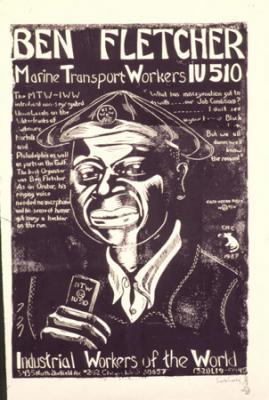
Today in Labor History August 29, 1968: Chicago cops brutally assaulted demonstrators, reporters & bystanders at the Democratic national convention.
#workingclass #LaborHistory #chicago #Democrat #protest #demonstration #police #policebrutality #dnc
Today in Labor History August 27, 1798: An army of 2,000 French troops and United Irishmen, led by Wolfe Tone, routed a combined force of 6,000 British and Protestant loyalist soldiers in the Battle of Castlebar, during the Irish Rebellion of 1798. Wolfe Tone’s Society of United Irishmen formed in the wake of the French Revolution in order to win “equal representation in government for all people,” emancipation of Catholics and an independent Ireland. The organization was composed of both Protestants and Catholics who vowed to make common cause in their struggle. They organized primarily among the working class and tenant farmers. The Irish Rebellion lasted from late 5/24/1798-10/12/1798. Up 50,000 Irish rebels and civilians died in the uprising, along with up to 2,000 loyalist troops.
#workingclass #LaborHistory #ireland #irish #rebellion #unitedirishmen #wolfetone #catholic #frenchrevolution #independence
Today in Labor History August 27, 1942: Germans and Ukrainian Auxiliary Police began the Sarny Massacre in Nazi-occupied Poland (now part of Ukraine). They killed 14,000-18,000 people over 2 days, mostly Jews from Sarny and neighboring towns. At least 100 Roma were also killed. Prior to the massacre, Sarny had a Jewish population of 5-7,000. Soviet forces which had occupied the town since 1939, retreated after the Nazi assault on the USSR in 1941. However, Ukrainian nationalists remained, hoping that their alliance with the Nazis would help them create an independent Ukraine.
#workingclass #LaborHistory #holocaust #ukraine #nazis #worldwartwo #poland #jewish #antisemitism #massacre #nationalism #genocide
Why isn't this more in news?
Ebola outbreak in Democratic Republic of Congo (DRC) had its highest weekly death toll last week, with more than 300 new deaths.
The outbreak is now the fastest-growing in history, with 7x more deaths than the 2014-2016 West African outbreak in its first three months. The 2014-2016 outbreak ended with >11,000 deaths, by far the most ever, and incl many infections in Europe and the U.S. (from aid workers). This current outbreak is on track to shatter that number of deaths.
Why so fast-growing?
Why still so out of control?
For one, Trump's gutting of USAID and withdrawal from the WHO drastically cut funding and personnel for Ebola and Public Health monitoring, esp in Africa. Consequently, news of the outbreak didn't even come out until weeks after it had already exploded and spread.
And unlike the 2014-2016 strain, for which we now have a vaccine, there is no vaccine for the current Bundibugyo strain.
https://www.cidrap.umn.edu/ebola/dr-congo-suffers-deadliest-week-its-ebola-outbreak
Today in Labor History August 1, 1938: Police opened fire on 200 unarmed trade unionists protesting the unloading of a ship in Hilo Harbor, on the Big Island of Hawaii, in what became known as "the Hilo Massacre." The protest was in support of striking waterfront workers. 50 workers were injured. Police also used tear gas and bayonets. The workers came from numerous ethnic backgrounds, including Japanese, Chinese, Native Hawaiian, Luso (Portuguese) and Filipino. They belonged to several unions, including the ILWU. They were fighting for equal pay to dockers on the U.S. west coast and for a closed, union shop. Harry Kamoku (depicted in the original woodblock poster shown in this post) was the primary organizer and leader of the strike, as well as a member of Hawaii’s first union to be legally recognized. He was a Chinese-Hawaiian, a longshoreman, born in Hilo.
#workingclass #LaborHistory #union #strike #hilo #hawaii #police #massacre #ilwu
Today in Labor History August 1, 1842: The Lombard Street riot, a three-day race riot, occurred in Philadelphia, Pennsylvania. It was the last riot in a 13-year period of violent racist attacks in the city. In the early 19th century, large numbers of freed and fugitive slaves immigrated to Philadelphia. During that time, the city's black population grew over 50%. There were also growing numbers of Irish immigrants who were also subjected to racism and exclusion. Abd there was a great deal of competition between marginalized groups for jobs and economic survival, which contributed to these periodic outbreaks of racial, ethnic, and religious violence occurred among Irish Catholics, German Protestants, blacks, and sometimes even pacifist Quakers.
On the morning of August 1, 1842, the black Young Men's Vigilant Association held a parade of over 1,000 people on Philadelphia's Lombard Street. They were commemorating the eighth anniversary of the end of slavery in the British West Indies. An Irish Catholic mob attacked them, setting fires and attacking firefighters and police. The cops arrested several of the victims, but none of the perpetrators. Over the course of three days, rioters looted and burned the Second African American Presbyterian Church, the abolitionist Smith's Hall, and many homes and public buildings. Eventually, they called in the militia to restore order.
#workingclass #LaborHistory #racism #riots #philadelphia #slavery #irish #immigration #catholic #BlackMastodon