#os
36 posts · Last used 8d
Google、ChromeOSを2034年に廃止へ。既定方針ながらおおっぴらに告知しない理由とは?【やじうまWatch】
https://internet.watch.impress.co.jp/docs/yajiuma/2143988.html
#internet_watch_impress #サービス_ソフト #ソフトウェア #OS #トピック #業界動向 #サポート終了 #ネットの話題
Boosted by @oxy@social.bsdlab.au
I was reading through the #OpenBSD documentation and ran into a small but revealing detail: in OpenBSD 5.6, released in 2014, the project didn’t merely disable Bluetooth by default it removed the Bluetooth subsystem altogether.
The official release page simply lists “bluetooth” among the utilities removed from the base system, while the 5.6 changelog gives the blunt explanation: “bluetooth(4) support removed (code did not work properly anyway).”
What I find interesting is that this was not presented as a grand statement that Bluetooth itself was inherently unacceptable or impossible to secure.
OpenBSD had carried Bluetooth support before: its historical changelog shows that parts of the #NetBSD Bluetooth stack were imported and that Bluetooth drivers were later added to the generic kernel configuration, though initially not enabled. There was even a driver, ubt(4), for #USB #Bluetooth #adapters in OpenBSD 5.5.
So, the practical reason OpenBSD dropped it in 5.6 was much simpler: the code was not working properly, which strongly suggests it had become difficult to maintain and could not meet the project’s expectations for reliability and code quality.
Rather than leaving behind a feature that existed mostly on paper, behaved unpredictably, or accumulated unreviewed complexity, the developers chose to remove it.
In many systems, keeping a feature can feel safer because users may rely on it someday. OpenBSD often takes the opposite view: unsupported or broken code is not really a feature it is maintenance debt, potential attack surface, and a promise the project cannot honestly keep. Removing it makes the system smaller, easier to audit, and clearer about what actually works.
My takeaway from reading this is that OpenBSD 5.6 did not abandon Bluetooth because of a single dramatic vulnerability or because wireless hardware was categorically forbidden.
It removed Bluetooth because the implementation was not in a state the project considered worth carrying forward. It is one of those deceptively small release-note lines that reveals a bigger principle: for OpenBSD, a feature has to earn its place through working, maintainable code not merely through demand or familiarity.
#openbsd #os #adapter #bluetooth


A great article by Gary Kildall about CP/M in Byte Magazine Volume 06 Number 06. June 1981. (p. 217)
Operating Systems
https://archive.org/details/byte-magazine-1981-06/page/n217/mode/1up
#computers #computing #system #cpm #os #byte #magazine #journal #reading #readers #read #mustread #retrocomputing #retrocomputers #retro #vintage #press #tech #plm #pli #cpm86 #mpm #garykildall
Inside PH4NTXM: #31 Firewall Supervision
A firewall can be correct at boot and different five minutes later.
PH4NTXM's normal-mode firewall guard polls the active ruleset every two seconds and compares its fingerprint with the expected state. Source rules are integrity-checked and syntax-checked before application, including the required NFQUEUE arrangement and disabled bypass behavior.
A detected mismatch removes readiness and activates emergency Lockdown before restoration. Readiness returns after successful verification. This is ongoing, periodic supervision of the expected policy, giving Boot Pilot and Health a current protection signal instead of a one-time startup assumption.
#ph4ntxm #linux #debian #os #live #privacy #security #opsec #infosec #research #tech #technology
Inside PH4NTXM: #29 System Ηardening
Protection services need boundaries of their own.
PH4NTXM combines selected kernel restrictions with component-specific systemd controls. The native packet worker, for example, uses a restricted capability set, protected system paths, limited address families, disabled core dumps, and a watchdog.
The configuration constrains what individual services can access and exposes failures through their startup or runtime checks. The live operator still has passwordless sudo, so administrative access remains a trust boundary. Hardening reduces available interfaces within that model. Ιt does not survive a fully compromised kernel by assumption.
#ph4ntxm #linux #debian #os #live #privacy #security #opsec #infosec #research #tech #technology
Inside PH4NTXM: #27 Network Drift
Packet timing can change throughout a session.
PH4NTXM's Network Drift uses netem to vary delay, jitter, and loss on qualifying Linux/Windows default-route interfaces. Profiles update every 20–59 seconds, with separate caps for wireless jitter and loss. Small duplication and reordering settings are also applied.
Recognized tunnel, container, bridge, loopback, and ghost interfaces are skipped. This feature deliberately changes network behavior, so latency and throughput tradeoffs are real. Lonewolf does not apply this local shaping. Ιts network path follows Tor.
#ph4ntxm #linux #debian #os #live #privacy #security #opsec #infosec #research #tech #technology
Inside PH4NTXM: #20 Display Persona
Resolution, refresh rate, and pixel ratio form a profile together.
PH4NTXM generates nominal display metadata from the selected hardware and GPU class. Laptop, desktop, gaming, and supported Apple personas receive bounded combinations, including connector identity and optional secondary-display metadata where applicable.
The completed screen environment becomes input for the viewport generator and participating reporting components. Lone Wolf derives its own display state. These are managed persona values. Publishing display metadata does not physically change the monitor attached to the machine.
#ph4ntxm #linux #debian #os #live #privacy #security #opsec #infosec #research #tech #technology
Inside PH4NTXM: #18 Protected CPU Reporting
Different system commands should not disagree about the same session.
PH4NTXM builds CPU model, feature, and topology information from the generated capability profile. It installs selected read-only cpuinfo and CPU sysfs views, while protected lscpu, nproc, and free commands expose corresponding session values.
Unsupported reporting options return an explicit error instead of silently promising coverage they do not provide. This gives the managed reporting paths a consistent view, with a defined boundary around the interfaces PH4NTXM actually controls.
#ph4ntxm #linux #debian #os #live #privacy #security #opsec #infosec #research #tech #technology
Apologies for the constant rebuilds and refactoring on PH4NTXM lately.
Perfectionism is a curse, and I just can't let it go. Appreciate your patience while I'm fine-tuning the beast.
If you have any questions, about it feel free to ask them, I will reply and respect all of them.
As well some people keep on asking me about the commit date, why it's "35 years ago". As of this one, I'll let you search the exact date of the commit, and tell me what you think it is!
#ph4ntxm #linux #debian #os #live #privacy #security #opsec #infosec #research #tech #technology
Inside PH4NTXM: #11 Authenticated DNS-over-TLS
DNS deserves an explicit transport policy.
In Linux and Windows modes, PH4NTXM points local resolution at Unbound and configures authenticated DNS-over-TLS forwarding. TLS authentication uses provider names and the system CA bundle, with encrypted forwarding required and no plaintext upstream fallback.
The configured upstream sets follow the selected mode. Unbound also uses memory caching and conservative resolver settings, while a watchdog checks local resolution and requests a restart when the required conditions indicate a failure. Resolver availability and transport policy are both part of the design.
#ph4ntxm #linux #debian #os #live #privacy #security #opsec #infosec #research #tech #technology
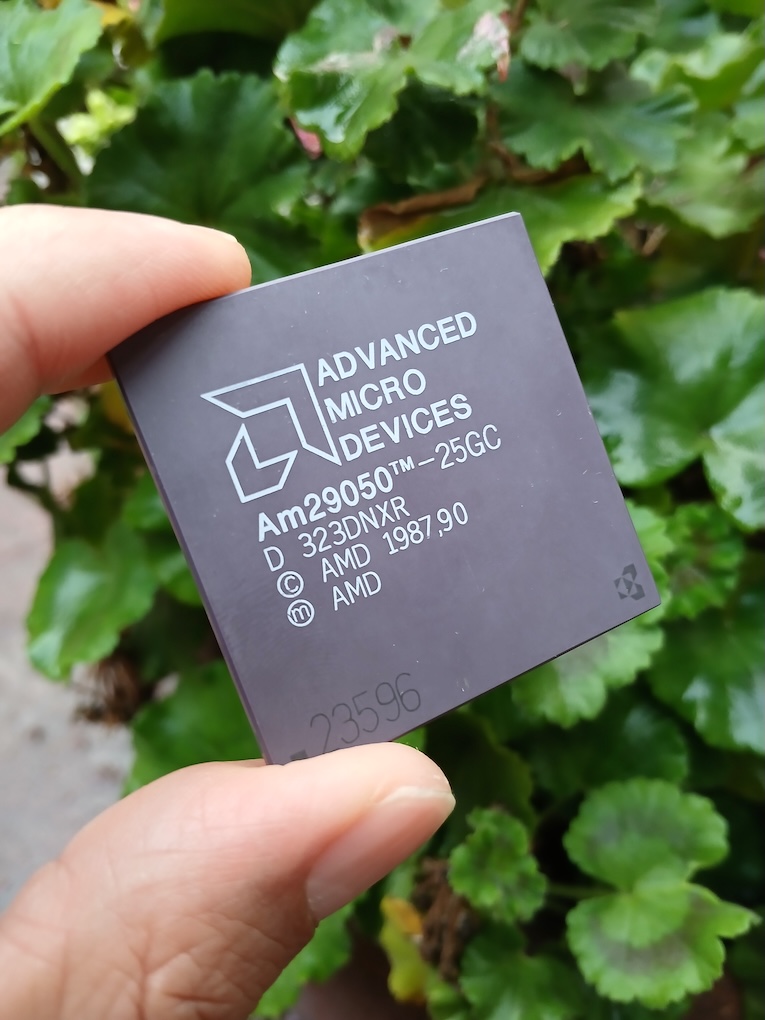
My Am29000 Javascript emulator now can run my 1999 operating system, including the web browser. However, because Javascript security restrictions, it cannot access Internet. #retro #amd #developer #javascript #os https://nanochess.org/am29000_emulator.html
Another small improvement to PH4NTXM.
The Nuke Kernel now allocates available RAM and zero-fills allocated memory before powering off.
The goal has never been to add features for the sake of features. It's to make every session end as cleanly as possible while keeping the implementation simple and reliable.
Small changes. Big impact.
Thank you.
#ph4ntxm #linux #debian #os #live #privacy #security #opsec #infosec #research #tech #technology
シャープ「AQUOS wish6」発表、120Hz対応大画面や迷惑電話対策AI搭載、まずはソフトバンクの法人向け
https://k-tai.watch.impress.co.jp/docs/news/2130637.html
#ktai_watch_impress #OS #Android #AQUOS #キャリア #ソフトバンク #法人
Update... Update!
PH4NTXM includes now an overall ph4ntxm-health cli, so you can check your identity and more, including score.
Almost every important spoofed value is on your screen so you can verify at any mean time that everything is safe and as expected.
Thank you!
#ph4ntxm #linux #debian #os #live #privacy #security #opsec #infosec #research #tech #technology
Was bietet TUXEDO OS auf Debian Testing für Entwickler
https://www.tuxedocomputers.com/de/TUXEDO-OS-auf-Debian-Testing-ist-die-bessere-Basis-fuer-Ihre-Entwicklungsumgebung.tuxedo
#Linux #LinuxNews #LinuxDE #LinuxNewsDE #LinuxEU #TUXEDO #OS #TUXEDOOS #Debian #Testing #DebianTesting #Debian14
This whole #KeepAndroidOpen thing (@keepandroidopen@techhub.social) has definitely not gotten the amount of attention it deserves. (Including from myself.)
TLDR: Google wants to lock down (at the #Android #OS level, rather than at the #PlayStore level) what can be installed on #Android phones. That would most likely be the end of (legit) alternative AppStores like @fdroidorg@floss.social .
Spread the word! https://keepandroidopen.com/
#FDroid #Keep_Android_Open
RakuOS Linux
Fedora-based atomic, bootc image-based operating system. Works like Fedora Atomic (your Silverblue, Kinoite, etc.), but you can use RPM packages like normal!
RakuOS adds a persistent overlay on /usr so you can install any native RPM package and have it survive every system update automatically, no slow layering, no rebuilds.
#linux, #os
Show some love for #OSS Stewards! 💛
In Open-Source-Ökosystemen arbeiten sogenannte Stewards an der Schnittstelle zwischen Wirtschaft, Verwaltung und Gesellschaft. Damit kommt ihnen besondere Verantwortung zu. Mit unserem neuesten Policy Brief fordern wir, diese bedeutende Rolle entsprechend zu fördern.
Konkrete Empfehlungen an die Politik:
👉 sicherstellen, dass die im #CRA definierte Rolle im deutschen Recht so eingerichtet wird, dass sich bestehende OS-Organisationen – unabhängig von ihrer jetzigen Rechtsform – darin wiederfinden
👉 OSS-Stewards durch rechtliche Klarheit (z. B. Haftungsprivilegien), finanzielle Förderung (z. B. direkte öffentliche Mittel) und institutionelle Unterstützung (z. B. Einbindung in Cybersicherheitsstrategien) gezielt stärken
👉 die steuerliche Anerkennung von OSS-Stewards als gemeinnützig stärken
Mehr Infos und Brief zum Download: https://gi.de/meldung/gi-fordert-anerkennung-und-besserstellung-von-open-source-software-stewards
#OpenSource #OS #WirSindInformatik
Many technologies in modern computing have been influenced by BSD.
Part 2 of this Andrew Oram series explores BSD’s contributions to email and BSD’s impact on operating systems and programmer tools through BSD Jails, Berkeley Packet Filter (BPF), and other innovations!
Explore: https://lpi.org/1v8r
@FreeBSDFoundation@mastodon.social #FreeBSD #BSD #Linux #opensource #TechHistory #freebsdfoundation #unix #freesoftware #linux #OS #Berkeley #LPI