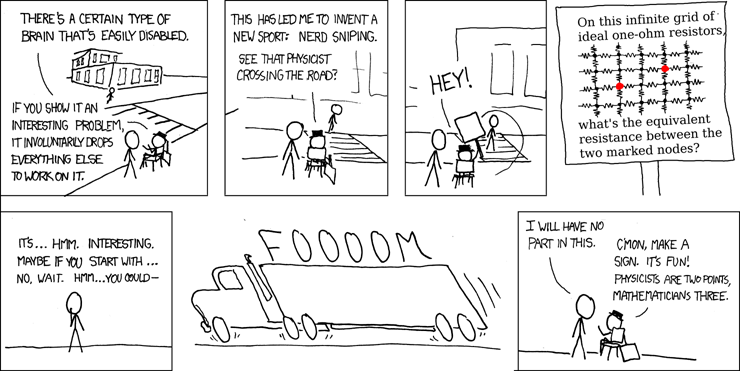
@trebach @ZachWeinersmith I can read the code just fine; my python was this (having replaced spaces with newlines in the input); a-k appear in the cartoon, the rest I added as guesses.
import sys
alpha = {
"a": "000000000",
"b": "000010011",
"c": "001001010",
"d": "000011001",
"e": "010100110",
"n": "110111000",
"y": "100110001",
"h": "011111111",
"u": "010011010",
"k": "101000111",
"i": "100001101",
"r": "000101111",
"t": "011100101",
" ": "101111010",
"m": "111101011",
"p": "111100000",
"l": "111010100",
"s": "001110110",
"o": "111100001",
"f": "010110101",
"w": "111010010"
}
alpha = {k: int(v, 2) for k, v in alpha.items()}
for n in map(str.rstrip, sys.stdin):
m = int(n, 2)
c = None
best_d = 999
for k, v in alpha.items():
d = (v^m).bit_count()
if d < best_d:
best_d = d
c = k
elif best_d == d:
c= f"{c}{k}"
if best_d < 3:
if len(c) == 1:
print(f"{c}") #, n, (alpha[c[0]]^m).bit_count())
else:
print(f"[{c}]") #, n, (alpha[c[0]]^m).bit_count())
elif best_d == 3:
print('?', bin(m), best_d)
else:
print('?', n, best_d, "no match")

 mastodon 4.7.3