#asteroid

13 posts · Last used Aug 01

☄️ Billions of people—and multiple spacecraft—may see a ‘once-per-millennium’ asteroid flyby in 2029 「 Initial calculations suggested the roughly 340-meter-diameter rock had a one-in-37 chance of impacting Earth in 2029. Careful tracking, however, subsequently dropped those odds to zero. But Apophis’s close approach in 2029 will still offer “a once-per-millennium natural experiment 」 https://www.scientificamerican.com/article/spacecraft-will-swarm-asteroid-apophis-during-fateful-2029-earth-flyby/ #apophis #science #asteroid
0
0
1
0
💁🏻‍♀️ TIL: ☄️🌍 A mapping project shared at the University of #Padua shows when and where billions of people can see #asteroid #Apophis during its safe 2029 flyby. Scientists calculated that the #space rock will be bright enough for naked eye viewing across #Europe, #Africa, and #Asia, and it will pass closer to our #planet than many #weather #satellites. 👉 https://www.livescience.com/space/asteroids/shared-cosmic-experience-potentially-hazardous-asteroid-apophis-could-be-visible-to-90-percent-of-earths-population-during-ultraclose-2029-flyby-new-maps-reveal #astronomy #science #maps #nasa #earth
9
1
12
0
"Apophis flyby in 2029 will be the first time a potentially hazardous asteroid has been visible to the naked eye" by @LiveScience@flipboard.com - #Asteroid #99942Apophis will make a close pass by Earth on April 13, 2029. Earth will not be affected. But scientists are gearing up to observe how Earth's gravity changes the orbit of the asteroid, and possibly deforms its shape. There's so much to learn for #PlanetaryDefense / #PlanetaryDefence for the future. https://www.livescience.com/space/asteroids/apophis-flyby-in-2029-will-be-the-first-time-a-potentially-hazardous-asteroid-has-been-visible-to-the-naked-eye #astronomy #LowFlyingRocks
1
1
2
0
Replying to
"'Shared cosmic experience': 'Potentially hazardous' asteroid Apophis could be visible to 90% of Earth's population during ultraclose 2029 flyby" by @LiveScience@flipboard.com - Every continent except North America will have some nighttime hours with view of the near-Earth #asteroid #99942Apophis during its fly-by on April 13, 2029. Closest point will be 19,000mi/30,600km from Earth's surface, which is closer than geosynchronous satellites! https://www.livescience.com/space/asteroids/shared-cosmic-experience-potentially-hazardous-asteroid-apophis-could-be-visible-to-90-percent-of-earths-population-during-ultraclose-2029-flyby-new-maps-reveal #Apophis #NEA #NEO #astronomy #LowFlyingRocks
3
0
7
0
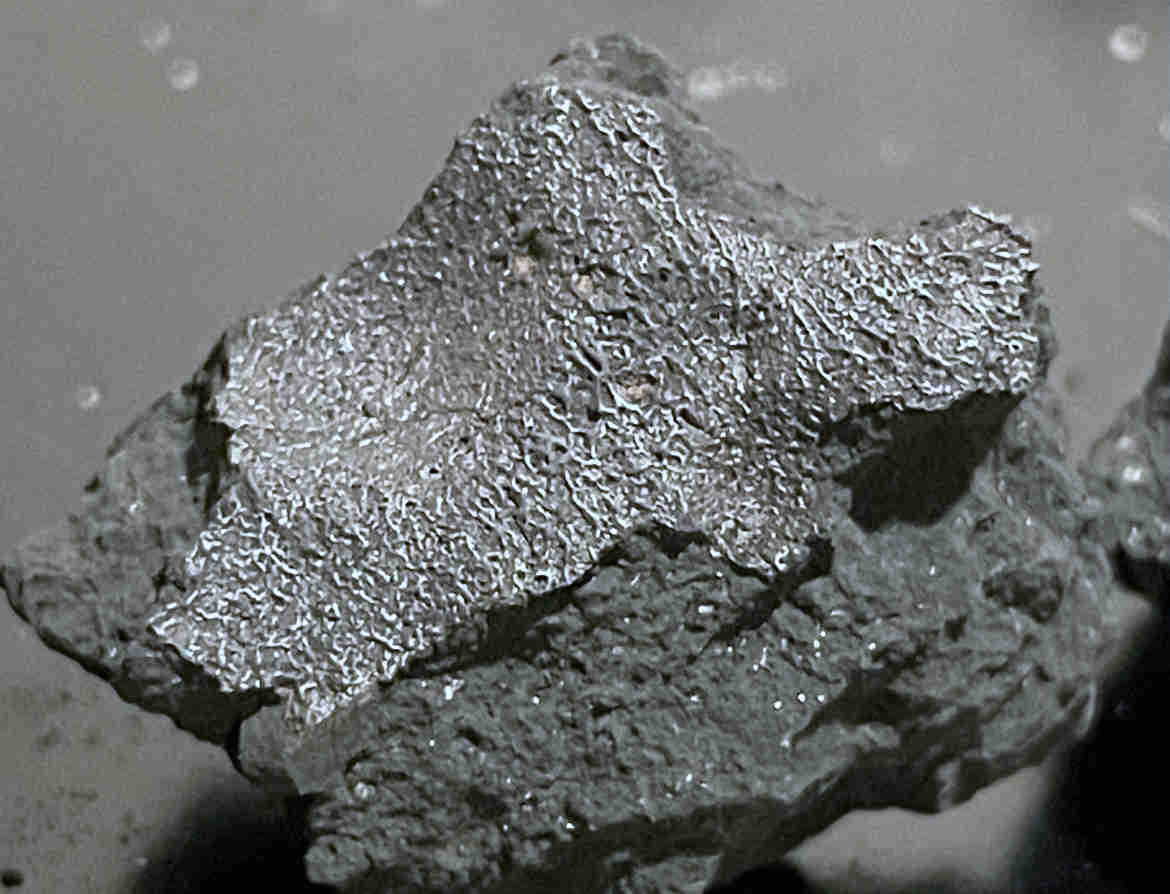
💁🏻‍♀️ TIL: ☄️🧂 A #meteorite that crashed through a #NewJersey home in 2024 contained preserved salts and organic compounds from its parent #asteroid, evidence of ancient brines interacting with #carbon #chemistry. Researchers found amino acids and other #prebiotic #molecules in the rock. The findings offer new clues about how life’s building blocks may have been delivered to early #Earth. 👉 https://www.seti.org/news/alien-world-chemistry-found-inside-meteorite/ #space #science #astrobiology #seti #nasa #aminoacids #solarsystem #earthscience #meteor
1
0
1
0
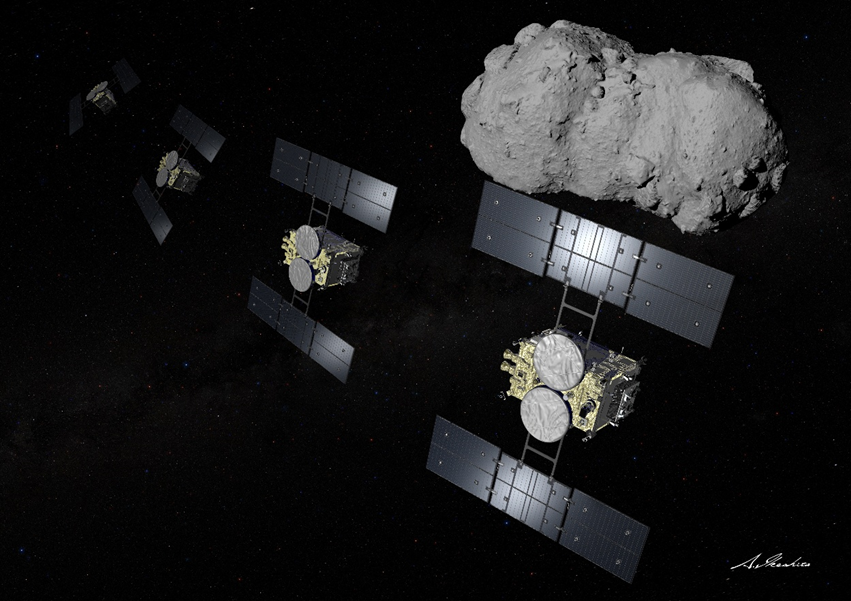
In 6 hours - at 6:00 UTC - a webcast (with commentary in Japanese) at https://www.youtube.com/live/tl8CoHvky4I will cover the #Hayabusa2 visit to #asteroid (98943) #Torifune. See also https://x.com/haya2_jaxa/status/2073388791822532727 for unresolved approach images, https://www.monitormyplanet.com/posts/5707 for a prediction of the rotation state during the encounter, https://global.jaxa.jp/press/2026/06/20260609-1_e.html for its importance, https://www.hayabusa2.jaxa.jp/topics/20260703_direction/index.html for where the asteroid is in the sky and https://www.space.com/astronomy/asteroids/japanese-probe-set-for-super-close-flyby-on-july-5-were-going-to-discover-another-beast-to-put-in-the-zoo-of-asteroids and https://astropics.bookbright.co.jp/hayabusa2-torifune-flyby for preview articles.

小惑星探査機「はやぶさ2」による小惑星トリフネ・フライバイのライブ中継

2
1
2
1
Replying to
Also, the JAXA Hayabusa2 spacecraft will fly by asteroid Torifune on Sunday July 5. It's objective is to test navigation systems for a future asteroid deflection mission. See https://fosstodon.org/@AkaSci/116841633571799400 #Space #Asteroid #Science 3/n
Quoting
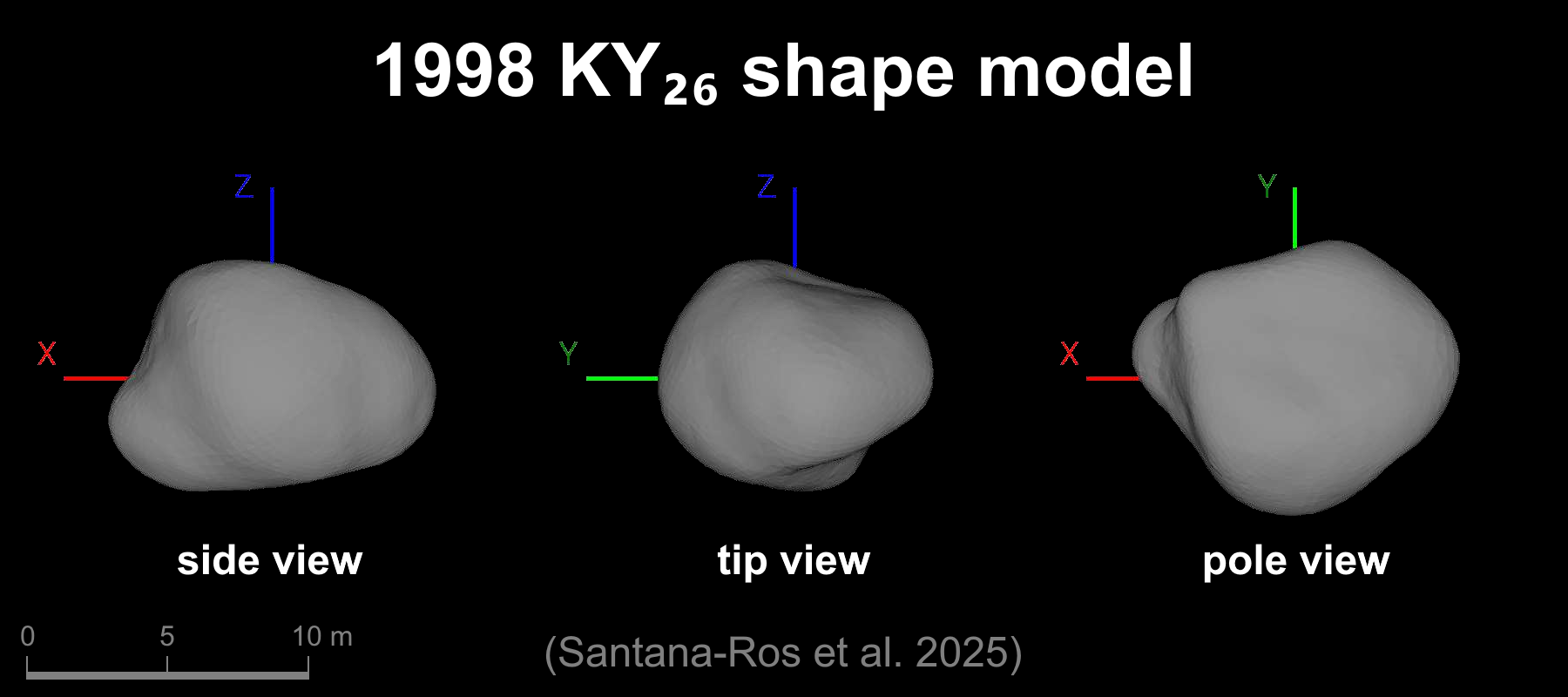
Remember Hayabusa2, the plucky JAXA spacecraft that visited asteroid Ryugu in June 2018, scooped up some rock samples and returned them to Earth in December 2020? It's still out there. It will fly by asteroid Torifune on Sunday July 5, at a relative speed of 5 km/s and a closest distance of 1 km. The data from this flyby will help accurately guide probes to impact and deflect small asteroids in future. In 2031, Hayabusa2 will rendezvous with asteroid 1998 KY26. https://global.jaxa.jp/press/2026/06/20260609-1_e.html 2/n
Open quoted post
11
0
5
0

The White House announced a plan to cancel over 50 #space missions as part of a devastating 46% cut to #NASA #science.

The proposal would likely eliminate thousands of jobs at an agency that has just launched astronauts to the #Moon for the first time in decades, and dozens of other space missions would see their operations reduced or slowly wound down to a halt.

The following missions are to be cancelled:

  1. The Habitable Worlds Observatory being built to search for #life on dozens of Earth-like planets beyond our Solar System while addressing fundamental questions about our #Universe.

  2. OSIRIS-APEX capitalizes on the exceptionally rare 2029 Earth flyby of the potentially hazardous #asteroid #Apophis to advance planetary defense strategies and reveal how Earth’s #gravity alters an asteroid’s surface and interior.

  3. The ExoMars Rosalind Franklin rover will deliberately search for signs of life on #Mars by analyzing the composition of samples collected from as deep as 2 meters below the surface.

  4. The DAVINCI mission is an atmospheric probe that will be deployed to our sister planet, #Venus, and provide the first detailed measurements of the composition and chemistry of its #atmosphere.

  5. Initially focusing on #Jupiter’s interior, atmosphere, and aurora, #Juno is already orbiting Jupiter and has expanded during its extended mission to be a full system explorer capable of investigating the Galilean satellites, rings, inner moons, radiation belts, and boundaries of Jupiter’s magnetosphere.

  6. VERITAS will create unprecedented, global, high-resolution datasets of Venus designed to answer a fundamental question for rocky #planets: how did Earth and her twin Venus evolve into two entirely different examples of planetary #habitability?

https://www.planetary.org/articles/meet-the-people-behind-nasas-endangered-missions

81
16
164
3
You've seen all posts