Question for my type curious friends… can anyone recommend a good bitmap font editor?
Can be straight black and white, color, or whatever… Need something better than this beauty
 mastodon 4.7.2
Running https://fathom.info since 2010 / spent 22 years building https://processing.org and supporting its community / sometimes seen teaching at https://mit.edu
I simply cannot get my head around why anyone would let AI anywhere near their data analysis work.
Why would you add something to your work that can drop its accuracy by half? by 10%? by 1%? What would be an acceptable amount? What is the possible upside that would make this worth it?
I'm floored by the number of people in this field who take themselves all too seriously but are out there starting their whatever *dot AI* companies to get in on the grift, or say things like “and of course, AI” like it's both obvious and inevitable. And how is this so shiny that even educators have taken leave of their senses?
What the f*k is the point of analyzing a dataset if you're ok with answers simply being incorrect? What are we even doing here?
Pretty wild to see Adobe entering the “Microsoft Word 6 for Mac” phase.
In 1993, Microsoft had the genius idea to normalize the UI across Mac and Windows. Easier for their development! Harder on users!
It was so bad (and slow!) that they actually went back and **re-released Word 5** while they fixed the worst of it.
Hairball the cat is unimpressed with your network graph visualization.
I don't know if it *started* during the financial crisis, but it certainly has been accelerating in that timeframe.
My best guess is that the problem coincides with massive availability of capital—interest rates went exceptionally low, and there's been a massive amount of “money just sloshing around the market” (as my brother who works in finance puts it).
This gave us a shift toward startups that were completely unmoored from delivering things for customers… there was plenty of funding and capital to burn through, so as long as you could play “thought leader” you could keep raising more money, regardless of actual success with paying users. Getting funded this way also reinforces the self-described “genius” status of these egomaniac founders. So they go on to do this for a few years, burn through the cash, and when it fails, start all over again.
(That also rhymes with the dot-com boom, but we didn't have social media to amplify the insanity and clout chasing in the same way.)
Meanwhile, all the huge companies that *are* profitable were built on (or moving to) extraction… Facebook since forever, or Apple in their transition to services (we can do this for all of the “Magnificent 7”), so smaller companies are watching the worst behavior be rewarded with revenue and start chasing the same behaviors.
The situation is pretty bleak, though I also find it heartening that people (outside the usual suspects) are actually starting to notice that there is a problem.
Incredible thread about the source for Claude Code’s CLI being leaked due to a misconfiguration.
Includes analysis of the many ways that the code is a mess, and how the mess is so extreme that it's practically its own coding pattern.
Much hilarity, starting on April Fools' Eve:
“Porting Mac OS X to the Nintento Wii”
This made my day—first, that there are people out there who do things like this, but second (and more to the point), that he also took the time to document the process in detail.
So much to be learned here: https://bryankeller.github.io/2026/04/08/porting-mac-os-x-nintendo-wii.html
Finishing David Pogue's “Apple: The First 50 Years” and wondering whether Apple should have shipped the Vision Pro as essentially a pro monitor/display device (with some additional input device niceties like improved gestures), essentially a peripheral.
“Here's an amazing device for working with things spatially” for the audiences where it's having success, i.e. helping people think through or understand or approve massive architecture projects, or esoteric 3D imaging things in healthcare and science. The $3500 price tag is cheap for those audiences, and from what I've heard anecdotally, it seems to be doing well there. (Though if I'm in that group right now, I'd also be concerned about investing too much in the platform, since it's not clear where Apple is headed with it, since the lack of huge success is kind of a black eye for them, so they've been abandoning it. When was it last a focus—or even mentioned!—in one of their big events?)
Across the street from our studio, Mass General Hospital is doing a multi *billion* dollar renovation project. Think about how many people need to understand how it all fits together—from the architects to the decision makers to the builders to the city and state officials.
Even as a monitor—“here's a 100-inch display for long flights that doesn't take up any room on a tray table!” is a lot more compelling. And for that use case, really focus on making it less creepy overall as the design prompt. Not clear if that's actually doable… but FFS projecting googly eyes on the front ain't it. There are some amazing industrial designers out there who should be able to figure it out and get to something less cringe than “ski goggle face computer.”
By narrowing the use case to not be competing-not-competing with Quest and similar devices, it seems like you could also get to a much better spot hardware-wise. It makes a lot more sense as a third monitor option next to Apple's other $1600 and $3300 displays (setting aside the rationalization for those prices). If I'm spending $1-2k minimum for coast-to-coast or international flights as part of my work, $3500 is a drop in the bucket if I can be legitimately productive in that time. (On my laptop that already costs a few grand…)
Over time, they could have iterated on the device further, making it far more useful, and more of a “game changer” once the components were small enough and cheap enough and the use cases worked out. The first iPod was expensive as hell and kind of a joke at the time… ($400 to carry around a spinning disk in your pocket. Don't shake it too hard on your run! ~$740 adjusted for inflation.) But man after a few years it really turned into something useful as evolved to different sizes and price points and capabilities. (And wow, what a shame that they've killed it off completely now. But that's another topic.)
It seems like management at Apple was too focused on proving that they could innovate, rather than whether or not the device was ready. Too much hubris there, and an assumption that all the developers (after years of treating them like s*t) would bail them out.
Steve Jobs gets way too much credit (usually for others' work), but one thing I think he *did* do exceptionally well was understanding the timing of when to introduce a complex set of technologies to a wider audience (the market), and identifying the correct combination of tradeoffs to make that happen.
RE: @benfry@information.garden
Just finished; wow, this was *fantastic*
(for someone who is very curious about China, tech history, business, supply chain, how things are made, materials and manufacturing, design process and scale, the intersection of politics/policy/business/history, etc etc…)
Nearly every 7 digit number can be found in the first 100 million digits of pi.
Search for your favorites, or simply bask in the wonders of math and probability: https://www.benfry.com/pi/
Happy π day!
RE: @justvanrossum@typo.social
Ah, the Alien film titles regex…
Still working to get the right marketing message for Rowboat, but in the meantime, lots of updates this month: improved cell editing, map improvements, plus a fresh desktop release: https://rowboat.net
And for the superfans, all the gory details on the release page: https://docs.rowboat.net/releases/ 💪
Which is even worse, right? Acknowledging that there's a problem but missing the actual problem and instead doubling down on it?
LLMs are not a sampling technique, it's non-deterministic autocomplete. So the answer that comes back isn't within some understood range, you can ask the same question and be 5%, 50% or 100% incorrect each time it's asked.
(And yes, you can do lots of things to mitigate all these issues, but again, wtf are we even doing at that point? These are solved problems! We have well-defined and efficient methods, along with supercomputers for laptops and instead we're blowing all that power on petascale ELIZA.)
Was finishing Andy Grove's “Only the Paranoid Survive” while on my walk to work this morning, and was about to post about how older tech business books are often better as unintentionally hilarious history, with pronouncements like:
“But as my knowledge deepens, my conviction is growing that the triad of software coming from personal sources, from telephone and network sources and from the Internet will together be what will drive our industry in the years ahead.”
And the next sentence that follows?
“My conviction is also growing that the media and the advertising industries represent a growing opportunity for us.”
…and I arrive to work to find this on my timeline:
“I am, thank God, curiously detached from all this. Four and a half years ago I was minding my own business, cutting metal in my machine shop, when I received a text message from John Gaeta, a former colleague at Magic Leap, reading simply “Sorry for your loss.” At first I thought that he’d sent it to me mistakenly, but after a bit of Googling I became aware that Facebook had changed its name and announced that it was now going to build the Metaverse.”
“In retrospect, John’s message was prescient, since it marked the moment when the Metaverse really did break free and become my alienated, prodigal brainchild.”
https://nealstephenson.substack.com/p/my-prodigal-brainchild
Spoke at a panel at Northeastern last week about careers in information design & data visualization.
With 10 minutes allotted, it’s not a comprehensive guide to finding your path in life, but I wanted to pose a few questions that might help students focus their search:
Fall is the best, but spring in Boston is a close second. Animals re-emerging, plants are blooming, and massive flakes of heavy, wet snow are falling on this fine morn, the seventh of April.
Did OpenAI talk to Rosalind Franklin’s family about co-opting her good name this way?
Is that a dumb question when their CEO uses an AI slop avatar of himself in the “style” of a Miyazaki character in spite of Miyazaki calling AI imagery “an insult to life itself”?
https://arstechnica.com/science/2026/04/openai-starts-offering-a-biology-tuned-llm/
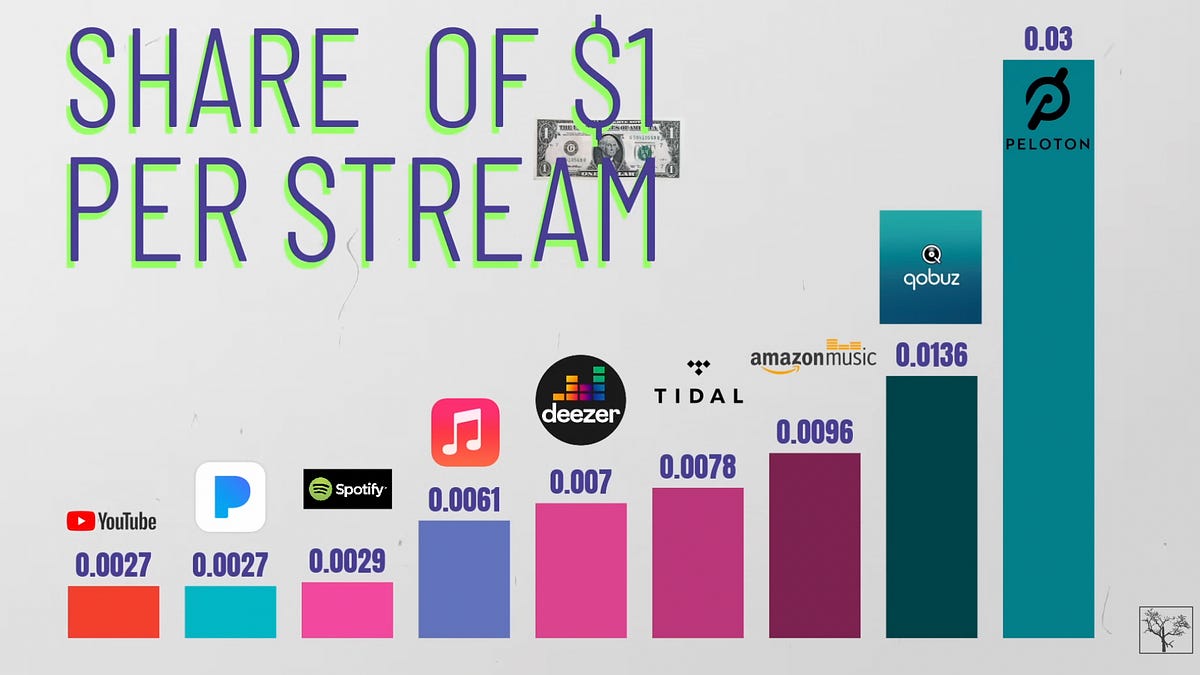
“So yeah, I’m having a great time with Qobuz, both because the product is genuinely better than Spotify, and because it feels like sweet release to be free of that shitpit.”
https://www.bloodinthemachine.com/p/a-complete-guide-to-quitting-spotify
Unintentionally celebrating Apple's 50th anniversary today having just started “Apple in China” which so far is the best retelling of their history I've read in years.