SETI Institute
Our mission is to lead humanity's quest to understand the origins and prevalence of life and intelligence in the universe and share that knowledge. #SETI #arewealone
#PPOD: Photographer Josh Dury captured this gorgeous view of the Flower #Moon on May 1, 2026, hanging above a cherry tree in full bloom and giving weight to the origin of the moon's name. "May Day; the second quarter day. With rich smells and colours all around, it is yet another signal that solstice is not far away. Within the period of this lunar cycle - flowers come, flowers go. From vibrant blossom displays, to moonlight stretching across a carpet of bluebells." Credit: Josh Dury
#PPOD: The Bubble Nebula, also known as NGC 7635, is a massive cosmic balloon located approximately 7,100 light-years from Earth in the constellation Cassiopeia. This seven-light-year-wide structure was created by the intense stellar winds of a super-hot O-type star, which is roughly 45 times more massive than our Sun. Credit: NASA, ESA, Hubble, Hubble Legacy Archive
#PPOD: This image of Neptune and Triton was captured by Voyager 2 as it departed the Neptune system on 31 August 1989. Voyager 2's flyby over Neptune's northern hemisphere bent the spacecraft's trajectory downwards out of our solar system's orbital plane. Credit: NASA / JPL-Caltech / Justin Cowart
#PPOD: NASA’s Curiosity Mars rover sees its tracks receding into the distance at a site nicknamed “Ubajara” on April 30, 2023. This site is where Curiosity made the discovery of siderite, a mineral that may help explain the fate of the planet’s thicker ancient atmosphere. Credit: NASA/JPL-Caltech/MSSS
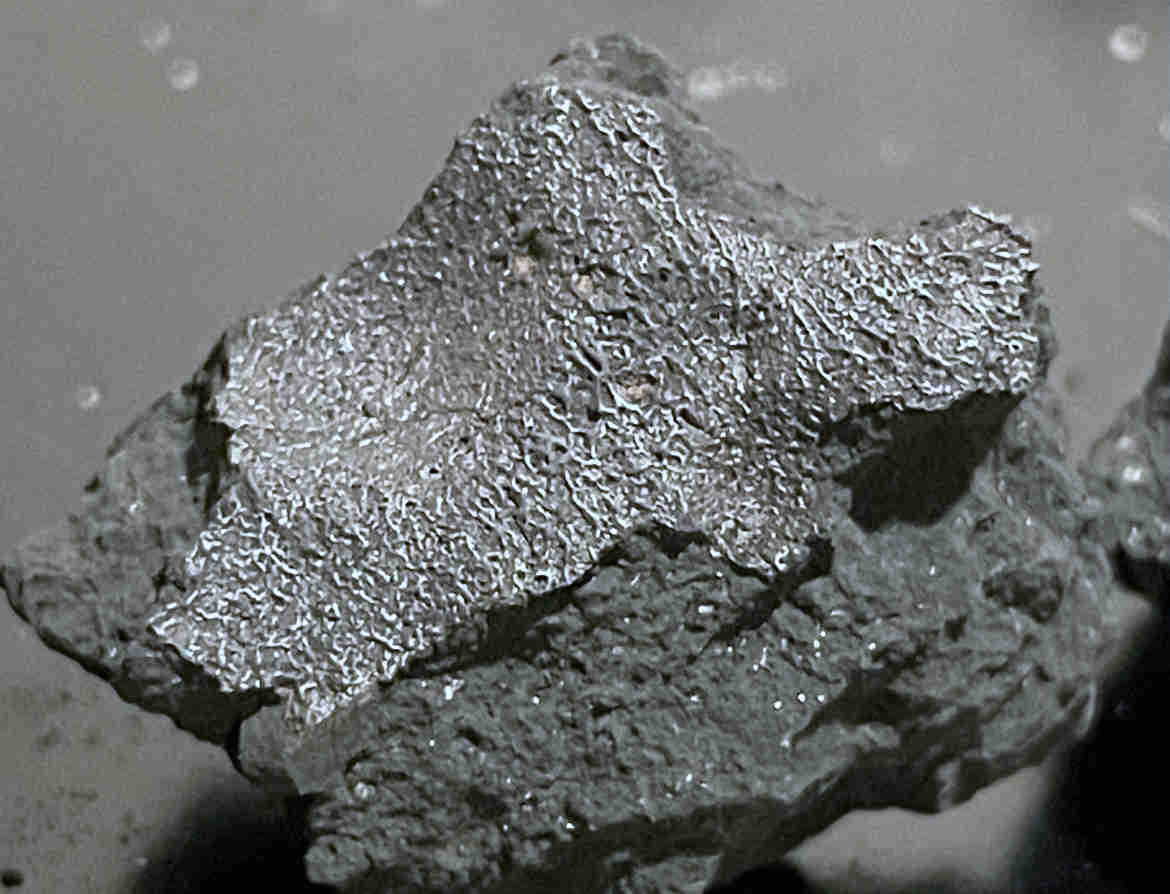
NASA’s Curiosity rover conducted its first successful wet-chemistry experiment on Mars, revealing a diverse array of ancient organic molecules in a 3.5-billion-year-old rock. Nathalie Cabrol, Director of the Carl Sagan Center for Research at the SETI Institute, examines what the results mean and why they are important (even though they are #NotAliens).
Learn more: https://www.seti.org/news/rethinking-organics-on-mars/
#PPOD: This view of Jupiter's icy moon Europa was captured by JunoCam, the public engagement camera aboard NASA's Juno spacecraft, during the mission's close flyby on Sept. 29, 2022. In the image, the terrain beside the day-night boundary appears rugged, with pits and troughs. Numerous bright and dark ridges and bands stretch across a fractured surface, revealing the tectonic stresses that the moon has endured over millennia. Credit: NASA/JPL-Caltech/SwRI/MSSS; Processing by Björn Jónsson #space
#PPOD: These two images of Pluto were captured several days apart in 1978. The planet appears elongated on the left because these images captured both Pluto and its companion dwarf planet, Charon. After eliminating the possibility that the elongations were produced by plate defects and background stars, the only plausible explanation was that they were caused by a previously unknown moon orbiting at a distance of about 19,600 km with a period of just over six days. Credit: U.S. Naval Observatory
All eyes on the sky for the Lyrid Meteor Shower! ☄️
The Lyrid Meteor Shower is gearing up for its big show, and you don’t want to miss it! Peak viewing is today, April 21, and tomorrow, April 22. Expect up to 20 meteors per hour streaking across the darkness.
Grab a blanket, find a dark place, take a stargazing buddy, and look up at the sky to experience one of the most beautiful shows space can give!
#PPOD: A pair of spiral galaxies whirl across this excerpt from a First Look image captured by NSF–DOE Vera C. Rubin Observatory. Although NGC 4411b (left) and NGC 4411a (right) appear right next to each other, they don’t show signs of interaction, such as distorted arms. Above the pair is RSCG 55, a group of interacting galaxies with trails of material between them. Credit: RubinObs/NOIRLab/SLAC/NSF/DOE/AURA
In April of 1986, Chernobyl blasted a radioactive plume into the sky. Built to represent the bright future of nuclear power, Chernobyl instead became the biggest nuclear disaster in history. We explore the catastrophe 40 years later on Big Picture Science
Listen here: https://bigpicturescience.org/episodes/40-years-after-chernobyl
#PPOD: A thin sliver of Earth’s edge is brightly illuminated against the vast darkness of space in this April 3, 2026, image taken during the Artemis II mission. This thin blue ribbon is what separates us from the abyss of space vacuum: the Earth's atmosphere, protecting life on the planet, one day at a time. Credit: NASA
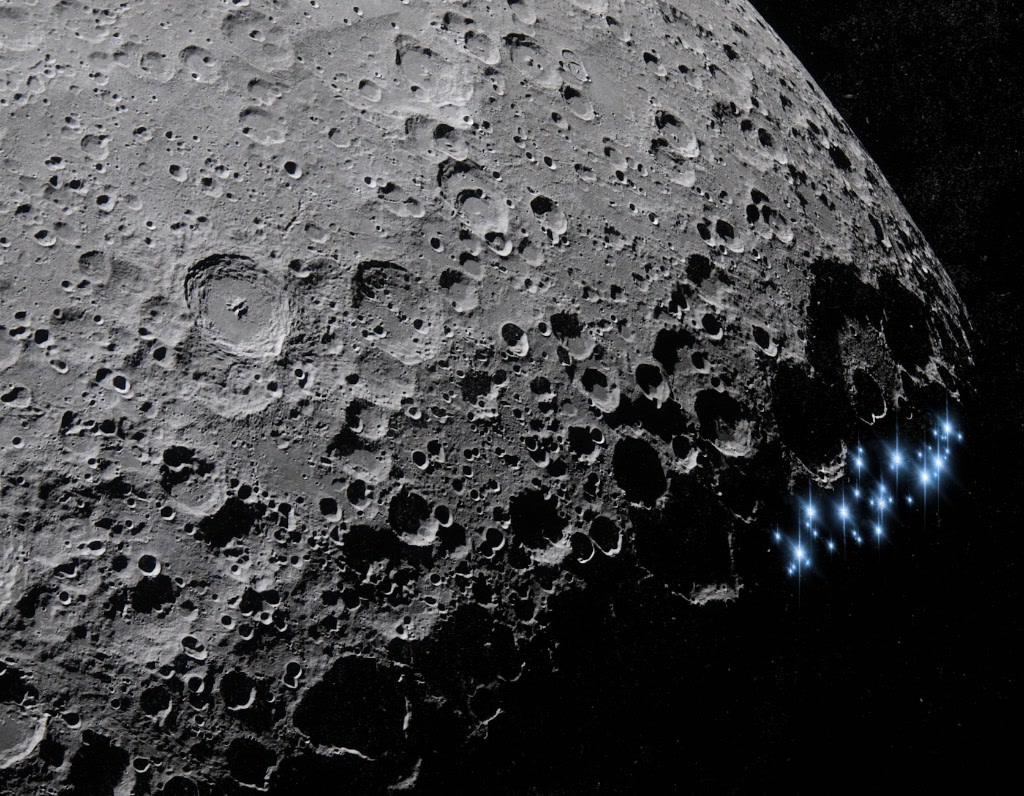
#PPOD: A close-up view taken by the Artemis II crew of Vavilov Crater on the rim of the older and larger Hertzsprung basin. The right portion of the image shows the transition from smooth material within an inner ring of mountains to more rugged terrain around the rim. Vavilov and other craters and their ejecta are accentuated by long shadows at the terminator, the boundary between lunar day and night. Credit: NASA
The International Astronomical Union (IAU) has officially named Asteroid 2006 BT282 as Asteroid Shostak, honoring Dr. Seth Shostak for his contributions to astronomy and science communication.
Learn more: https://www.seti.org/news/asteroid-shostak/
For the second year in a row, the SETI Institute joined in the Atlanta Science Festival’s Exploration Expo in Piedmont Park. The expo drew over 20,000 science lovers, many of whom visited our booth.
This year’s booth theme, “What Would You Say to Aliens,” focused on the Arecibo Message, sent in 1974 from the Arecibo Telescope to the globular cluster M13. The message encoded information about life on Earth, visualized as a grid of binary data.
Learn more: https://www.seti.org/news/atlanta-science-festival-exploration-expo-and-the-arecibo-message/
What does intelligence sound like?
Whales and dolphins may hold some of the most sophisticated communication systems ever studied on Earth. Join SETI Institute CEO Bill Diamond and 2026 Drake Award recipient Lori Marino as they explore the newest discoveries in cetacean communication, consciousness, and cognition — and why these studies matter for the search for intelligence beyond Earth.
🎥 SETI Live
💬 Live audience Q&A included
TODAY, 2:30 pm PDT: https://youtube.com/live/t9WsOzaoPFw
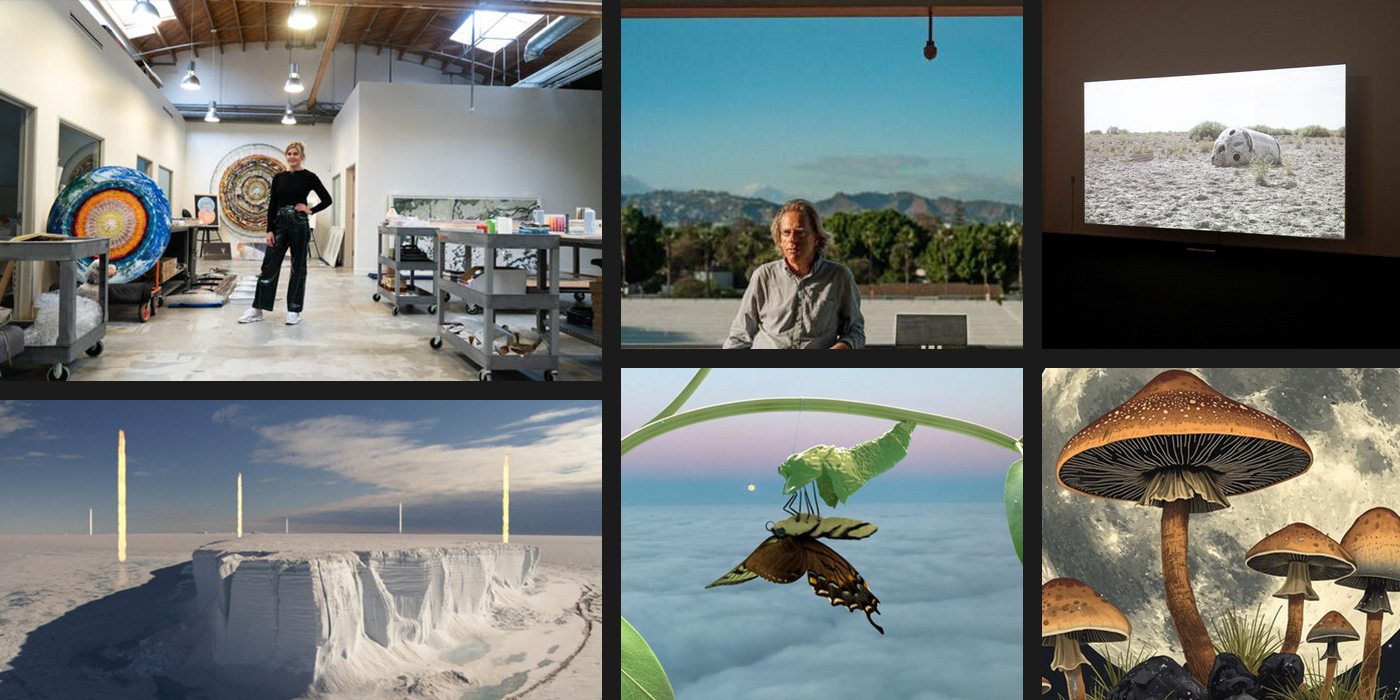
This month’s issue brings together a remarkable range of artistic practices that extend far beyond the studio, into orbit, deep time, and planetary environments. We are especially pleased to welcome Richelle Ellis as our newest affiliate artist, whose work exemplifies the expansive, exploratory spirit of the SETI AIR program, using space as both a medium and a lens for reconsidering life on Earth.
Happy reading! Bettina
Learn more: https://www.seti.org/news/seti-air-newsletter-april-2026/