Elektrine
Log in Register
Paige Chat Timeline Gallery Friends Email Drive DNS Private DNS Domains VPN Kairo Nerve
Remote

Anderson Nascimento

@andersonc0d3@infosec.exchange
mastodon 4.8.0-alpha.3+glitch
  • Open on infosec.exchange

Director and Security Researcher @alleleintel@infosec.exchange
Blog: https://blog.andersonc0d3.io

0 Followers
0 Following
35 Posts
Joined May 28, 2024
Open post
Anderson Nascimento @andersonc0d3@infosec.exchange
· 2w ago
RE: https://infosec.exchange/@andersonc0d3/117293431452812266 Registration is officially open for our September 2027 Introduction to Linux Kernel Exploitation training. We are capping this at 10 students. There are only 4 Super Early Bird seats available. If you have any questions, just contact me! Introduction to Linux Kernel Exploitation – September 2027 https://allelesecurity.com/introduction-to-linux-kernel-exploitation-september-2027/
Open quoted post
Quoting
Anderson Nascimento
@andersonc0d3@infosec.exchange
I'll be offering an Introduction to Linux Kernel Exploitation training in English, to be held online next year (likely September). This will be a whole-month training, totaling 48 hours split across 12 sessions. We will have live classes with me, and the sessions will be recorded and provided to students within 24 hours for those who can't join live. The classes will happen on Monday, Wednesday, and Thursday from 07:00 PM to 11:00 PM (GMT-3), meaning 4 hours of class per day. The training is for people interested in getting started in Linux kernel exploitation. We will cover the fundamentals: computer architecture, paging and segmentation, C programming, assembly, the Linux ecosystem, and development/APIs, and then how to exploit vulnerabilities and bypass mitigations (SMEP, SMAP, and KASLR). Besides the training, we provide support for students as soon as they enroll. We have an exclusive mailing list where I share a lot of content—usually much more detailed than what I share here. The mailing list is also used to help better prepare those with less experience several months before the training happens. Even though the training is focused on Linux kernel exploitation, I believe it's interesting even for those not looking to work directly in research. I talk about many related topics, from system performance and development to my 10+ years of experience in security research, malware/rootkits in general, and more. The class will be limited to 10 seats, as this will be my first time teaching it in English. I'll be pleased to help as many people as possible not just learn more, but truly grow and reach the next level in their careers. Would you be interested? If so, reply here, send a DM, or contact us through our website: http://allelesecurity.com/contact
Open quoted post
allelesecurity.com
1
0
1
0
Open post
Anderson Nascimento @andersonc0d3@infosec.exchange
· 2w ago
I'll be offering an Introduction to Linux Kernel Exploitation training in English, to be held online next year (likely September). This will be a whole-month training, totaling 48 hours split across 12 sessions. We will have live classes with me, and the sessions will be recorded and provided to students within 24 hours for those who can't join live. The classes will happen on Monday, Wednesday, and Thursday from 07:00 PM to 11:00 PM (GMT-3), meaning 4 hours of class per day. The training is for people interested in getting started in Linux kernel exploitation. We will cover the fundamentals: computer architecture, paging and segmentation, C programming, assembly, the Linux ecosystem, and development/APIs, and then how to exploit vulnerabilities and bypass mitigations (SMEP, SMAP, and KASLR). Besides the training, we provide support for students as soon as they enroll. We have an exclusive mailing list where I share a lot of content—usually much more detailed than what I share here. The mailing list is also used to help better prepare those with less experience several months before the training happens. Even though the training is focused on Linux kernel exploitation, I believe it's interesting even for those not looking to work directly in research. I talk about many related topics, from system performance and development to my 10+ years of experience in security research, malware/rootkits in general, and more. The class will be limited to 10 seats, as this will be my first time teaching it in English. I'll be pleased to help as many people as possible not just learn more, but truly grow and reach the next level in their careers. Would you be interested? If so, reply here, send a DM, or contact us through our website: http://allelesecurity.com/contact
allelesecurity.com
1
0
0
1
Open post
Anderson Nascimento @andersonc0d3@infosec.exchange
· 8mo ago

Linux kernel is adding support for a new mechanism to validate lock usage during compile-time. It depends on a new Clang feature called Thread Safety Analysis.

"Implement compiler-driven static analysis locking context checking, using the upcoming Clang 22 compiler's context analysis features."

https://git.kernel.org/pub/scm/linux/kernel/git/torvalds/linux.git/commit/?id=0923fd0419a1a2c8846e15deacac11b619e996d9

Documentation/dev-tools/context-analysis.rst
https://github.com/torvalds/linux/blob/master/Documentation/dev-tools/context-analysis.rst

Thread Safety Analysis
https://clang.llvm.org/docs/ThreadSafetyAnalysis.html

git.kernel.org
12
0
7
0
Open post
Anderson Nascimento @andersonc0d3@infosec.exchange
· 2mo ago
CoreFreq https://github.com/cyring/CoreFreq
github.com
1
0
0
0
Open post
Anderson Nascimento @andersonc0d3@infosec.exchange
· 3mo ago
Replying to
‪Modify pages_map() to support mapping uncommitted virtual memory.‬ ‪https://github.com/jemalloc/jemalloc/commit/c2f970c32b527660a33fa513a76d913c812dcf7c‬ ‪work around heuristic overcommit causing fork failure + improve behaviour with no overcommit‬ ‪ #193‬ ‪https://github.com/jemalloc/jemalloc/issues/193‬
github.com
0
0
0
0
Open post
Anderson Nascimento @andersonc0d3@infosec.exchange
· 2mo ago
Replying to
Dennard scaling https://en.wikipedia.org/wiki/Dennard_scaling
en.wikipedia.org
0
1
0
0
Open post
Anderson Nascimento @andersonc0d3@infosec.exchange
· 2mo ago
Replying to
0
0
0
0
Open post
Anderson Nascimento @andersonc0d3@infosec.exchange
· 2mo ago
Replying to
Claude couldn't write an exploit after a few hours of work.
0
0
0
0
Open post
Anderson Nascimento @andersonc0d3@infosec.exchange
· 2mo ago
Replying to
Defeating Transient Execution Attacks by Limiting Secret Reachability through REGISTER HIDING and SHADOWCFI https://people.csail.mit.edu/mengjia/data/2026.SP.RegisterHiding.pdf
people.csail.mit.edu
0
1
0
0
Open post
Anderson Nascimento @andersonc0d3@infosec.exchange
· 2mo ago
Replying to
Safe RET Interrupt Vulnerability https://www.amd.com/en/resources/product-security/bulletin/amd-sb-7061.html
amd.com
0
0
0
0
Open post
Anderson Nascimento @andersonc0d3@infosec.exchange
· 3mo ago
Red Hat is working on a capability for virtual machine guests (tenants) to provide their own firmware (UEFI). This is interesting for measured boot (attestation), implementing per-guest features/configurations, and various other use cases. It's known as Bring Your Own Firmware (BYOF). Introducing FUKI, guest firmware in a UKI for confidential cloud deployments (2025) https://archive.fosdem.org/2025/schedule/event/fosdem-2025-4661-introducing-fuki-guest-firmware-in-a-uki-for-confidential-cloud-deployments/ Empowering confidential VMs in the cloud to use their own firmware upon instantiation. (2024) https://people.redhat.com/~anisinha/BYOF-KVMForum2024.pdf Additionally, there is a technical challenge regarding resetting certain confidential guests. Because their CPU register states and memory regions are encrypted and inaccessible to the host, the hypervisor cannot execute a standard, hardware-assisted reset, which previously caused these confidential guests to terminate upon a reboot attempt. The author explains the problem and the two approaches to address it in the blog post below: Confidential guest reset on QEMU hypervisor: Design choices and approach https://www.redhat.com/en/blog/confidential-guest-reset-qemu-hypervisor-design-choices-and-approach
archive.fosdem.org
0
0
0
0
Open post
Anderson Nascimento @andersonc0d3@infosec.exchange
· 3mo ago
FreeBSD has added the pdopenpid() system call. It is the FreeBSD equivalent of pidfd_open() on Linux. kern: add pdopenpid(2) https://github.com/freebsd/freebsd-src/commit/5c32aa785184bb1e646b0b4c73d3c5fd9a6b8951 pdfork.2: document pdopenpid(2) https://github.com/freebsd/freebsd-src/commit/3e8b68c26e2b108dac96517ef8fd26fe7dce5bcd sys: add pdopenpid(2) https://reviews.freebsd.org/D57124
github.com
0
0
0
0
Open post
Anderson Nascimento @andersonc0d3@infosec.exchange
· 3mo ago
Debugging with CHERI CHERI is designed to improve the security of both existing and future software. https://freebsdfoundation.org/our-work/journal/browser-based-edition/improving-software-quality/debugging-with-cheri-2/
freebsdfoundation.org
0
0
0
0
Open post
Anderson Nascimento @andersonc0d3@infosec.exchange
· 2mo ago
perf/x86/amd/brs: Fix kernel address leakage https://git.kernel.org/pub/scm/linux/kernel/git/torvalds/linux.git/commit/?id=47915e855fb38b42133e31ba917d99565f862154 perf/x86/amd/lbr: Fix kernel address leakage https://git.kernel.org/pub/scm/linux/kernel/git/torvalds/linux.git/commit/?id=2a892294b83f541115c94b0bb637f39bef187657
git.kernel.org
0
0
0
1
Open post
Anderson Nascimento @andersonc0d3@infosec.exchange
· 2mo ago
Second server that I am having issues with the fan. The first one wasn't under warranty and I didn't have support from the vendor to fix it. I ended up damaging it when trying to understand what was going on and how to fix it. This one now is new and it's already the third fan with issues. In the first two occurrences with this server, the vendor sent me new fans. I am intrigued that two different servers ended up having the same issues. The consequence of the issue is that the fans operate at higher RPMs, making a very loud noise. It shouldn't be dust. A server's fan doesn't support home-level dust?! It's also not connected to the power line directly. It's powered by a sinusoidal no-break. It's a minor problem that causes a lot of headache. The error is shown below. 2026-07-13 14:18:01 2054 FAN0001 Fan 2 RPM is less than the lower critical threshold.
0
0
0
0
Open post
Anderson Nascimento @andersonc0d3@infosec.exchange
· 2mo ago
I used FreeBSD Boot Environment (BE) for the first time and it's awesome! It allows me to build a kernel and world (userspace), switch to them and in case of failure, revert everything back with just a command. Check out the articles below for more information about it. Managing Boot Environments https://klarasystems.com/articles/managing-boot-environments/ FreeBSD Boot Environments on ZFS https://srobb.net/fbsdbe.html ZFS Boot Environment Introduction https://wiki.freebsd.org/unitrunker/BE Boot Environments https://wiki.freebsd.org/BootEnvironments ZFS Boot Environments Revolutions https://vermaden.wordpress.com/2022/03/14/zfs-boot-environments-revolutions/
klarasystems.com
0
0
0
0
Open post
Anderson Nascimento @andersonc0d3@infosec.exchange
· 2mo ago
RE: https://infosec.exchange/@andersonc0d3/116903287835170560 The fixes in the quoted post are a great example of LLM-assisted development. One issue was fixed, and Sashiko automatically noticed that another component had the same issue. This has likely happened several times in Linux kernel history. I remember one case I posted about years ago — it took 301 days for the fix in the other component to land upstream. In this era of LLM-assisted development, the similar issue was spotted in just 17 seconds. "An example I often mention is the issues below. The three mechanisms (message queues, semaphores, and shared memory) of the IPC subsystem in the Linux kernel share code. Knowing this, if there's a vulnerability affecting one mechanism, it’s worth checking if it also affects the other mechanisms. They fixed a vulnerability in the semaphore mechanism but forgot the message queues and shared memory mechanisms. Analyzing public fixed vulnerabilities can help you learn about the inner details of the affected subsystem and sometimes even lead to new vulnerabilities being discovered." ipc/sem.c: fully initialize sem_array before making it visible https://github.com/torvalds/linux/commit/e8577d1f0329d4842e8302e289fb2c22156abef4 Initialize msg/shm IPC objects before doing ipc_addid() https://github.com/torvalds/linux/commit/b9a532277938798b53178d5a66af6e2915cb27cf
Open quoted post
Quoting
Anderson Nascimento
@andersonc0d3@infosec.exchange
perf/x86/amd/brs: Fix kernel address leakage https://git.kernel.org/pub/scm/linux/kernel/git/torvalds/linux.git/commit/?id=47915e855fb38b42133e31ba917d99565f862154 perf/x86/amd/lbr: Fix kernel address leakage https://git.kernel.org/pub/scm/linux/kernel/git/torvalds/linux.git/commit/?id=2a892294b83f541115c94b0bb637f39bef187657
Open quoted post
github.com
0
0
0
0
Open post
Anderson Nascimento @andersonc0d3@infosec.exchange
· 2mo ago
Dnsmasq DNS Remote Heap Buffer Overflow https://blog.exodusintel.com/2026/07/20/dnsmasq-dns-remote-heap-buffer-overflow/
blog.exodusintel.com
0
0
0
0
Open post
Anderson Nascimento @andersonc0d3@infosec.exchange
· 2mo ago
The GNU C Library version 2.44 is now available https://sourceware.org/pipermail/libc-alpha/2026-July/179159.html
sourceware.org
0
0
0
0
Open post
Anderson Nascimento @andersonc0d3@infosec.exchange
· 2mo ago
Claude referenced an exploitation technique by the name of the researcher who wrote a public paper about it. The thing is that I had used the technique a few years before that work appeared. I didn't discover it, though. A co-worker shared it with me at the time, and he had learned it from a public work. It was there in a public work, but just a few people seem to have noticed it. That's not a problem, and today I am totally fine with it. I believe this is part of becoming mature intellectually. I've spent a great amount of time in the past reading about science and its history, and in the past I bothered when the credit went to the second and third discoverer/researcher. It has happened thousands and thousands of times. However, as I am getting older and more experienced about life, I accepted that this is uncontrollable and it's just how things work.
0
1
0
0
Open post
Anderson Nascimento @andersonc0d3@infosec.exchange
· 2mo ago
RE: https://infosec.exchange/@andersonc0d3/116980936217755939 This was fixed after I reported a way to bypass pointer guard (PTR_MANGLE) in glibc. I had known about and taught the technique in my binary exploitation classes for a few years (since ~2020/2021), but I wasn't sure whether the glibc team was aware of it. After the report, a developer mentioned several related issues and started working on the fixes. Besides the technique I reported, I didn't know about the others — I don't focus on binary exploitation beyond my training classes. I was surprised by how many issues there were in glibc that allowed mitigation bypasses. The fix for one of those issues landed in glibc 2.44 today. My report: Mitigating __pointer_chk_guard_local exposure and pointer mangling in ld.so https://sourceware.org/pipermail/libc-alpha/2026-May/177729.html
sourceware.org
0
0
0
0
Open post
Anderson Nascimento @andersonc0d3@infosec.exchange
· 2mo ago
RE: https://infosec.exchange/@andersonc0d3/116574727959286021 Playing with canaries Looking at SSP over several architectures. https://www.elttam.com/blog/playing-with-canaries
elttam.com
0
0
0
0
Open post
Anderson Nascimento @andersonc0d3@infosec.exchange
· 2mo ago
Release 2.47 of the GNU Binutils is now available https://inbox.sourceware.org/binutils/87o6fty5pz.fsf@redhat.com/
inbox.sourceware.org
0
0
0
0
Open post
Anderson Nascimento @andersonc0d3@infosec.exchange
· 2mo ago
Initial discussion of what became the perf subsystem in the Linux kernel. [patch 0/3] [Announcement] Performance Counters for Linux https://lore.kernel.org/all/20081204225345.654705757@linutronix.de/
lore.kernel.org
0
0
0
0
Open post
Anderson Nascimento @andersonc0d3@infosec.exchange
· 2mo ago
amd64: do not allow to set reserved bits in MXCSR for ptrace(PT_SETFPREGS) https://github.com/freebsd/freebsd-src/commit/cef05c5a62ba63eda222eed083972bfaa1449ac2
github.com
0
0
0
0
Open post
Anderson Nascimento @andersonc0d3@infosec.exchange
· 2w ago
AT_SECURE programs may load attacker-controlled code via $ORIGIN AT_SECURE program buffer overflow via $ORIGIN processing https://sourceware.org/pipermail/libc-announce/2026/000064.html
sourceware.org

The GNU C Library security advisories update for 2026-09-22

0
0
0
0
Open post
Anderson Nascimento @andersonc0d3@infosec.exchange
· 2w ago
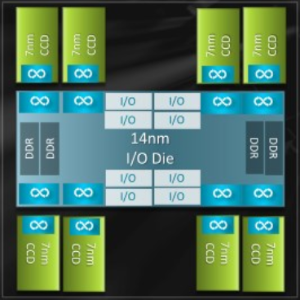
AMD EPYC Rome Application Performance on vSphere Series: Part 1 – SQL Server 2019 https://blogs.vmware.com/cloud-foundation/2020/04/23/amd-epyc-rome-application-performance-on-vsphere-series-part-1-sql-server-2019/ AMD 2nd Gen EPYC (Rome) Application Performance on vSphere Series: Part 2 – VMmark https://blogs.vmware.com/cloud-foundation/2020/05/27/app-perf-vmware-vsphere-amd-epyc-rome/
AMD EPYC Rome Application Performance on vSphere Series: Part 1 - SQL Server 2019
VMware Cloud Foundation (VCF) Blog

AMD EPYC Rome Application Performance on vSphere Series: Part 1 - SQL Server 2019

This blog shows the performance of Microsoft SQL Server on VMware vSphere with the host powered by a second-generation AMD EPYC processor (Rome).

0
0
0
1
Open post
Anderson Nascimento @andersonc0d3@infosec.exchange
· 2w ago
RE: https://infosec.exchange/@andersonc0d3/117325659239046952 I shared this because it was with this article series that I learned about LLC (CCX) as a NUMA domain on AMD processors. I have finally found the time and incentive to learn more about modern processors and systems. There are many acronyms and details that I didn't know about. In fact, I came across that term/feature in an official tuning guide from AMD for Red Hat Enterprise Linux, and when searching about it, I bumped into these articles from VMware. Intel also has a similar feature that is called Sub-NUMA-Clustering (SNC). Impact of sub-numa-clustering (SNC) on LLC access https://stackoverflow.com/questions/74511855/impact-of-sub-numa-clustering-snc-on-llc-access It seems some people get performance benefits by enabling that feature. Best CPU performance settings for HP DL325/AMD EPYC servers? https://xcp-ng.org/forum/topic/4421/best-cpu-performance-settings-for-hp-dl325-amd-epyc-servers
Open quoted post
Quoting
Anderson Nascimento
@andersonc0d3@infosec.exchange
AMD EPYC Rome Application Performance on vSphere Series: Part 1 – SQL Server 2019 https://blogs.vmware.com/cloud-foundation/2020/04/23/amd-epyc-rome-application-performance-on-vsphere-series-part-1-sql-server-2019/ AMD 2nd Gen EPYC (Rome) Application Performance on vSphere Series: Part 2 – VMmark https://blogs.vmware.com/cloud-foundation/2020/05/27/app-perf-vmware-vsphere-amd-epyc-rome/
Open quoted post
stackoverflow.com
0
0
0
0
Open post
Anderson Nascimento @andersonc0d3@infosec.exchange
· 2mo ago
Replying to
@gzobra@infosec.exchange Yes, but I'd prefer not to name names to avoid getting involved in controversies.
0
2
0
0
Open post
Anderson Nascimento @andersonc0d3@infosec.exchange
· 2mo ago
Replying to
@gzobra@infosec.exchange If you're still interested, feel free to reach out to me directly and I can share the details. You can find me on other social media and DM me there.
0
0
0
0
Open post
Anderson Nascimento @andersonc0d3@infosec.exchange
· 2w ago
Replying to
@buherator@infosec.place I almost skipped it after reading some bits because of the way it's written, but it's a cool post. I'll be sharing it with the people who took my binary exploitation training.
0
0
0
0
Back
313k7r1n3
Elektrine

Tor hidden service

elekhj7afj4qnrr4yd3bkzslsyo5jgfxw3orgjkhlcxifueodybyiiad.onion

I2P eepsite

j6b6cyk6gjmepjih7jjadxgxvvf3lzzujljuu2v4biemzpg3naya.b32.i2p

Platform

  • Email
  • Chat
  • Timeline
  • VPN
  • DNS

Company

  • About
  • Contact
  • FAQ
  • Lite (no JS)

Legal

  • Terms of Service
  • Privacy Policy
  • Transparency Report
  • Report Abuse
  • Warrant Canary
  • VPN Policy

Support

  • support@elektrine.com
  • Report Security Issue
Mail client setup IMAP mail.elektrine.com:993 POP3 mail.elektrine.com:995 SMTP mail.elektrine.com:465
© 2026 Elektrine. All rights reserved. Server: 10:25:01 UTC