"Project memory" for coding agents can mean very different things.
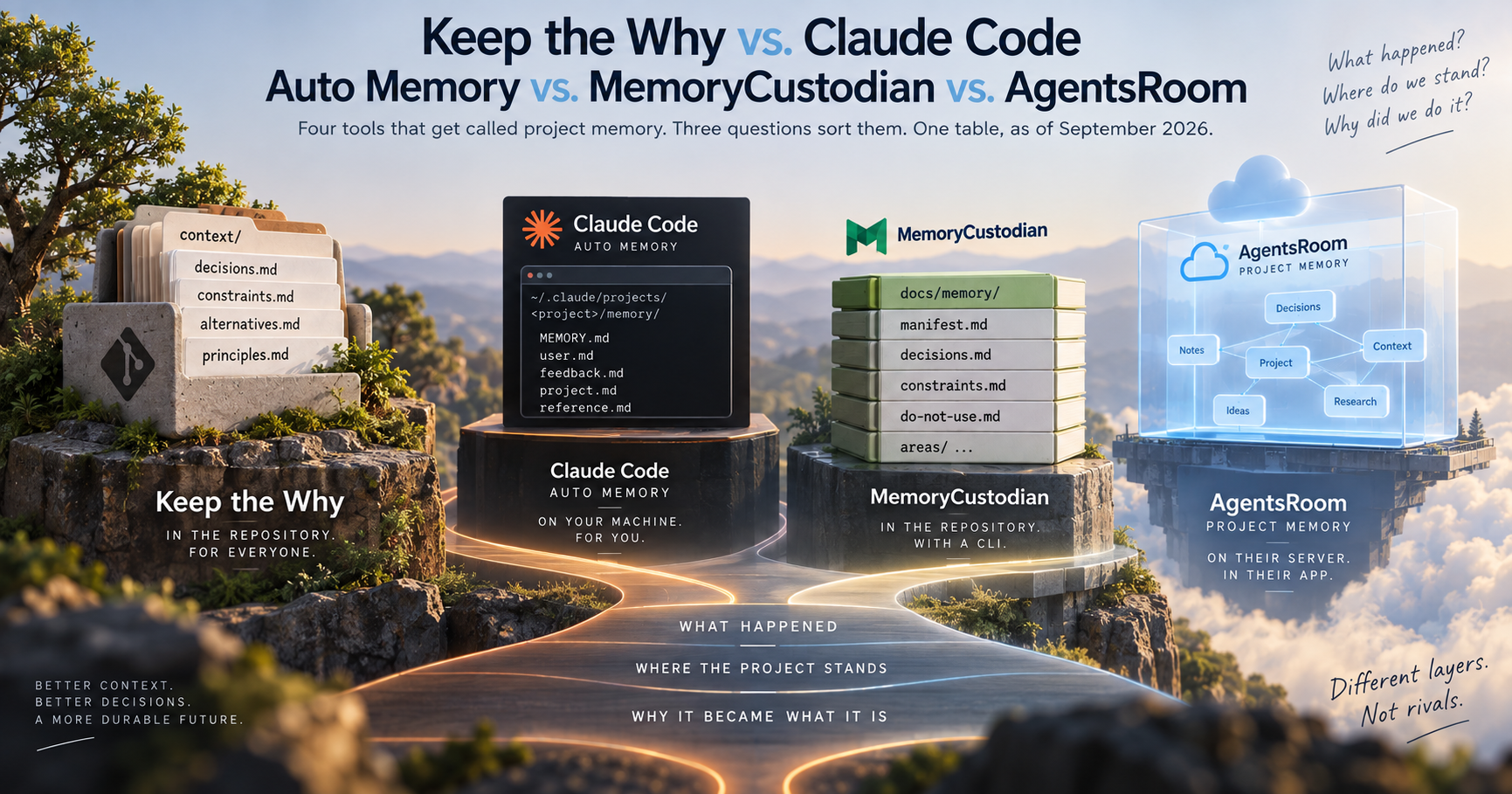
I compared Keep the Why, Claude Code Auto Memory, MemoryCustodian and AgentsRoom using three questions:
Where does the memory live?
Who can read it?
What does it actually remember?
The interesting result: most of these tools are not direct competitors.
Session memory remembers what happened.
Project state remembers where the project is.
The rationale layer remembers why the project became what it is.
Different layers, different tools, different trade-offs.
https://blog.technopathy.club/keep-the-why-vs-claude-code-auto-memory-vs-memorycustodian-vs-agentsroom
#AI #AIAgents #CodingAgents #ClaudeCode #DeveloperTools #OpenSource #ProjectMemory #RepoNative #KeepTheWhy
#projectmemory
3 posts · Last used 15d
Your repository already is project memory.
Code, docs, tests and Git preserve the *what* and *how*.
What’s usually missing is the *why*:
why this design, what was tried, what was rejected.
That belongs in the repo too.
https://keepthewhy.com
#AI #CodingAgents #AgenticCoding #ProjectMemory #SoftwareArchitecture #SoftwareEngineering #DevTools #Git #GitHub #OpenSource #DeveloperTools #LLM #AIEngineering #Documentation #KnowledgeManagement #ContextEngineering
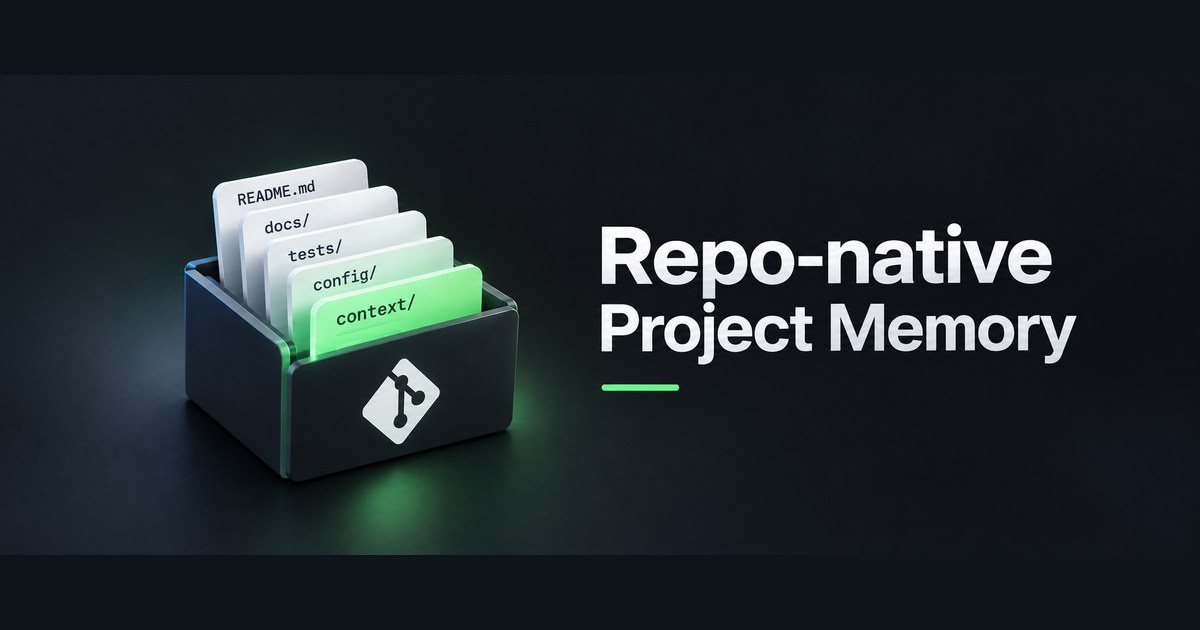
Your repository already is your project's memory.
README → what
docs → how
tests → expected behavior
Git → what changed, when and by whom
Coding agents exposed the missing layer:
context/ → why
Why the workaround exists. Why an approach was rejected. Why something that looks wrong is intentional.
My argument: project memory doesn't need to begin with another database or service. Complete the structure we already have and keep the knowledge with the code.
https://oliver-zehentleitner.github.io/repo-native-project-memory/
It's a thesis, not a product. Criticism very welcome.
#AI #CodingAgents #SoftwareEngineering #DevTools #ContextEngineering #ProjectMemory #Git #OpenSource #LLM
You've seen all posts