#codingagents

7 posts · Last used 15d

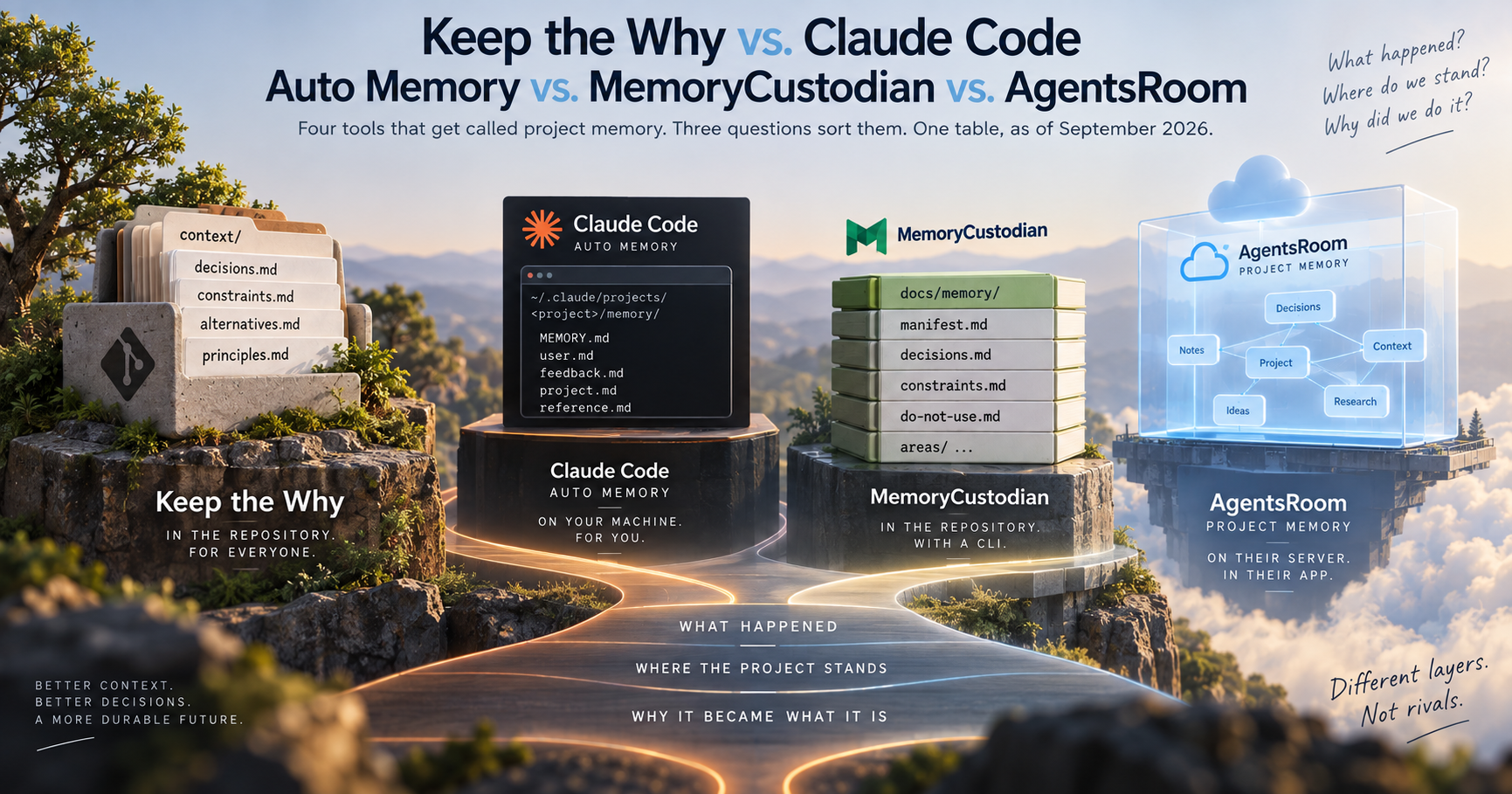
"Project memory" for coding agents can mean very different things. I compared Keep the Why, Claude Code Auto Memory, MemoryCustodian and AgentsRoom using three questions: Where does the memory live? Who can read it? What does it actually remember? The interesting result: most of these tools are not direct competitors. Session memory remembers what happened. Project state remembers where the project is. The rationale layer remembers why the project became what it is. Different layers, different tools, different trade-offs. https://blog.technopathy.club/keep-the-why-vs-claude-code-auto-memory-vs-memorycustodian-vs-agentsroom #AI #AIAgents #CodingAgents #ClaudeCode #DeveloperTools #OpenSource #ProjectMemory #RepoNative #KeepTheWhy
1
0
10
0
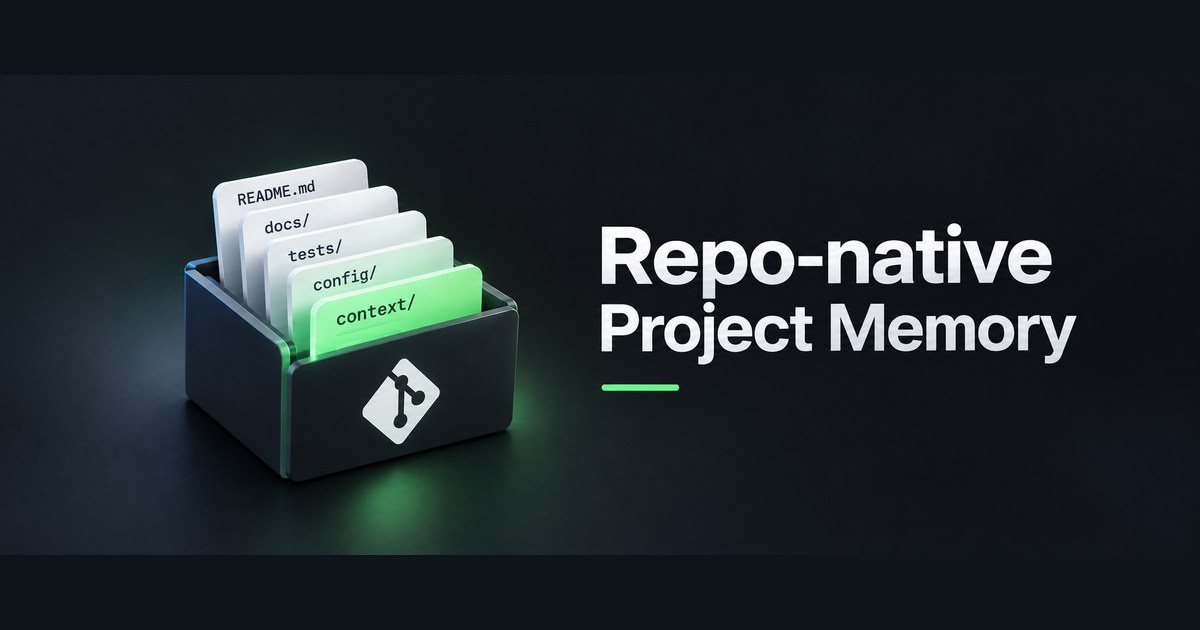
Your repository already is your project's memory. README → what docs → how tests → expected behavior Git → what changed, when and by whom Coding agents exposed the missing layer: context/ → why Why the workaround exists. Why an approach was rejected. Why something that looks wrong is intentional. My argument: project memory doesn't need to begin with another database or service. Complete the structure we already have and keep the knowledge with the code. https://oliver-zehentleitner.github.io/repo-native-project-memory/ It's a thesis, not a product. Criticism very welcome. #AI #CodingAgents #SoftwareEngineering #DevTools #ContextEngineering #ProjectMemory #Git #OpenSource #LLM
3
0
12
0
I keep coming back to one idea: Every repository should carry its own memory. Git shows what changed, but not the decisions that never became code. A week later, a fresh agent can have the same bad idea again. Keep the Why puts that reasoning next to the code. https://keepthewhy.com #CodingAgents #AgentMemory #AIEngineering #OpenSource #SoftwareEngineering #DevTools #ContextEngineering #Git
3
1
8
0
Someone “cleaned up” the workaround. The code looked simpler. Then the production bug came back. That strange delay was not just ugly code. It carried knowledge: The upstream API could replay the same order unless the request was handled carefully. But the reason existed only in someone’s head. Keep the Why is an agent skill that captures this kind of rationale as a natural by-product of development and stores it as versioned Markdown inside the project. So before the next developer or agent removes the workaround, they can see: • why it exists • what was already tried • what could break • what must change before it can safely be removed Legacy does not begin when code gets old. It begins when the reason disappears. Free and open source: https://keepthewhy.com/ What “ugly” workaround in your codebase is actually carrying important knowledge? #OpenSource #AIEngineering #DeveloperTools #SoftwareEngineering #CodingAgents #ContextEngineering #TechnicalDebt #Documentation
0
0
8
0
---------------- 🛠️ Tool =================== Superset is a local code editor designed to orchestrate multiple CLI-based coding agents in parallel. The core idea: instead of switching between agent sessions manually, each agent runs in its own isolated git worktree with a dedicated branch, terminal, and environment. What it does: The tool lets you run 10+ coding agents simultaneously, such as Claude Code, Codex, or any other CLI agent. Each workspace is isolated via git worktrees, so agents don't interfere with each other's changes. You can compare results from different agents and merge the winner. Key features: • Parallel Workspaces: Each agent operates in its own git worktree with a separate branch. This avoids the context-switching overhead of juggling multiple agent sessions in the same working directory. • Agent Monitoring: Sidebar tracks each agent's status with working indicators, completion chimes, and dock badges when attention is needed. • Built-in Terminal: Supports tabs, infinite splits, persistent sessions that survive restarts, and a rich prompt editor (⌘I) with multiline editing and @-file mentions. • Built-in Diff Viewer: Review, comment on, and edit agent changes without leaving the app. Commit and push when ready. • In-App Browser & Ports: Preview running dev servers directly in a browser pane. Ports are auto-detected. • Remote Access: Reach workspaces via remote hosts, the CLI, the SDK, or MCP. Technical architecture: The isolation model relies on git worktrees rather than containers or VMs. This is lighter weight but still provides filesystem-level separation between agent workspaces. The persistent terminal sessions and the SDK/MCP interfaces suggest this is built for integration into existing developer workflows rather than replacing them. Limitations: Currently macOS-only. The GitHub repo shows active development but no detailed documentation on the internal architecture beyond the marketing page. Haven't tested personally. Practical use cases: • Running multiple implementations of the same feature and diffing the results • Having one agent write tests while another implements the feature • Parallel bug investigation across different branches The worktree-based isolation approach is pragmatic. It avoids the overhead of full containerization while still preventing agents from stepping on each other's work. For teams already using CLI coding agents, this could reduce the friction of managing multiple concurrent sessions. 🔹 tool #superset #aiagents #gitworktrees #codingagents 🔗 Source: https://github.com/superset-sh/superset

0
0
0
0
You've seen all posts