
Elektrine
Log in Register
Paige Chat Timeline Gallery Friends Email Drive DNS Private DNS Domains VPN Kairo Nerve
Remote

Shreevatsa R

@svat@mathstodon.xyz
mastodon 4.7.2
  • Open on mathstodon.xyz
111 Followers
39 Following
10 Posts
Joined September 03, 2022
home page:
https://shreevatsa.net
Open post
Shreevatsa R @svat@mathstodon.xyz
· 8mo ago

Douglas Adams once said something, answering a question from a fan about whether Arthur Dent was a “hero”, and whether the Hitchhiker stories were “gaily whimsical” or cynical. The whole thing won't fit here (see: https://shreevatsa.net/post/douglas-adams-cultural-divide/) but quoting the main part:

> I suspect there is a cultural divide at work here. In England our heroes tend to be characters who either have, or come to realise that they have, no control over their lives whatsoever – Pilgrim, Gulliver, Hamlet, Paul Pennyfeather (from Decline and Fall), Tony Last (from A Handful of Dust). We celebrate our defeats and our withdrawals – the Battle of Hastings, Dunkirk, almost any given test match. There was a wonderful book published, oh, about twenty years ago I think, by Stephen Pile called the Book of Heroic Failures. It was staggeringly huge bestseller in England and sank with heroic lack of trace in the U.S. Stephen explained this to me by saying that you cannot make jokes about failure in the States. It’s like cancer, it just isn’t funny at any level. In England, though, for some reason it’s the thing we love most. So Arthur may not seem like much of a hero to Americans – he doesn’t have any stock options, he doesn’t have anything to exchange high fives about round the water-cooler. But to the English, he is a hero. Terrible things happen to him, he complains about it a bit quite articulately, so we can really feel it along with him - then calms down and has a cup of tea. My kind of guy!
>
> I’ve hit a certain amount of difficulty over the years in explaining this in Hollywood. I’m often asked ‘Yes, but what are his goals?’ to which I can only respond, well, I think he’d just like all this to stop, really. It’s been a hard sell.

shreevatsa.net

Douglas Adams on the English–American cultural divide over “heroes” | Blog

542
40
353
7
Open post
Shreevatsa R @svat@mathstodon.xyz
· 2mo ago
Replying to

@gregeganSF@mathstodon.xyz Note for anyone who may not know:

Joan Birman went back to grad school in math in her forties, and is now one of the top researchers in knot theory.

— the top answer at https://mathoverflow.net/questions/3591/mathematicians-who-were-late-learners-list

(According to Wikipedia she got her PhD in 1968 at age 41.)

mathoverflow.net
8
0
5
0
Open post
Shreevatsa R @svat@mathstodon.xyz
· 7mo ago
Replying to
@mjd@mathstodon.xyz Thank you, I'm not sure about the etiquette of boosting a mention of my blog post, but I was considering reposting this myself (such a cool fact!) as a top-level post (toot?) instead of as a reply, so I'll just reuse yours. :)
7
2
0
0
Open post
Shreevatsa R @svat@mathstodon.xyz
· 7mo ago

I've been re-reading _The Hitchhiker's Guide to the Galaxy_ by Douglas Adams, and he seems even more prescient now than he did when I first read the books 20 years ago. More on that some other time. Anyway, in the copy I was reading from, _The Restaurant at the End of the Universe_ has a preface by Terry Jones (of Monty Python), who in passing says:

> Nobody, I suspect, reads the Hitchhiker books for their plot. Not many, I would suppose, read them for their characters (apart from Marvin). So why is it that we love these books so much? After all, if a novel doesn't have great characters or a compelling plot, why bother reading it?

And the next book has a preface by Simon Brett (the producer of the very first radio pilot) who (coincidentally?) says something very similar:

> _Life, the Universe and Everything_is the book in which Douglas gets closest to actually having a plot. But as he would readily admit, he wasn't really good at plots, and it isn't a very good plot. That couldn't matter less, though. You don't read Douglas Adams for his plots any more than you read Raymond Chandler for his. You read both authors for their language and the imaginative world that they create.

I've been returning to this thought quite a few times for some reason, and I'm still not sure what I think. Maybe I need a list of some other authors that one reads not for their plots or their characters.

5
2
1
0
Open post
Shreevatsa R @svat@mathstodon.xyz
· 7mo ago
Replying to
@oantolin@mathstodon.xyz For what it's worth, the description seems to be that of the book “Throw a Hungry Loop” (1990) by Dona Schenker: https://www.google.com/search?q=%22A+thirteen-year-old+with+a+talent+for+throwing+loops+and+who+lives+on+a+ranch+with+his+father+and+grandfather+yearns+for+a+roping+horse%22
google.com

Google Search

4
0
0
0
Open post
Shreevatsa R @svat@mathstodon.xyz
· 5mo ago
Replying to
@j2kun For something in the other direction, here is an OEIS sequence based on open-source code: https://oeis.org/A357677 "Powers of either 3 or 5 or 7 (and 0)." (Based on a decision made in the ext2/ext3/ext4 filesystems: explained at https://unix.stackexchange.com/questions/463473/superblock-replicas-in-ext4 for example.)
oeis.org

A357677 - OEIS

2
1
0
0
Open post
Shreevatsa R @svat@mathstodon.xyz
· 6mo ago
Replying to
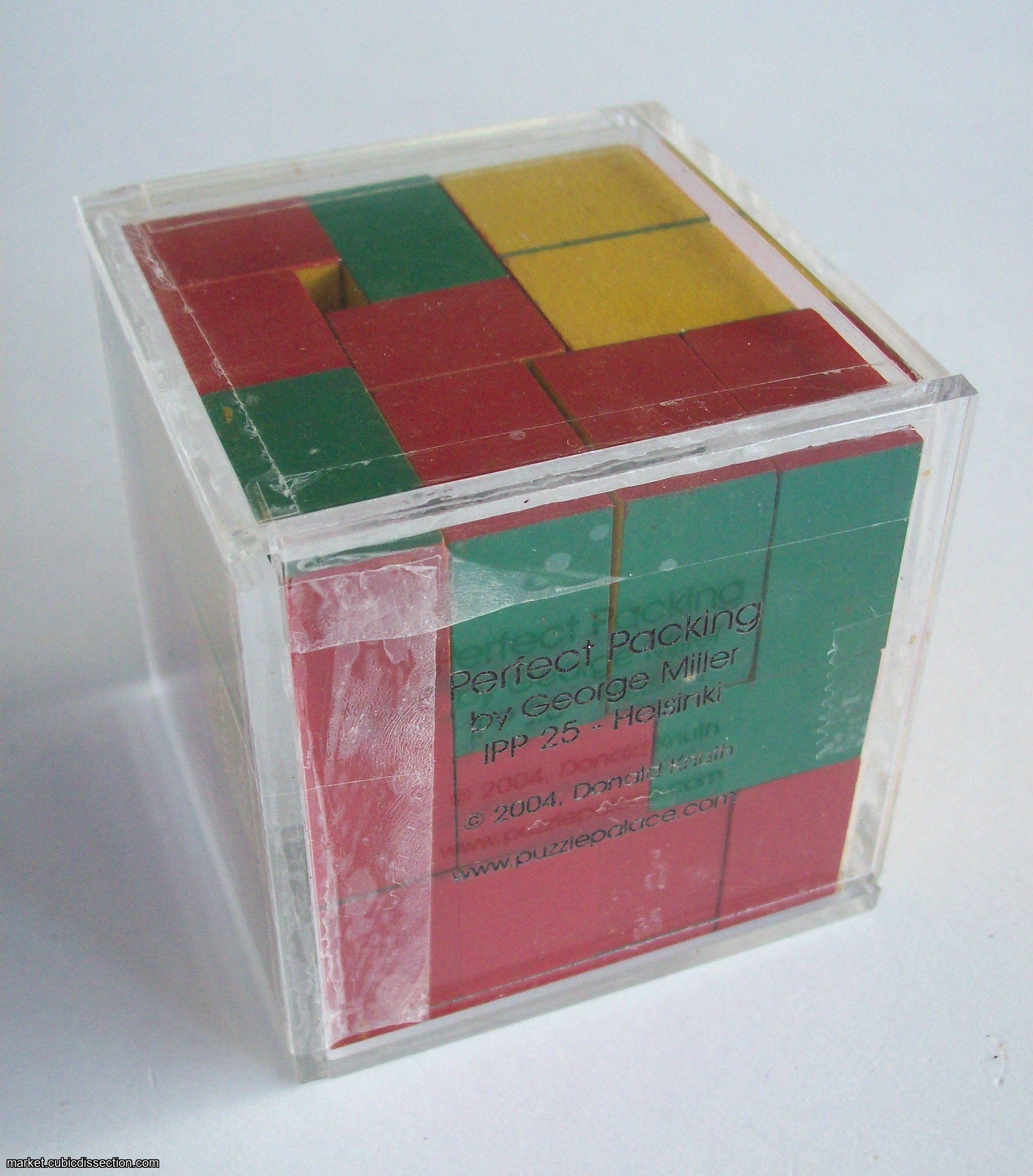
@robinhouston All the details I was able to find, based on these: https://market.cubicdissection.com/listing/perfect-packing/120685 http://www.ageofpuzzles.com/Masters/DonaldEKnuth/DonaldEKnuth.pdf (has solutions / spoilers) https://puzzlewillbeplayed.com/Brick/Hoffman/ https://www.printables.com/model/221119-knuths-packing-puzzle https://en.wikipedia.org/wiki/Hoffman%27s_packing_puzzle In 1978, Dean G. Hoffman posed this puzzle "to a conference at Miami University": Can 27 identical cuboids of dimensions a×b×c be placed into a cube of side length a+b+c? To avoid easy solutions that occur when min(a,b,c)<(a+b+c)/4, he further stipulated that a,b,c be distinct and min(a,b,c)>(a+b+c)/4. Hoffman wrote in 1981 that this puzzle typically takes "20 minutes to multiple hours" to solve, and it was first solved by David A. Klarner (his doctoral advisor). There are 21 solutions. In 2004, Donald Knuth looked into the case where min(a,b,c)=(a+b+c)/4, and discovered three solutions (easy, medium, hard) that accommodate not 27 but 28 a×b×c cuboids. This puzzle was George Miller’s exchange gift at the International Puzzle Party 25 held in Helsinki, Finland 2005.
Perfect Packing
market.cubicdissection.com

Perfect Packing

This puzzle is a exchange puzzle by George Miller for the International Puzzle Party 25 held in Helsinki, Finland 2005 Objective / Description: About the puzzle: In 1978, Dean Hoffman posed the following problem to a conference at ...

2
0
0
0
Open post
Shreevatsa R @svat@mathstodon.xyz
· 7mo ago
Replying to
@jcreed@mastodon.social @mjd@mathstodon.xyz Thank you, I had missed this thread from the original discussion; looks intriguing and I will think about it!
1
4
0
0
Open post
Shreevatsa R @svat@mathstodon.xyz
· 7mo ago
Replying to
@gjm@mathstodon.xyz @oantolin@mathstodon.xyz Ah right, the Google Books page https://www.google.com/books/edition/Topics_in_Topology/fzYZAQAAIAAJ?kptab=overview says “Source: Publisher” which is the same as what https://www.google.com/books/edition/Throw_a_Hungry_Loop/x1oVOQAACAAJ?hl=en says. The publishers are different though, so I think it's more likely the error is on Google Books's part rather than any publisher's.
google.com
1
0
0
0
Open post
Shreevatsa R @svat@mathstodon.xyz
· 6mo ago
Replying to
@jcreed@mastodon.social @mjd@mathstodon.xyz Thank you. I thought about it some more... Being totally lacking in any visual imagination, I had to translate your picture to symbols and automata, but now I finally understand it and can see that it's the “same” bijection, though stated differently. (And it's cool that you could just think of it directly.) I've added a new section at the bottom of the post mentioning your bijection (let me know if I should call you something other than "@jcreed"), search for the part that says "Added later 2026-03-12": https://shreevatsa.net/post/tetris-tilings-fibonacci/#:~:text=Added%20later%202026%2D03%2D12 (cc @robinhouston@mathstodon.xyz )
shreevatsa.net

Tilings with Tetris pieces, and squared Fibonacci numbers | Blog

0
1
0
0
Back
313k7r1n3
Elektrine

Tor hidden service

elekhj7afj4qnrr4yd3bkzslsyo5jgfxw3orgjkhlcxifueodybyiiad.onion

I2P eepsite

j6b6cyk6gjmepjih7jjadxgxvvf3lzzujljuu2v4biemzpg3naya.b32.i2p

Platform

  • Email
  • Chat
  • Timeline
  • VPN
  • DNS

Company

  • About
  • Contact
  • FAQ
  • Lite (no JS)

Legal

  • Terms of Service
  • Privacy Policy
  • Transparency Report
  • Report Abuse
  • Warrant Canary
  • VPN Policy

Support

  • support@elektrine.com
  • Report Security Issue
Mail client setup IMAP mail.elektrine.com:993 POP3 mail.elektrine.com:995 SMTP mail.elektrine.com:465
© 2026 Elektrine. All rights reserved. Server: 02:02:51 UTC